- English
- French
- German
- Portuguese
- Spanish
- Russian
- Japanese
- Korean
- Arabic
- Irish
- Greek
- Turkish
- Italian
- Danish
- Romanian
- Indonesian
- Czech
- Afrikaans
- Swedish
- Polish
- Basque
- Catalan
- Esperanto
- Hindi
- Lao
- Albanian
- Amharic
- Armenian
- Azerbaijani
- Belarusian
- Bengali
- Bosnian
- Bulgarian
- Cebuano
- Chichewa
- Corsican
- Croatian
- Dutch
- Estonian
- Filipino
- Finnish
- Frisian
- Galician
- Georgian
- Gujarati
- Haitian
- Hausa
- Hawaiian
- Hebrew
- Hmong
- Hungarian
- Icelandic
- Igbo
- Javanese
- Kannada
- Kazakh
- Khmer
- Kurdish
- Kyrgyz
- Latin
- Latvian
- Lithuanian
- Luxembou..
- Macedonian
- Malagasy
- Malay
- Malayalam
- Maltese
- Maori
- Marathi
- Mongolian
- Burmese
- Nepali
- Norwegian
- Pashto
- Persian
- Punjabi
- Serbian
- Sesotho
- Sinhala
- Slovak
- Slovenian
- Somali
- Samoan
- Scots Gaelic
- Shona
- Sindhi
- Sundanese
- Swahili
- Tajik
- Tamil
- Telugu
- Thai
- Ukrainian
- Urdu
- Uzbek
- Vietnamese
- Welsh
- Xhosa
- Yiddish
- Yoruba
- Zulu
Single Machine or Complete Line? Total Cost Compared
A single solar strut channel roll forming machine costs less upfront, while a complete line often costs less per finished meter once volume, labor, and handling are counted. I suggest a single machine when capital is tight, orders are small, or you already own a decoiler and punch. I suggest a complete line when orders are steady, and labor is expensive. Your drawings, output target, and a three- to five-year cost view decide the answer. Below, I compare both options using real ZTRFM machine data so you can build an honest budget.
Understanding the Decision and the Real Cost Structure Why the Purchase Price Is Only the Starting Point
When people get two quotes, they often choose the lower one. In no way does a solar strut channel roll forming machine work by itself. It's necessary to load, level, punch, shape, cut, and stack coils. The making core is made up of a single machine, and the path from the decoiler to the stacker is coordinated by a full line. Market reports from SEIA and Wood Mackenzie show that solar installations in the U.S. are still strong. This means that a weak point in your process could cost you real orders. It's not just the invoice that purchasing managers, engineers, distributors, and investors should compare; they should also look at the capacity, labor, maintenance, energy, and growth plans.
What a Quotation Should Include
Itemized quotes make it fair to compare. It is important to find out if the price includes the decoiler, leveling unit, punching system, hydraulic cutter, tools, electrical cabinet, training, installation, and replacement parts. For a low machine price, you often don't get decoiling, conveying, or stacking included. Then you have to do the engineering work to connect machines from different suppliers. There should also be money in the budget for freight, customs, and commissioning. I think you should put all of the exceptions in one table and give each one a cost. That step really shows the difference between a machine that works by itself and a full production line.
Machine Data That Shapes Your Budget
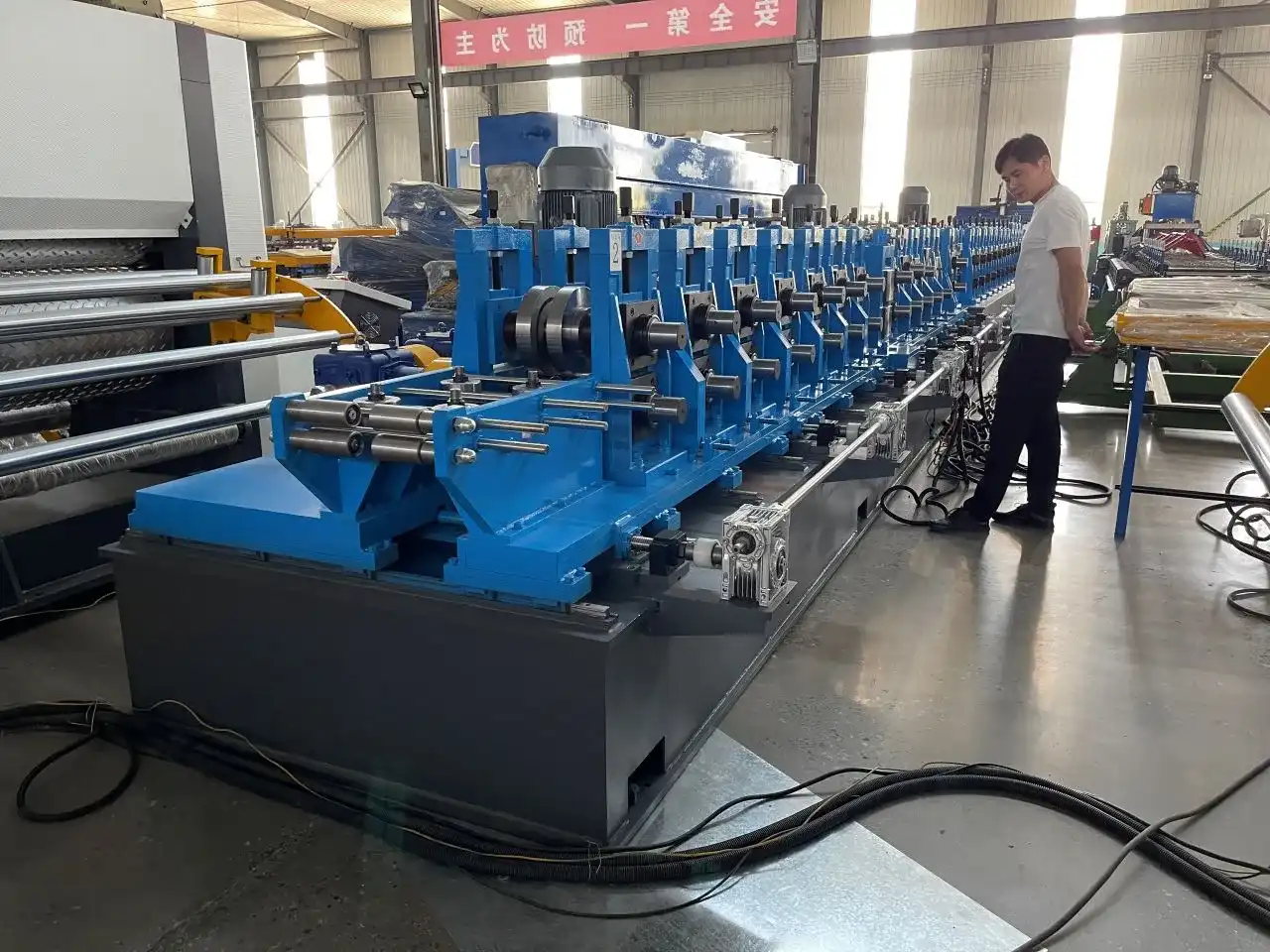
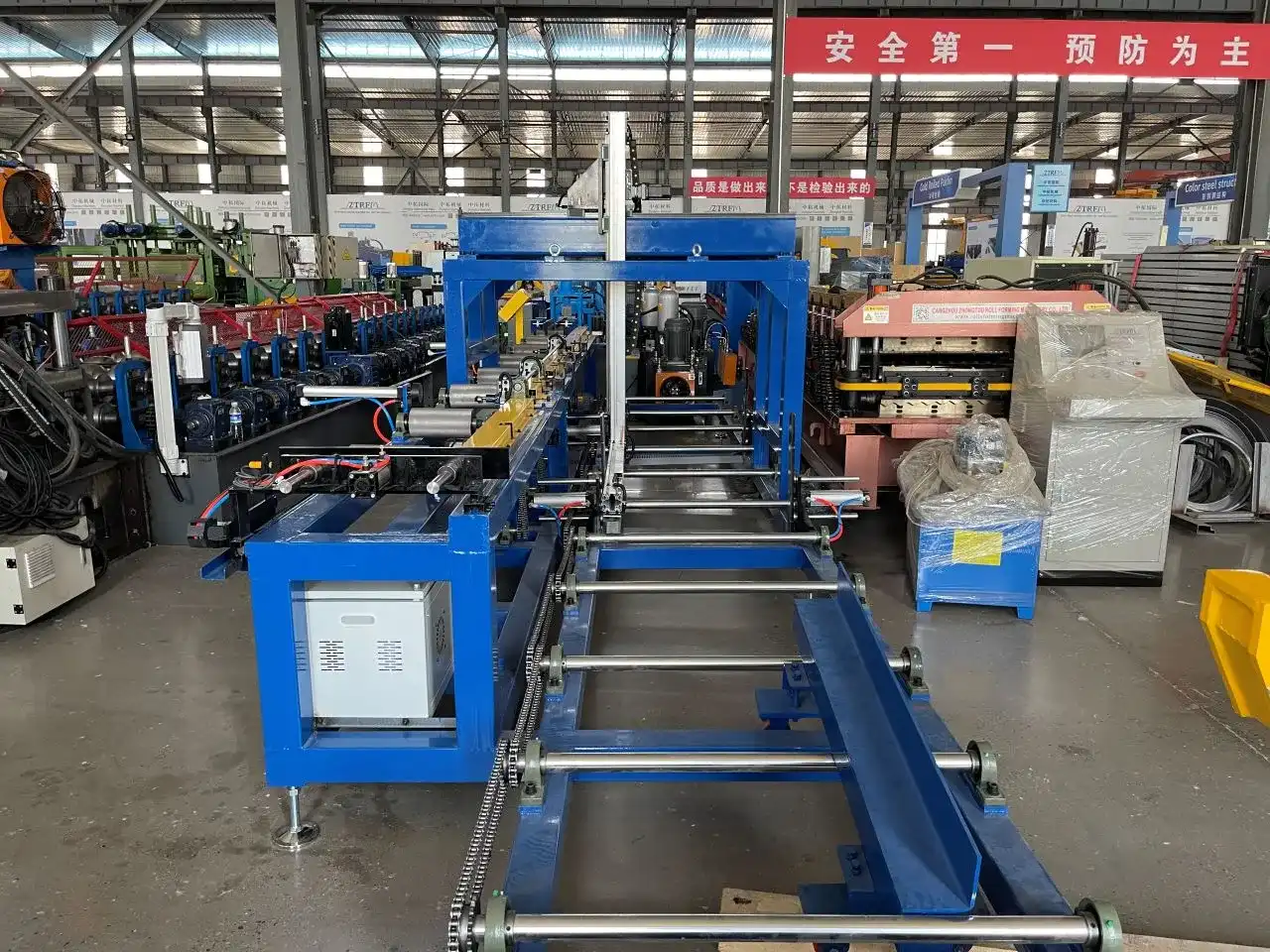
Real specs help you figure out how much to spend. The feed width of our solar strut channel roll forming machine is 90 to 230 mm, and it can work with materials that are 1.5 to 2.5 mm thick. The main motor has 22 kW, and the hydraulic station adds 11 kW. It forms at a speed of 8 m/min through 24 rollers. The shafts are 80 mm 45# forged steel, and the body is 25 mm 45# steel. When you plan your power supply, go ahead and add both motor ratings. Voltage is usually 380V, 3-phase, 50 Hz, but can be changed upon request. US buyers should make sure they know what kind of electricity they need early on.
Single Machine vs. Complete Line: Benefits and Limits
When a Standalone Machine Makes Sense
A stand-alone roll former is good for small and medium-sized businesses, pilot projects, and shops that already have a decoiler or punch press that works with it. It costs less at first, is easier to set up, and you can add tools gradually. The trade-off shows up on the ground. It takes a lot of work and time for operators to move coils and finished lengths by hand. When equipment comes from more than one source, it can be unclear who is responsible for fixing an interface issue. You can use our offline and press punching choices for small or large amounts. When you price this route, you need to include labor, downtime, and moving things around.
When a Complete Line Pays Off
Decoiling, leveling, punching, roll forming, cutting, and stacking are all done in one continuous process on a full line. Because of this coordination, holes stay in the same place, production stays steady, and fewer people have to move steel. It costs more because you need more money, more room, more power, and more time to set it up. Most of the time, you'll get the best return when demand stays steady, labor is expensive, and customers expect the same quality for large orders. For mass output, our line has live punching, and for cutting, it has hydraulic shearing. Finally, base the layout on your profile, thickness, hole pattern, and output goal.
Performance: Capacity, Quality, and Energy
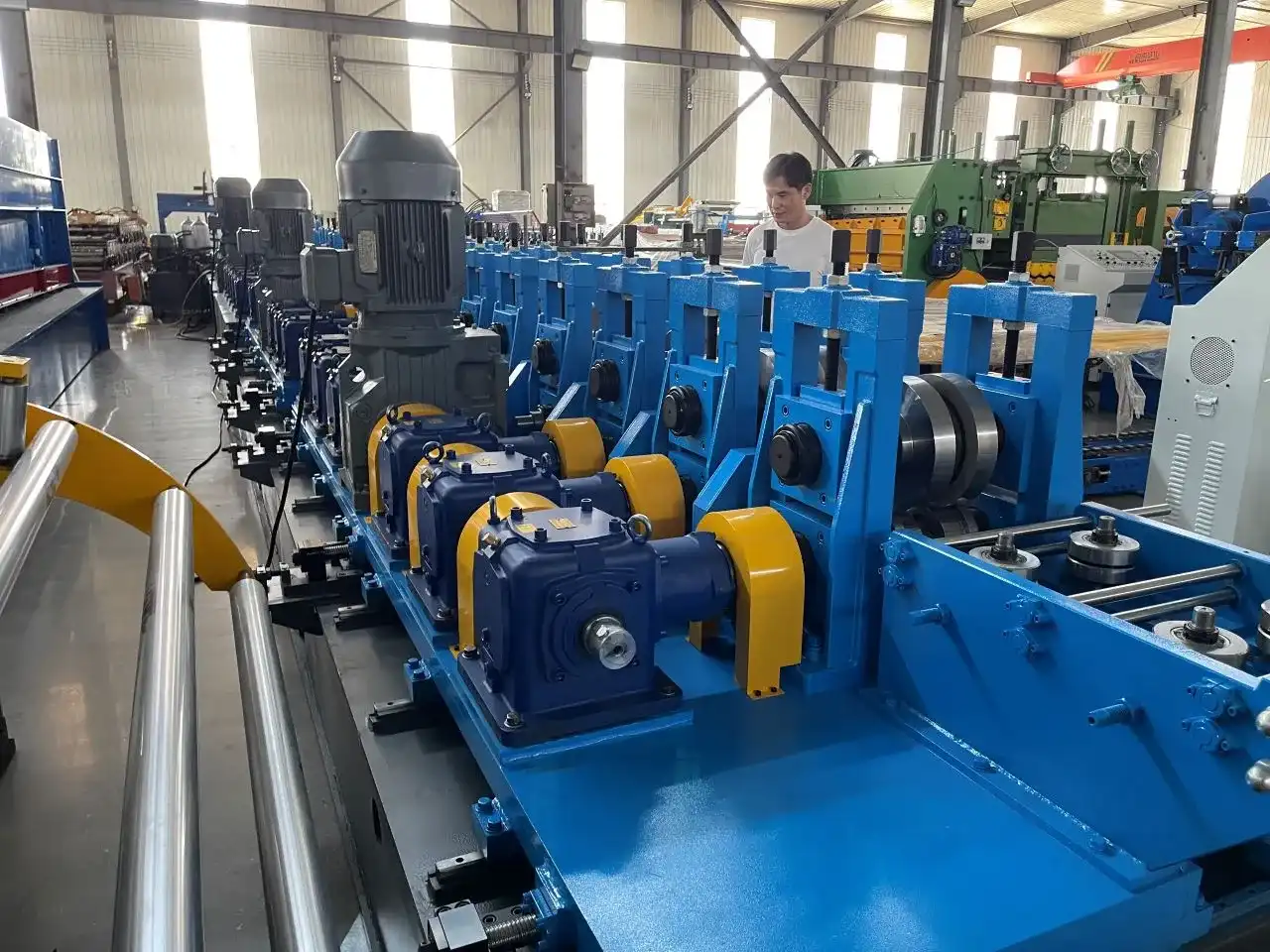
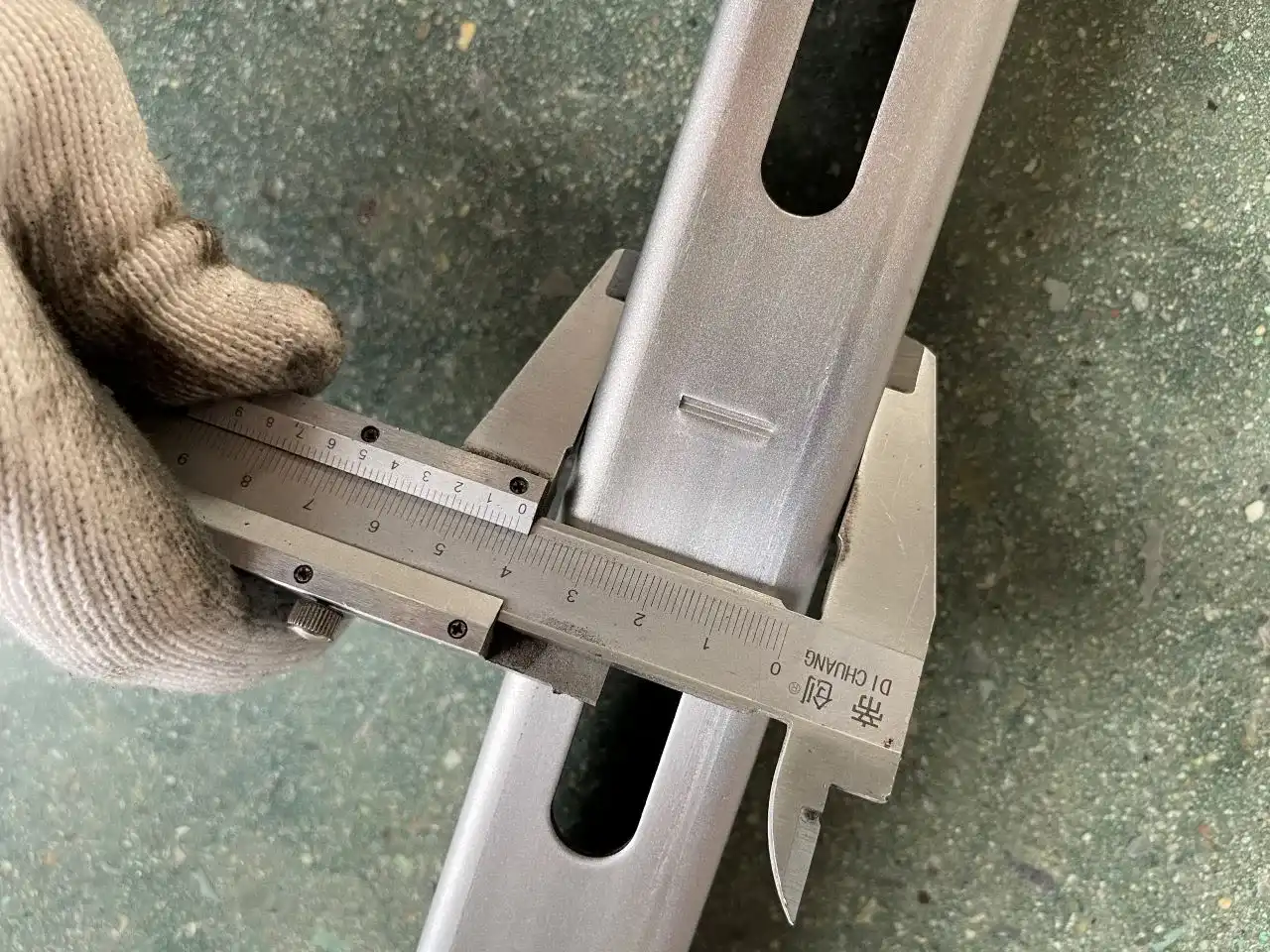
Speed on a data sheet does not mean daily output. The real output depends on the thickness, shape, frequency of punching, length of cut, changes in coils, and skill of the operator. Our Single machine vs complete line cost moves at 8 m/min, so use your own drawings to check that number. The range given is ±1.5 mm, so make sure the parts are straight, the holes are accurate, and the pattern stays the same over long runs. The making rollers are made of GCr15 steel that has been coated in chrome, and the cutter blade is made of Cr12 mold steel that has been quenched. Not just by motor size, but also by how much energy is used per final meter. It is faster for one machine to change to new profiles than for a run of machines to handle things.
Five-Year Total Cost of Ownership
Costs to Include in the Model
The total cost of ownership is the sum of all the costs over three to five years. The NIST Life Cycle Costing Manual combines the costs of purchase, use, upkeep, and renewal into a single figure. Roll forming works the same way. Make a list of the costs for things like freight, customs, installation, operators, electricity, tools, spare parts, maintenance, downtime, scrap, rework, and control upgrades. The power you need is set by our 22 kW main motor and 11 kW hydraulic station. The bill is based on the number of hours you run the machine. Instead of nameplate power, multiply your local electricity rate by the number of hours your business is actually open.
How to Estimate Payback
Payback is easy to figure out. Divide the extra money spent on the whole line by the money saved each year on running costs. Fewer workers, less waste, fewer steps in the handling process, and less downtime all add up to savings. To give you an idea, the line that costs $100,000 more but saves $40,000 a year will pay for itself in 2.5 years. You can set your own hours and wages. Payback takes longer for one shift with low volume, but shorter for two shifts with steady orders. Before you decide, do the math for both options.
Hidden Costs That Change the Result
Amounts can change because of small things. Over five years, the cost of tools for new shapes, extra punch dies, and spare parts adds up. We don't need a second machine because our first one can make struts in a range of sizes, including 41x41, 41x21, and 41x62. This is possible with a quick roll change or servo adjustment. Costs to start up are also affected by things like floor space, power, and lifting equipment. ZTRFM offers installation and training on-site, as well as technical support over the internet and spare parts. Long-term maintenance is also supported by technical support for life and machine records. You should include prices for these services in all of the quotes you look at.
Choosing the Right Setup for Your Business
Match the Option to Your Buyer Profile
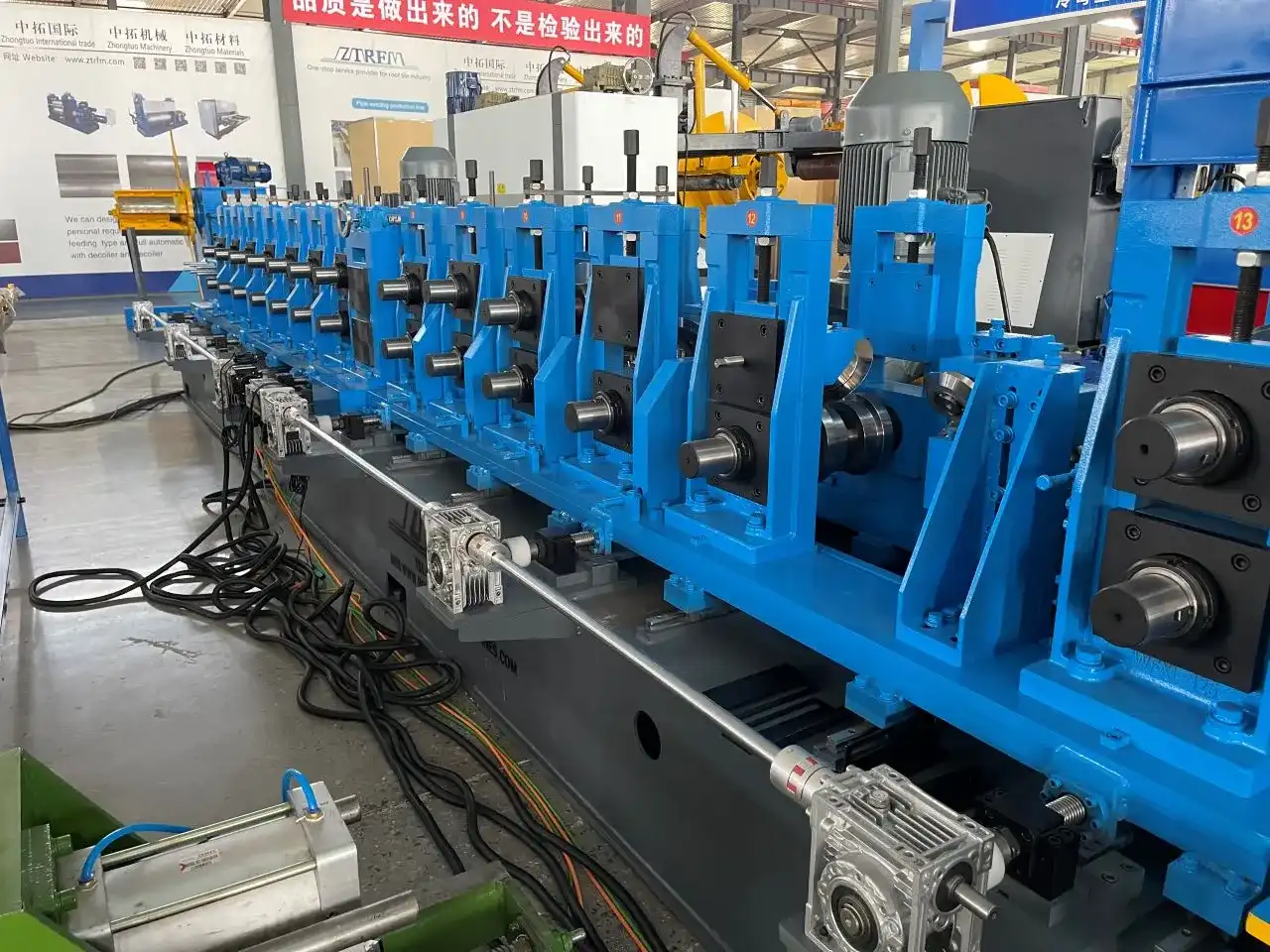
Small businesses and projects entering a new market usually begin with one Single machine vs complete line cost and a small amount of money. With steady orders, established rack makers can often get a lower cost per meter from an integrated line. Distributors and OEM clients need tools that can be used in a variety of sizes, can be changed quickly, and come with clear instructions. For big solar projects to go ahead, the suppliers need to be able to keep working and get the same results every time. Steel service centers that are switching to solar are in the middle of these groups, and they usually do best with slow growth. If everyone agrees in writing who owns each interface, a factory that already has some equipment can add a roll former. ZTRFM also sells OEM and ODM profile-to-order tools.
Avoid Common Procurement Mistakes
Choosing the lowest top price, thinking that nominal speed is the same as real output, ignoring future profiles, and missing site checks are all common mistakes. You should ask for a production test with your chosen material, shape, hole pattern, and cut length. While that test is going on, look over the scrap rate and changeover time. Before shipping, make sure you have the right workshop space, power, floor loading, and operator skills. Check the rollers, shafts, motors, hydraulics, controls, and dies on a used machine, and make sure that parts are available. A written list helps everyone stay on the same page. People who buy from ZTRFM can look at proof that they are certified by ISO 9001, CE, and CAS.
A Practical Decision Path
Pick a single machine if you don't have a lot of money, if your volume is low to medium, if you want to make a wide range of products, or if you already have extra equipment and trained workers. Pick a full line if you know what the demand will be, there isn't a lot of work, punching and cutting need to be done at the same time, and you want to save money per meter over the long run. If you don't know what the demand will be in the future, buy a good core machine now and set aside floor space and control interfaces for when you want to automate later. Our modular design makes it easy to do repairs, make improvements, and add on in the future. Then, look at the delivered cost, the actual output, the labor, the downtime, the quality, and the supplier support.
Conclusion
The decision between a single machine and a whole line is based on the total cost, not the price. It costs less to start up a stand-alone solar strut channel roll forming machine that can adapt to different profiles, but it needs more manual handling and integration work. A full line costs more up front and needs more space and power, but when demand is steady, it can cut down on labor, waste, and downtime. The most accurate comparison is based on a five-year model that includes freight, installation, tools, energy, spare parts, service, and five years of use. Real drawings and materials are used in production tests to confirm output and quality. People who don't know how much demand there will be can start with a core machine and save space for automation later.
FAQ
1. Is a complete line always more expensive?
It costs more to buy because it comes with tools for decoiling, punching, cutting, and stacking. You usually have to buy extra things for those steps with single machines. Over time, lower costs for labor, scrap, and handling may make up the difference, based on your output, shifts, and local wages.
2. Can one machine make different strut sizes?
Yes. You can quickly change the rolls or make servo adjustments on our solar strut channel roll forming machine to make sizes like 41x41, 41x21, and 41x62. With this method, you don't have to buy two separate machines. Our engineers need to see your profile drawings to make sure that each size is correct.
3. Can I add automation later?
Most of the time, yes, as long as you plan ahead. Our modular design makes it easy to do repairs, make improvements, and add on in the future. Plan your growth now and share it with the company when you ask for a quote on floor space and control tools.
Request a Solar Strut Channel Roll Forming Machine Quote from ZTRFM
ZTRFM, which stands for Cangzhou Zhongtuo, has been making cold roll forming machines since 2014 and sends them to more than 150 countries. Looking for a company that makes solar strut channel roll forming machines? Email zhongtuorollforming@gmail.comandsend your profile drawings along with the material grade, thickness, hole pattern, and output you want to achieve. For your plant, our engineers will look at both a single machine and a whole line. We respond with a suggested setup and a quote with all the necessary parts.
References
1. U.S. Solar Market Insight 2024 Year in Review, SEIA and Wood Mackenzie, 2025
2. Life Cycle Costing Manual for the Federal Energy Management Program, NIST Handbook 135, 1996
3. Roll Forming Handbook, CRC Press, 2006
4. Metal Forming: Mechanics and Metallurgy, Cambridge University Press, 2011
5. Machinery Directive 2006/42/EC, European Parliament and Council, 2006
6. ISO 9001:2015 Quality Management Systems Requirements, ISO, 2015