- English
- French
- German
- Portuguese
- Spanish
- Russian
- Japanese
- Korean
- Arabic
- Irish
- Greek
- Turkish
- Italian
- Danish
- Romanian
- Indonesian
- Czech
- Afrikaans
- Swedish
- Polish
- Basque
- Catalan
- Esperanto
- Hindi
- Lao
- Albanian
- Amharic
- Armenian
- Azerbaijani
- Belarusian
- Bengali
- Bosnian
- Bulgarian
- Cebuano
- Chichewa
- Corsican
- Croatian
- Dutch
- Estonian
- Filipino
- Finnish
- Frisian
- Galician
- Georgian
- Gujarati
- Haitian
- Hausa
- Hawaiian
- Hebrew
- Hmong
- Hungarian
- Icelandic
- Igbo
- Javanese
- Kannada
- Kazakh
- Khmer
- Kurdish
- Kyrgyz
- Latin
- Latvian
- Lithuanian
- Luxembou..
- Macedonian
- Malagasy
- Malay
- Malayalam
- Maltese
- Maori
- Marathi
- Mongolian
- Burmese
- Nepali
- Norwegian
- Pashto
- Persian
- Punjabi
- Serbian
- Sesotho
- Sinhala
- Slovak
- Slovenian
- Somali
- Samoan
- Scots Gaelic
- Shona
- Sindhi
- Sundanese
- Swahili
- Tajik
- Tamil
- Telugu
- Thai
- Ukrainian
- Urdu
- Uzbek
- Vietnamese
- Welsh
- Xhosa
- Yiddish
- Yoruba
- Zulu
Mold Changeover Too Slow? Cut It With These Steps
If your production floor is losing hours every time you switch profile sizes, you're not alone. Slow mold changeover is one of the most common bottlenecks in purlin roll forming machine operations, and it directly cuts into your throughput, delivery schedules, and bottom line. Whether you're producing C purlins, Z purlins, or other structural sections for steel warehouses or PEB projects, getting changeover time under control is one of the fastest ways to reclaim lost productivity. This guide walks through the root causes and practical steps to fix them.
Understanding the Mold Changeover Challenge in Purlin Roll Forming Machines
Mold switching is the process of moving a roll-making line so that it can make profiles of different sizes or shapes. To meet a new structural requirement, this could mean changing the web width, flange height, or lip dimension on a C/Z purlin line. It seems simple, but it's not always that way in real life.
What Slows Things Down?
Most delays happen because of manual adjustment steps that require operators to move roll stations, switch tooling sets, and measure alignment again by hand. This step can take up to four hours for each changeover on older servers. That's time lost on production.
Key Machine Components Involved
Changing the size of the roll stations, shaft-mounted tools, side guides, and punching dies all need to be done very carefully. Profile distortion happens when there is even a small mismatch across several stations. This means that more time is lost to scrap and repair, and the line never runs smoothly again.
Why It Matters Commercially
For a PEB maker or structural steel cutter who works with multiple profile sizes during the shift, every hour of downtime means that orders are late and relationships with clients are stressed. According to the Lean Enterprise Institute, one of the top five reasons why equipment in metal fabrication environments isn't working as well as it should be is unplanned changeover delays.
Analyzing the Causes of Slow Mold Changeover: Bottlenecks and Inefficiencies
It's important to know where the time is going before you can fix the problem. I've seen the same patterns happen over and over again when I've worked with manufacturers in different markets.
Manual Adjustments Without SOPs
Every shift takes a different amount of time when workers don't use written processes but instead rely on memory or unwritten rules. Without measurements, there is no starting point, no rule, and no way to make things better. One missed step can throw everything off, and you'll have to start over from the beginning.
Machine Design Limitations
At every roll station, fully manual purlin roll forming machines need to be worked on with wrenches. This is less of a problem with semi-automatic tools that have controlled adjustments on some axes. A touchscreen lets fully automatic systems with PLC controls and motorized linear guides handle changes in size. Changeover times vary a lot between these three levels. On average, manual systems take 2–4 hours, while fully automatic lines do the same thing in 1–5 minutes.
Mechanical Wear and Poor Maintenance
When roll tools or mounting hardware are worn out or corroded, it's harder to take things apart and align them again precisely. When rollers get worn down and lose their shape, the process takes longer each time. This is especially true when working with high-tensile steels like G450 or G550.
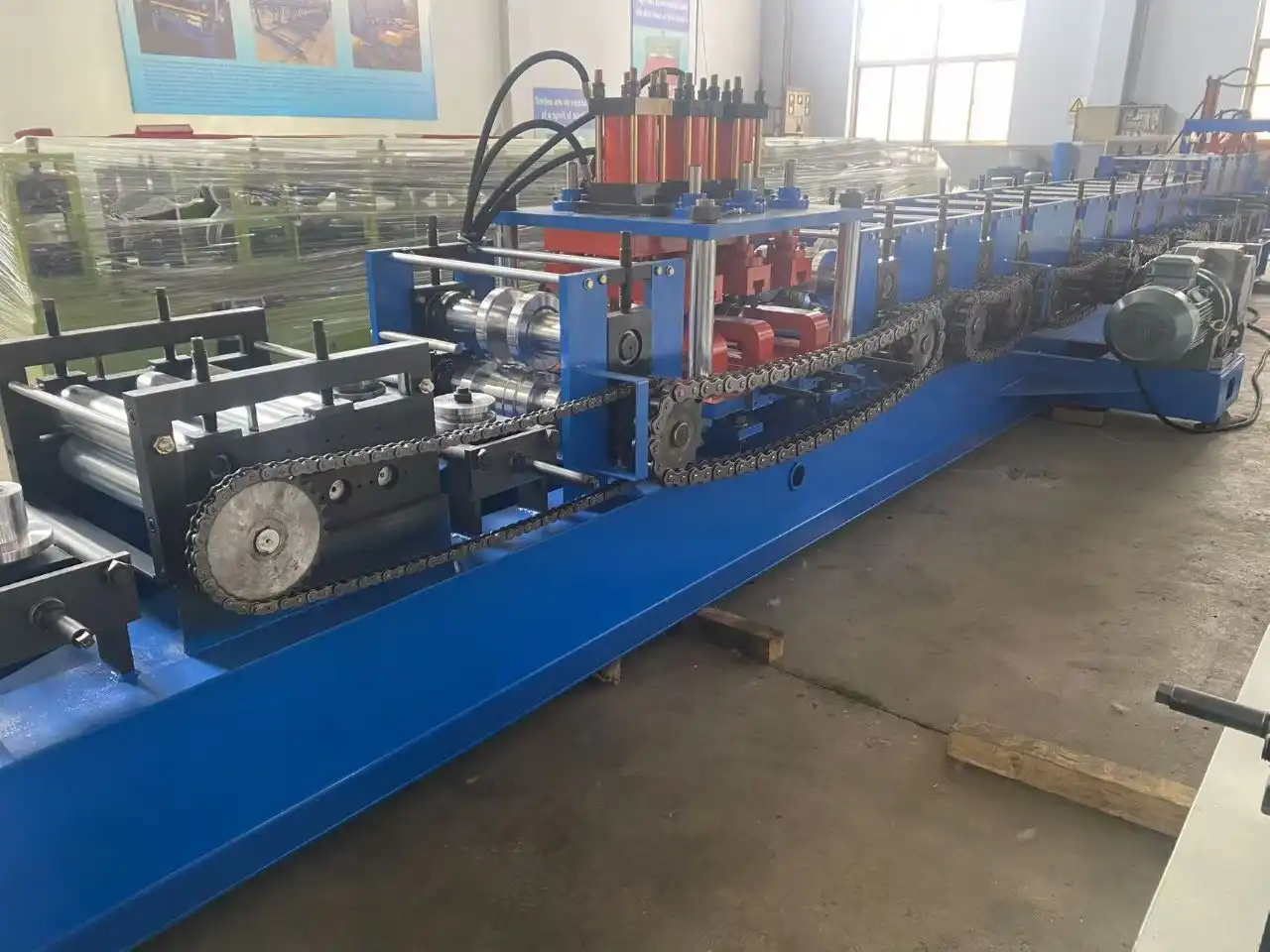
Step-by-Step Solutions to Accelerate Mold Changeover
To speed up changeover, you shouldn't skimp on steps; instead, you should create a process that can be used over and over again with enough resources. The scale moves because of these steps.
Step 1 — Pre-Changeover Preparation
Make sure the machine has all the screws, measuring tools, and tools that it needs before the line stops. A simple list will save you time because you won't have to look for tools every time the work is done. Getting ready outside of shift doesn't use up any of your shift time.
Step 2 — Implement Standard Operating Procedures
Note down each step of the process of switching over. Tell people in certain jobs what they need to do. Time each step during practice runs to find out where you're losing time. Follow the same steps every time to keep things from going wrong and give your team a clear goal to work toward.
Step 3 — Invest in Quick-Release and Modular Tooling
Quick-release clamps and flexible mold boxes make it easy to switch them out without any tools. This saves time. On a Z purlin line, instead of setting up one station at a time, modular tooling sets that are already set up for different web widths can be put in place all at once. It can be done in more than half the time with this.
These steps take care of most of the things that cause delays. They work together to make a shift process that can be planned, done again, and tracked. Things can keep getting better over time because of this.
Step 4 — Upgrade to Automatic Size Adjustment
It is clear that a C/Z purlin roll forming machine can help a company that changes sizes a lot. Fully automatic systems don't need any help from people because they have linear lines controlled by a PLC and changes made by servos. With the push of a button, the remote can get the size information. It keeps the profile right on its own, so there are fewer test runs and less loss.
Real-World Success Stories: How Leading Manufacturers Cut Mold Changeover Times
Case 1 — Small Fabricator Moves From Manual to Semi-Automatic
When that person used a manual C purlin line, it took them about three hours to switch between four different sizes of purlins. Their switching time went from more than 40 minutes to less than 20 minutes after they moved to a system that was partly automatic and had motorized flange adjustment. Because of this, their rate of on-time deliveries went up, and the time lost each year for changeovers dropped by over 60%.
Case 2 — OEM Supplier Integrates Smart Mold Management
There is a link between a company that sells PEB parts and makes Z purlins for many builders and a system that plans upkeep. Instead of treating size changes as separate events, they planned them around roller checks. This cut down on unplanned stops by 35% and cut the usual wait time for big orders by two weeks.
When makers see changeover as a real production engineering problem instead of just a practical annoyance, they get results like the ones shown.
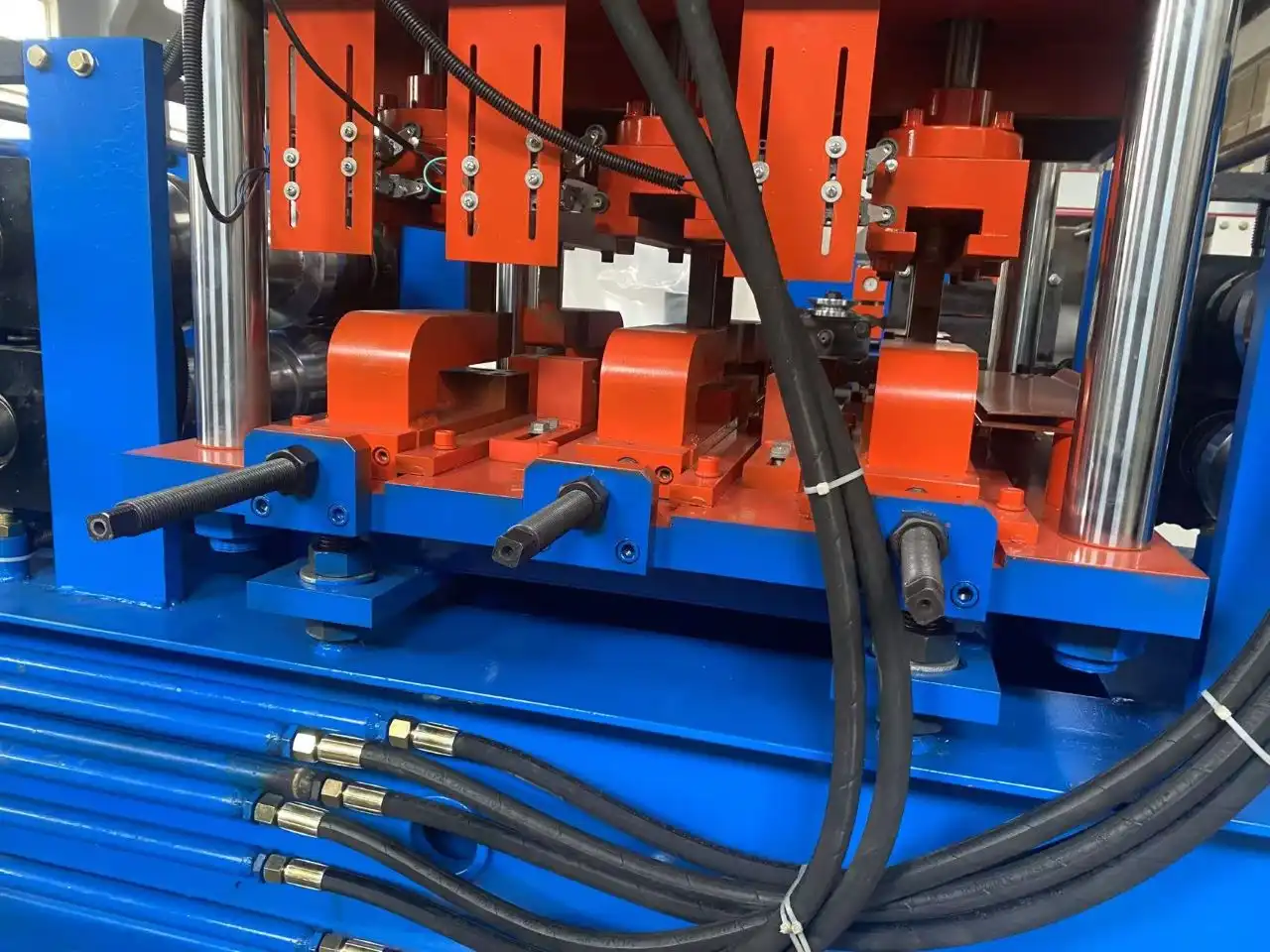
Maintenance and Safety Tips for Sustaining Efficient Mold Changeover
Fast changeover will stay fast as long as the tools are in good shape. The work you've made will stay safe as long as you do upkeep on it.
Routine Inspection Schedule
The sides of the roll tools should be checked for grooves, chips, or bending every 50,000 meters of production. If you heat-treat Cr12MoV steel to HRC 58–62, the rollers will keep their shape well under normal loads. But high-tensile coil stock will make them wear out faster. That needs to be fixed in the middle of a shift? If you catch wear early, you can stop it.
Lubrication and Cleaning
Every time you switch over, make sure to clean all of the rails and fixing surfaces. Make sure the shafts and adjustment mechanisms are always oiled with the right oil. The guides may take longer to fix if they are dirty or dry. This can cause moving parts to wear out more quickly.
Safety Protocols During Changeover
Always follow the lockout/tagout (LOTO) steps before removing or putting on roll tools. For big plastic cassettes, you need the right tools to lift them. Don't touch them if they are too heavy to move by hand. Safety glasses and gloves that won't cut should be worn by everyone throughout the whole process. Because they get safety training all the time, these habits don't change from shift to shift.
Conclusion
Changing molds slowly costs real money. Good news: the problem can be fixed by any size of maker, from a small one to a big PEB maker using a purlin roll forming machine. You can get shorter and more regular switch cycles if you plan ahead, write down steps, make better tools, and use just the right amount of automation. First, write down where your time is going. After that, do the steps that work best for your tools and level of production. You can notice the changes right away.
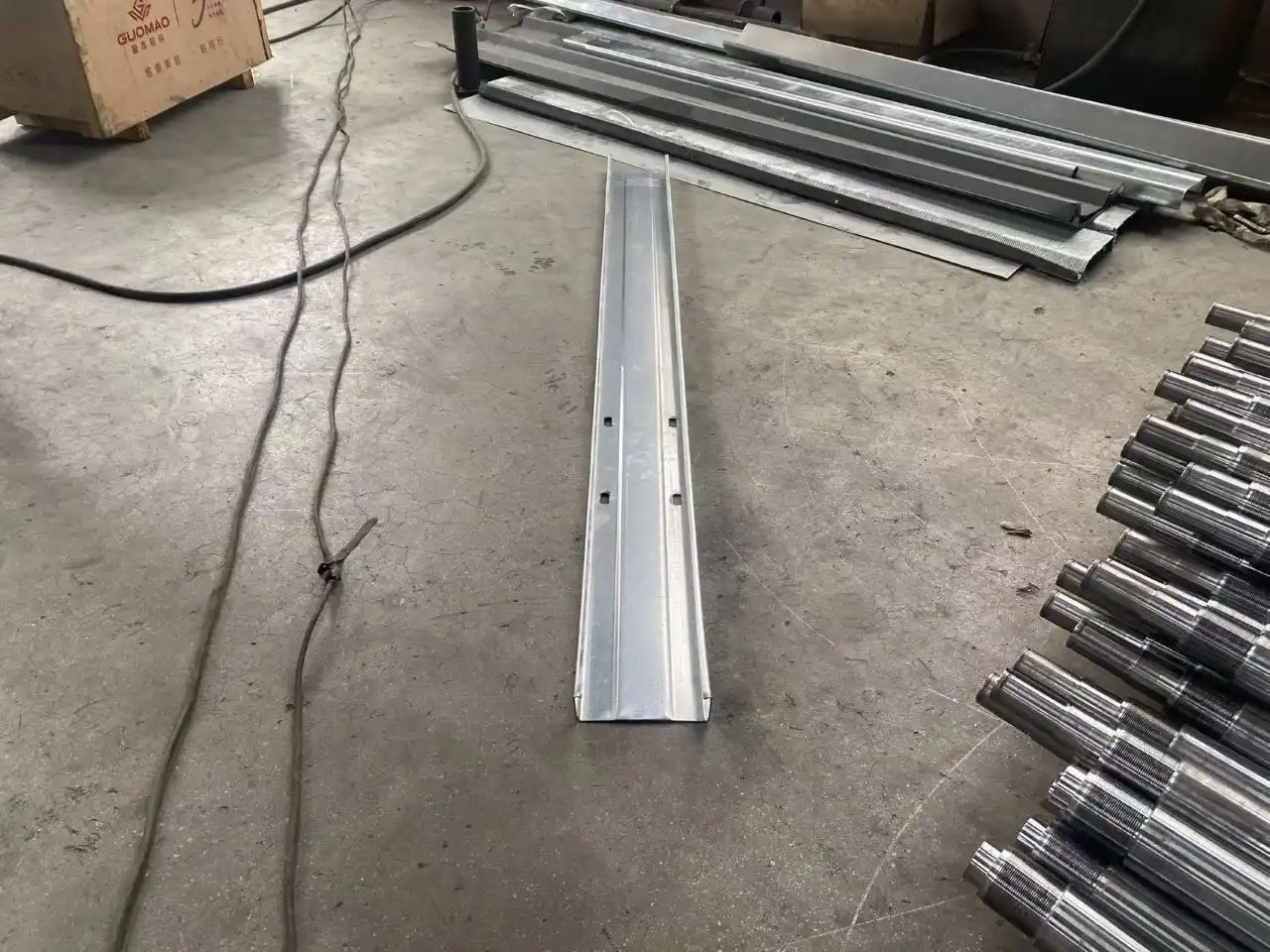
FAQ
1. How often should mold changeover happen on a purlin line?
Changeover frequency depends entirely on your order mix. A shop running a single profile size might change over weekly. A facility producing multiple C and Z sizes for different projects may change over multiple times per shift. The goal is to make each changeover fast enough that frequency becomes a non-issue.
2. What's a realistic changeover time target?
With manual equipment, two hours is a reasonable starting target if you implement good SOPs and preparation. Semi-automatic systems can achieve 30–60 minutes. Fully automatic PLC-controlled lines achieve 1–5 minutes for size-to-size transitions within the machine's range.
3. Are automatic changeover systems cost-effective for smaller operations?
Yes, particularly if you're running more than three or four different profile sizes regularly. The reduced labor cost, lower scrap rates, and faster throughput typically offset the equipment investment within one to two years, depending on production volume.
4. What causes profile twisting during or after changeover?
Twisting in asymmetrical profiles like Z purlins usually results from residual stress in the strip or misaligned exit guides. A properly configured straightening unit at the machine exit corrects this. Always verify exit guide settings as part of your changeover checklist.
Ready to Cut Your Changeover Time? Talk to ZTRFM
There have been making cold roll forming machines made by ZTRFM since 2014. There are ISO9001, CE, and CAS marks on their products, and they've been sent to more than 150 countries. Our automatic C/Z purlin roll forming machine for sale has a flying shear that cuts after the cut, size adjustment that is controlled by a PLC, and modular tooling systems. It was made to cut down on downtime and make accurate profiles in places where a lot of them are made. Let me know if the line you're on now is making you wait. Email zhongtuorollforming@gmail.com to get technical help and product suggestions that fit your production needs.
References
1. Lean Enterprise Institute. Lean Lexicon: A Graphical Glossary for Lean Thinkers. 5th ed., 2014.
2. Shingo, Shigeo. A Revolution in Manufacturing: The SMED System. Productivity Press, 1985.
3. Metal Construction News. Advances in Purlin and Girt Manufacturing for Pre-Engineered Buildings. 2021.
4. American Iron and Steel Institute (AISI). Cold-Formed Steel Design Manual. 2016.
5. Society of Manufacturing Engineers. Tool and Manufacturing Engineers Handbook: Forming. Vol. 2, 1984.
6. International Journal of Advanced Manufacturing Technology. Optimization of Roll Forming Process Parameters for Cold-Formed Structural Sections. Springer, 2019.