- English
- French
- German
- Portuguese
- Spanish
- Russian
- Japanese
- Korean
- Arabic
- Irish
- Greek
- Turkish
- Italian
- Danish
- Romanian
- Indonesian
- Czech
- Afrikaans
- Swedish
- Polish
- Basque
- Catalan
- Esperanto
- Hindi
- Lao
- Albanian
- Amharic
- Armenian
- Azerbaijani
- Belarusian
- Bengali
- Bosnian
- Bulgarian
- Cebuano
- Chichewa
- Corsican
- Croatian
- Dutch
- Estonian
- Filipino
- Finnish
- Frisian
- Galician
- Georgian
- Gujarati
- Haitian
- Hausa
- Hawaiian
- Hebrew
- Hmong
- Hungarian
- Icelandic
- Igbo
- Javanese
- Kannada
- Kazakh
- Khmer
- Kurdish
- Kyrgyz
- Latin
- Latvian
- Lithuanian
- Luxembou..
- Macedonian
- Malagasy
- Malay
- Malayalam
- Maltese
- Maori
- Marathi
- Mongolian
- Burmese
- Nepali
- Norwegian
- Pashto
- Persian
- Punjabi
- Serbian
- Sesotho
- Sinhala
- Slovak
- Slovenian
- Somali
- Samoan
- Scots Gaelic
- Shona
- Sindhi
- Sundanese
- Swahili
- Tajik
- Tamil
- Telugu
- Thai
- Ukrainian
- Urdu
- Uzbek
- Vietnamese
- Welsh
- Xhosa
- Yiddish
- Yoruba
- Zulu
How to reduce scrap rate in roll forming?
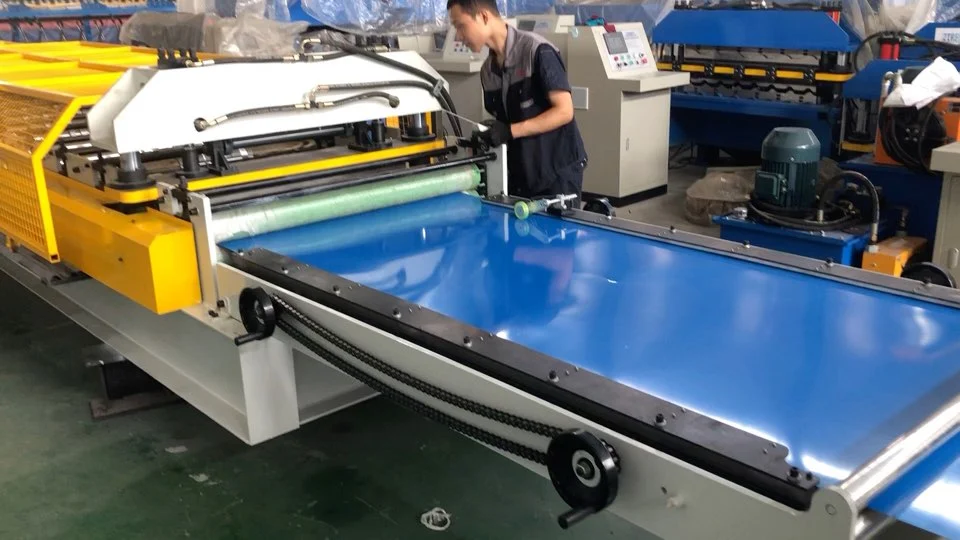
First, I measure the part. Then, I fix the three most common causes of waste in roll forming: variations in the coil, mistakes in the setup, and inaccurate cutting. It is helpful to have a well-built AG panel roll forming machine with stable roller alignment, repeatable PLC cut lengths, and low-speed test runs before full production. If you do preventative maintenance and use your own coil for a factory acceptance test, you can see a clear drop in the amount of startup waste and rejected panels. The sections that follow explain how I keep track of scrap, figure out what causes it, manage the process, and pick tools that will keep your coil investment safe.
Measure Scrap and Find Its Root Causes Where Scrap Appears in an AG Panel Line
In the process of making AG panels, scrap shows up at several stages, including coil threading, startup, forming, cutting, stacking, and handling. It costs something different at each point. Every time you thread a new coil, you lose some material. This means that shops that do a lot of short orders lose more material than shops that do a lot of long orders. Panels are broken if they are the wrong length, have a distorted profile, have paint that is scratched, or have burrs at the cut edge. The AG profile is usually sold with 36 inches of coverage and 3/4-inch ribs spaced 9 inches apart. There isn't much room for error with the ribs because side laps on barns and sheds need to close tightly. It might look better to go faster, but a line that isn't stable at speed wastes more coil than a line that is stable at a moderate speed.

How to Build a Scrap Baseline
Before I do anything else, I figure out the scrap rate, which is the weight of the scrap divided by the weight of the whole coil and then multiplied by 100. Then I divided that number into waste from the beginning, waste from the end, defective panels, damaged coil, and handling loss. One monthly total doesn't show patterns that can be seen when you log each coil by its thickness, width, coating, shift, operator, and order. For instance, if a lot of rejects happen on one shift or one coil supplier, it's not the machine's fault; it's the material or the way it's being used. You can beat your old record every two weeks, and you can show that each change worked.
Main Causes of Scrap in Roll Forming
Most of the scrap comes from six places: different types of material, AG panel roll forming machine setup, tools, cutting, operator practice, and maintenance. A profile can be messed up before the first roller even touches a coil that doesn't have the right yield strength, camber, or thickness drift. Bow, twist, and waviness, which is also known as "oil canning" on thin flat sections, are caused by misaligned guides, too much roll pressure, and uneven station loading. Cutting mistakes happen because of the encoder's calibration, the blade's clearance, the hydraulic pressure, or the PLC's timing. Maintenance that wasn't done and setups that were done quickly hide the real problem. I think you should change one variable at a time to get to the root cause.
Control the Process, Automate the Line, and Maintain the Rollers
Controlled Setup and Low-Speed Trials
A written start-up routine takes the guesswork out of it. Before the line moves, the operators check the approved drawing, the coil specification, the alignment of the guides, the roll gaps, the cut length, and the safety conditions. After a low-speed test, they check the straightness, surface finish, rib height, and cover width. Then they move on to production speed. By putting the entry guides in place and centering the coil on the decoiler, you can protect pre-painted steel from edge damage, buckling, and scratches. Fewer emergency stops and smoother acceleration cut down on restart waste, since each stop leaves a piece of panel that needs to be checked or thrown away. This process only takes minutes but saves a lot of coil.

PLC Recipes and Sensors Reduce Operator Variation
With automation, results can be repeated between shifts. A PLC keeps track of profile parameters, manages the shear sequence, sets the speed and cut length, and stores alarms. With a Siemens PLC and a hydraulic flying shear, ZTRFM lines can be cut to length without stopping the coil. Overload, coil position, encoder length, hydraulic pressure, and pressure can all be tracked by sensors. Fully automatic lines are best for high volumes and repeat orders, while semi-automatic lines are better for small batches or changes that happen often. ZTRFM has quick-change cassette tooling for shops that work with more than one profile. This cuts down on changeover time and trial material when you switch profiles.
Preventive Maintenance That Protects Profile Accuracy
Long before a bad panel is seen, worn rollers and loose shafts cause scrap. Every day, I clean the rollers and guides, check the coil feeding, look for leaks in the hydraulic oil, check the condition of the blades, and go over the PLC alarms. Roller wear, shaft alignment, bearings, lubrication, fasteners, sensors, and encoder calibration are all checked once a week and once a month. It costs less to replace a worn roller early than to sort a batch that was rejected. The material of the rollers is important. ZTRFM rollers are made of forged 40Cr or 45# steel that has been hardened and hard-chrome plated. This makes the rollers resistant to wear and surface marks on coated coil. Remote diagnostics through the Siemens cloud IoT also help our support team figure out what's wrong.
Choose and Verify the Right Roll Forming Line
Roll Forming Versus Traditional Panel Production
Unlike brake bending or making things by hand, an AG panel roll forming machine works with coils all the time, which saves material and makes sure that profile dimensions stay the same over long runs. Programmable cutting gets rid of the need to measure by hand, and continuous lengths get rid of end laps, which makes it less likely that large roofs will leak. These records also show that each panel can be traced back to its coil. When you need to make a long run of panels, a roll former is better than a bending brake for shorter runs. For one-of-a-kind shapes, very short runs, or materials that aren't easy to shape, the old ways still work. I believe that the choice should be based on quantity, variety of products, labor, and the cost of each meter that is thrown away.
Select the Machine by Material and Profile
Start with the real data: the width, thickness, weight, coating, yield strength, and profile drawing of the coil. Then check the floor space, cutting method, power, forming stations, and shaft size. Steel and aluminum spring back in different ways, so the settings for each need to be checked. The ZTRFM can work with PPGI, GI, Al-Zn, and aluminum coil, and profile-to-order tooling can increase the gauge range to between 0.3 and 1.2 mm. Every quote should include the capacity, voltage, and number of spare roller sets for the decoiler, so you can compare prices fairly. A free manual decoiler comes with a lot of ZTRFM models. Based in Botou, Cangzhou, ZTRFM has been in business since 2014 and ships to more than 150 countries. It is certified by ISO 9001, CE, and CAS.
Common Mistakes That Raise Scrap
The cheapest quote might cost more. After buying something, it's common for missing parts, soft rollers, weak electrical parts, or poor technical support to show up. Trying to reach the top speed leads to distortion, cut errors, and a lot of stops, which lowers the real output. The wrong settings are made when differences in thickness, coating, or alloy are ignored. Problems are also missed when only the roll former is looked at, since decoiling, guiding, cutting, stacking, controls, layout, and power all have an effect on scrap. I think you should buy the line as a whole. Each piece in ZTRFM's one-stop lines fits with the others, from the decoiler and roll former to the stacker and spare parts.
Verify With a Trial Run Before Shipment
Before the line leaves the factory, a factory acceptance test gives you proof. Ask for runs at low, medium, and target speed, and send your own coil and profile drawing. Check the size, straightness, quality of the surface, cut length, stacking, and startup scrap. Include in the contract the acceptance criteria, such as the maximum amount of scrap, the allowed tolerances, the marks that can be used, and the number of consecutive good panels. ZTRFM gives you a pre-shipment trial-run video with your coil, which is something that U.S. buyers usually ask for, and you can sign an NDA to protect the tooling drawings. The production report should be used as a starting point for future improvements.
Conclusion
Variations in the coil, mistakes in setup, tool wear, inaccurate cutting, and unstable speed are all things that can be measured as causes of scrap in roll forming. That's where waste starts when you keep track of the scrap rate by coil, shift, and profile. Losses are cut down with controlled setups, low-speed trials, PLC recipes, and preventative maintenance. Results stay the same with a full line that is matched to the material and profile. Roll forming also lets you process things continuously and keep the same sizes, which is something that traditional methods can't do on long runs. Before production starts, the chosen AG panel roll forming machine is put through a factory acceptance test with the buyer's own coil to make sure it meets the agreed-upon scrap and tolerance limits.

FAQ
1. What scrap rate should I expect from an AG panel roll forming machine?
There is no one number that fits. Rate is based on profile, coil, order length, setup frequency, and how well the operator follows the rules. First, find your starting point. Then, work with your supplier to set a goal for the acceptance test.
2. Does a faster line produce more scrap?
Yes, it can. Deformation and cut errors go up when the rollers, guides, or shear aren't tuned for the speed. Stops and starts also waste time. First try it at low, medium, and target speeds. Then pick the speed that gives you the best panels.
3. Can one machine run different gauges and materials?
Yes, within the range it was made for, but the settings change. Rolling a coil that is thicker or harder needs a different amount of pressure, and steel springs back differently than aluminum. With custom tools, ZTRFM can increase the gauge range by 0.3 to 1.2 mm. Send us the data from your coil so we can look it over.
Request a Low-Scrap AG Panel Roll Forming Machine Quote from ZTRFM
ZTRFM, an AG panel roll forming machine company based in Botou that was started in 2014, will look over your profile drawing, coil gauge, and output target. Then, we suggest a line with Siemens PLC control, hardened rollers with chrome plating, and a video of a trial run with your own coil. Send your specs today to zhongtuorollforming@gmail.com for more information.

References
1. Roll Forming Handbook, CRC Press, 2005
2. Metal Forming Handbook (Schuler), Springer, 1998
3. Fundamentals of Modern Manufacturing, Wiley, 2019
4. Lean Thinking, Free Press, 2003
5. ISO 9001:2015 Quality Management Systems – Requirements, International Organization for Standardization, 2015
6. North American Specification for the Design of Cold-Formed Steel Structural Members (AISI S100), American Iron and Steel Institute, 2016