- English
- French
- German
- Portuguese
- Spanish
- Russian
- Japanese
- Korean
- Arabic
- Irish
- Greek
- Turkish
- Italian
- Danish
- Romanian
- Indonesian
- Czech
- Afrikaans
- Swedish
- Polish
- Basque
- Catalan
- Esperanto
- Hindi
- Lao
- Albanian
- Amharic
- Armenian
- Azerbaijani
- Belarusian
- Bengali
- Bosnian
- Bulgarian
- Cebuano
- Chichewa
- Corsican
- Croatian
- Dutch
- Estonian
- Filipino
- Finnish
- Frisian
- Galician
- Georgian
- Gujarati
- Haitian
- Hausa
- Hawaiian
- Hebrew
- Hmong
- Hungarian
- Icelandic
- Igbo
- Javanese
- Kannada
- Kazakh
- Khmer
- Kurdish
- Kyrgyz
- Latin
- Latvian
- Lithuanian
- Luxembou..
- Macedonian
- Malagasy
- Malay
- Malayalam
- Maltese
- Maori
- Marathi
- Mongolian
- Burmese
- Nepali
- Norwegian
- Pashto
- Persian
- Punjabi
- Serbian
- Sesotho
- Sinhala
- Slovak
- Slovenian
- Somali
- Samoan
- Scots Gaelic
- Shona
- Sindhi
- Sundanese
- Swahili
- Tajik
- Tamil
- Telugu
- Thai
- Ukrainian
- Urdu
- Uzbek
- Vietnamese
- Welsh
- Xhosa
- Yiddish
- Yoruba
- Zulu
How to Maintain Your Trapezoidal Sheet Roll Forming Machine for Longevity
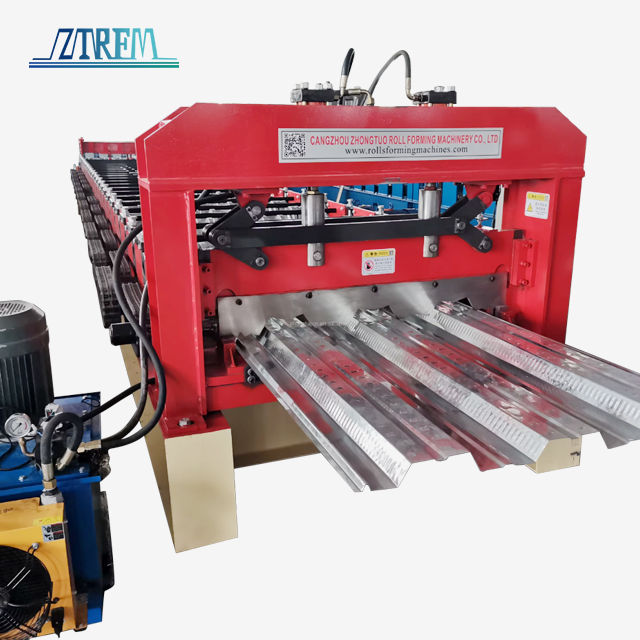
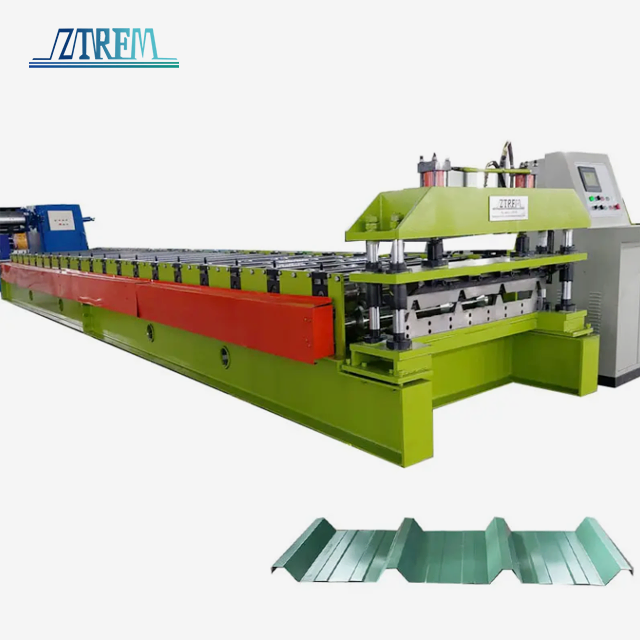
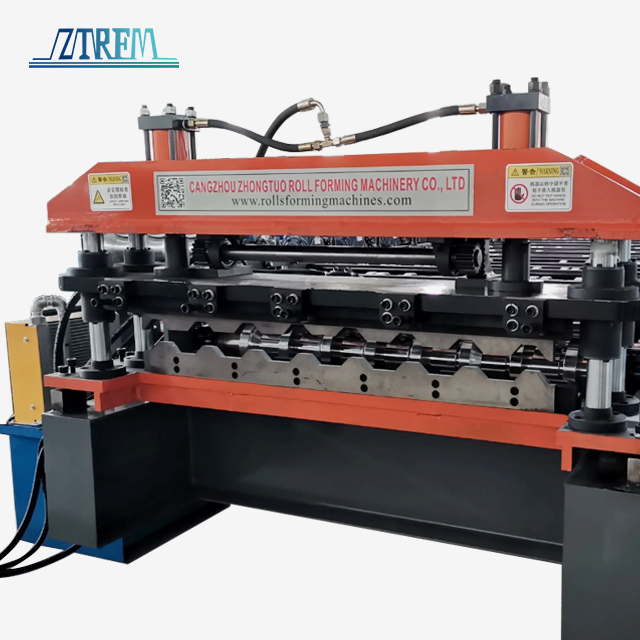
Maintaining your trapezoidal sheet roll forming machine isn't just about preventing breakdowns—it's about protecting your production investment and ensuring consistent quality for years to come. A well-maintained machine operates at peak forming speeds of up to 60 meters per minute while producing precision roofing and wall panels with tolerances as tight as ±1mm. When you invest in proper upkeep, you're safeguarding your production capacity, reducing scrap rates, and extending equipment lifespan well beyond industry averages. Whether you're running a high-volume roofing manufacturer or a startup in the metal forming sector, these proven maintenance strategies will help you maximize your return on investment while minimizing costly downtime.
Understanding the Common Maintenance Challenges of Trapezoidal Sheet Roll Forming Machines
Not only does maintaining your trapezoidal sheet roll forming machine keep it from breaking down, but it also protects your business investment and makes sure that the quality stays the same for years to come. When the machine is well taken care of, it can form metal at speeds of up to 60 meters per minute and make roof and wall panels with an accuracy of as little as 1mm. When you spend money on proper maintenance, you protect your production capacity, lower the amount of waste, and make tools last much longer than the average in your industry. Whether you're a large roofing company or a new company in the metal forming industry, these tried-and-true maintenance tips will help you get the most out of your investment and avoid costly downtime.
Every production manager knows how frustrating it is when a queue that is making things stops working in the middle of a shift. There are a few problems that keep happening with trapezoidal sheet roll forming machines that can make you lose money if you don't fix them.
Bearing Wear and Roller Degradation
The continuous pressure of metal formation stresses bearing systems and roller surfaces. Even little bearing play may produce profile changes when dealing with 0.3 mm to 1 mm solids at high speeds. Old rollers lose their chrome shine, scratching pre-painted galvanized sheets. This defect prompts buyers to reject sheets, wasting material.
Hydraulic System Vulnerabilities
Pressure fluctuations and seals wear out in 7.5 kW hydraulic cutting systems. Leaking hydraulic fluid not only endangers individuals but also hinders precision cutting, affecting tolerance within ±1mm. Burrs on sheet sides and uneven cuts from hydraulic pressure variations slow down productivity.
Electrical and Control System Faults
These days, PLC-based control systems determine everything from material feeding rate to batch duration. Dust on circuit boards, poor wiring, and voltage variations may create system errors that terminate output without notice. Electrical issues like irregular forming rates or erroneous length readings make it unable to satisfy customers' 3–to 20-foot length demands.
Poor maintenance causes greater energy costs since motors have to work harder to overcome mechanical resistance, higher scrap rates that cut into revenues, and safety issues that put your firm at danger of being sued. Early detection of these tendencies allows procurement teams and plant engineers to plan ahead rather than hurry to address issues before deadlines.

Essential Maintenance Practices to Extend Machine Longevity
Setting up a regular repair schedule for your trapezoidal sheet roll forming machine will turn it from a possible risk into a reliable production machine. The machines we make at ZTRFM are built to last, but even the strongest cast iron frame and 80mm solid steel shafts need regular maintenance to last for decades.
Daily Inspection and Cleaning Protocols
The start-of-shift inspection takes less than 15 minutes yet saves hours of downtime. Operators must check all 26 roller stations for metal, ensure the drive system sounds smooth and doesn't rattle, and check the hydraulic cutting blade for chips or deformations. Chrome-plated rollers may be cleaned with a lint-free cloth to remove metal dust that might harm your next set of aluminium or PPGI coils.
Strategic Lubrication Management
Performing proper lubrication is the most crucial maintenance activity. Your machine's 45# steel parts need consistent film strength to avoid metal contact. We recommend adding manufacturer-recommended industrial lubricants to bearing housings weekly and monitoring gearbox gear oil monthly. Concentrate on solid shaft bearings. Without adequate lubrication, they will wear out more quickly and shift, altering your profile.
Automated lubrication systems that distribute exact volumes of oil at predetermined intervals are helpful for high-volume activities at the fastest forming speed of 60 meters per minute. This eliminates human error, which might cause too much or too little lubrication.
Alignment and Calibration Procedures
The profile correctness relies on roller alignment at all manufacturing sites. To maintain design tolerances, verify rib height, bottom width, and effective cover width monthly using dial indicators. Misalignment as minor as 0.05 mm might cause panels to nest improperly during installation or have oil-canning consequences on finished roofs.
Check the CR12MoV cutting blade for edge wear periodically. Galvanised steel is strong, but repeatedly cutting through it dulls the edge. Sharpening or replacing blades every 200,000 cuts keeps edges smooth and burr-free, which architects require for roofing and vertical wall cladding.
Electrical and Hydraulic System Upkeep
Dust in electrical boxes may create PLC control system short circuits, so clean them every three months using compressed air. For sensors and controllers to send signals consistently, wire ends must be tight, and cable insulation must not be damaged. Voltage stabilisers protect delicate servo motors from surges in unstable power lines.
Hydraulic systems require monthly fluid checks and annual fluid replacement to prevent pollution from degrading seals. Testing the system pressure under load shows that the 12–16 MPa range maintains cutting force for thousands of cycles.
All of these organized ways create a caring setting where each task contributes. Clean rollers need less oiling, and aligned rollers reduce bearing load, slowing them down. Stable electrical systems offer precise control, reducing material loss.

Troubleshooting Common Problems in Trapezoidal Sheet Roll Forming Machines
Even with careful maintenance, operational problems in trapezoidal sheet roll forming machines can happen from time to time. Quickly recognising signs and figuring out what causes them is what separates operations that work well from those that have problems that keep happening.
Inconsistent Sheet Thickness and Profile Distortion
Final panels with varying thicknesses or twisted forms are usually caused by unequal roller spacing or material feed tension. Check whether the decoiler maintains coil back-tension. Tension fluctuations cause material to bunch up or stretch during formation. Check roller clearances throughout the machine width using feeler gauges. Differences above 0.02mm indicate that the rollers require adjustment or replacement.
Unusual Noise and Vibration Patterns
Well-maintained machines work smoothly. New grinding noises indicate early bearing failure, whereas knocking sounds can indicate loose mounting bolts or worn coupling elements. If you solve these sound alarms immediately, you may prevent catastrophic failures that might damage numerous roller stations at once, requiring costly repairs, downtime, and perhaps special replacement parts.
Cutting System Performance Issues
Low hydraulic pressure or a dull blade causes rough edges or misaligned cuts. Run many panels at typical length settings and measure the output sizes to test cutting accuracy. Deviations over ±1 mm need blade replacement or hydraulic pump servicing. If cut edges have burrs that need to be removed again, the blade geometry or cutting pressure is inappropriate.
We highly recommend OEM-certified parts for addressing these issues. The surface of generic replacement rollers wears down too rapidly because they don't always undergo the correct heat treatment, despite their similar size. Original parts from ZTRFM come with material certificates and measurement pledges to ensure manufacturing quality and warranty validity.
An organized repair journal might reveal trends over time. Writing down issues, their symptoms, and the methods used to address them builds institutional knowledge that helps your support staff solve problems more quickly every time.

Best Practices for Customized Maintenance Plans Based on Production Needs
Standardised maintenance plans don't take into account how different a new business that only makes 5,000 linear feet a week is from a well-known company that works three shifts to make 150,000 feet. Adapting your trapezoidal sheet roll forming machine maintenance methods to actual usage patterns helps you get the most out of your resources and avoids both wasteful over-maintenance and failures caused by inadequate maintenance.
Volume-Based Maintenance Scheduling
When operations are running at full capacity, maintenance intervals should be shortened by the same amount. A machine that works 40 hours a week might need its bearings checked once a month, but a machine that works 120 hours a week needs those same checks every ten days. Instead of using calendar dates to keep track of machine hours, use the PLC system. This way of doing things makes maintenance more in line with how the machines actually wear out, not just at random times.
Predictive Maintenance Integration
Modern facilities use thermal imaging and sound sensors to keep an eye on the health of their equipment all the time. These prediction tools can find signs of bearing wear weeks before they can be heard. This means that parts can be replaced during planned breaks instead of having to be fixed in the middle of the shift. While the initial cost of monitoring technology needs to be planned for in the budget, the decrease in unexpected downtime usually pays for itself in the first year for high-volume operations.
Supplier Partnership Development
Maintenance can be turned from a hassle to a competitive advantage by building relationships with manufacturers who offer full technical support. Because ZTRFM has a service network in 150 countries, if you need help solving a complicated problem or finding a specific part, you can get expert help through direct communication lines instead of having to go through impersonal corporate structures.
Talking to your equipment provider on a regular basis will make sure you're using the most up-to-date repair methods and are aware of any changes that can be made to parts to make them more reliable. Suppliers with ISO9001 and CE certifications follow strict rules for documentation that gives you detailed maintenance instructions that are tailored to your specific machine.
Getting together with a repair partner also protects your supply line for spare parts. If you have to find critical parts on the spot, like custom-profile rollers or specialised cutting blades, the lead time could be weeks or months. Active providers can help you figure out how many extra parts to keep on hand in a way that balances costs with the risk of downtime.

Case Study: Successful Maintenance Implementation in a Manufacturing Facility
A medium-sized roofing panel maker in the southeast of the United States was getting more and more frustrated with their trapezoidal sheet roll forming machines. When they bought the machine five years ago, it kept breaking down, turning what should have been eight-hour production runs into twelve-hour marathons of starts and stops. The rate of scrap rose to almost 8% because of profile errors that meant whole batches had to be thrown away, and the money that was supposed to be used for capacity expansion was spent on emergency repairs.
When plant management hired an expert team to do a full audit of all the equipment, things started to change. The inspection showed that roller surfaces were worn down because they weren't properly oiled, hydraulic seals had hardened from not changing the fluid often enough, and electrical connections were corroding from the humidity in the air—all of these problems could have been avoided.
The first step in putting in place an organised repair procedure was to completely refurbish the machines. All of the rollers were re-chromed with hard chrome, the hydraulic parts were rebuilt with new seals, and the electrical cabinet was improved with temperature control and sealed connections. More importantly, the facility set up daily, weekly, and monthly maintenance checklists that were given to specific employees and tracked through their production management system to make sure they were followed.
Unplanned downtime dropped by 73% in just three months. As profile accuracy got a lot better, scrap rates dropped to less than 2%. The forming line now usually runs at its intended speed of 45 meters per minute, and energy use dropped by 18% when mechanical resistance from old parts was taken away. The maintenance cost, which was about 12% of the machine's original price, was recovered within seven months by less waste and higher throughput.
To quote the production manager, "understanding our machine as an asset requiring care rather than simply a tool to be used transformed our entire operation." This example shows that maintenance excellence is more than just checking off items on a list; it means that manufacturing companies change how they value and protect their production infrastructure.

Conclusion
It is important to protect your large investment in trapezoidal sheet roll forming machines by following a set of upkeep procedures. From daily checks to predictive tracking, the strategies described here work together to make a complete plan that keeps production quality high, extends machine life, and lowers the total cost of ownership. Whether you're in charge of a single line or several forming systems spread across several facilities, these principles can help you improve the reliability and regularity of your output. Just make sure you apply them to your unique production rate and material needs.
FAQ
Q1: How often should I perform maintenance on my roll forming equipment?
Maintenance frequency depends on production intensity and environmental conditions. Facilities that work single shifts and have moderate output usually do visual checks every day, lubrication every week, alignment checks every month, and full servicing every three months. For factories that make a lot of things all the time, these breaks should be shortened by the same amount: weekly tasks should be done every three days, and monthly checks should be done every two weeks. Instead of just using a calendar to plan maintenance, use your control system to keep track of the real hours that the trapezoidal sheet roll forming machine has been running. This way, maintenance will be more in line with how parts wear out.
Q2: Can proactive maintenance extend equipment warranties or reduce operating costs?
Maintenance compliance that is documented often lets businesses get longer warranty support from makers. In addition to protecting warranties, preventive maintenance saves a lot of money by finding small problems early on, before they become big ones. When a bearing seizes and damages roller assemblies, it costs $8,000 to fix, while replacing a $200 bearing during routine maintenance costs only $200. Studies in many types of manufacturing consistently show that every dollar spent on preventive maintenance saves between $4 and $6 in reactive repair costs. This is because unplanned downtime costs money, and production is lost.
Q3: Are there environmentally-friendly maintenance options available?
More and more, modern upkeep of making equipment uses environmentally friendly methods that don't hurt performance. Bio-based hydraulic fluids and lubricants made from renewable sources offer the same level of protection while having less of an effect on the environment if they leak. Variable frequency gears and motors that use less energy cut down on power use, which lowers both running costs and carbon emissions. Companies can support their environmental goals while keeping equipment running smoothly by choosing providers who use reusable materials in their parts and offer return programs for old parts.
Get Expert Support for Your Roll Forming Operations from ZTRFM
Building relationships with manufacturers of experienced trapezoidal sheet roll forming machines will protect your investment for many years to come. ZTRFM specialises in high-performance forming systems that are built to last, from our hard chrome-plated rollers to PLC control systems that make it easier to run the systems and keep track of maintenance. Our ISO9001 and CE-certified production methods ensure that the equipment we sell meets international quality standards. Additionally, our technical team gives you full training on how to properly maintain your machine based on its unique configuration. We offer full solutions, such as finding raw materials, customising machines, and providing real replacement parts. Our global services reach 150 countries. You can email our team at zhongtuorollforming@gmail.com to talk about how our maintenance support programs and dependable trapezoidal sheet roll forming machine providers can help you make more money and keep your manufacturing investment safe.

References
1. Smith, J. & Anderson, K. (2022). Industrial Roll Forming: Maintenance Strategies for Optimal Equipment Performance. Manufacturing Technology Press.
2. Chen, L. (2021). "Predictive Maintenance in Metal Forming Operations: Cost-Benefit Analysis and Implementation Guidelines." Journal of Manufacturing Systems, 58, 234-248.
3. Roberts, M. (2023). Cold Roll Forming Technology: Design, Operation, and Maintenance Best Practices. Industrial Equipment Publications.
4. Thompson, R. & Martinez, D. (2022). "Hydraulic System Reliability in High-Speed Forming Equipment." International Journal of Advanced Manufacturing Technology, 119(5-6), 3421-3436.
5. Williams, P. (2021). Asset Management in Metal Fabrication: Extending Equipment Lifespan Through Preventive Maintenance. Engineering Management Institute.
6. Zhang, H. & Kumar, S. (2023). "Lubrication Optimization for Roll Forming Machinery: Experimental Analysis and Field Applications." Tribology International, 178, 108-124.