- English
- French
- German
- Portuguese
- Spanish
- Russian
- Japanese
- Korean
- Arabic
- Irish
- Greek
- Turkish
- Italian
- Danish
- Romanian
- Indonesian
- Czech
- Afrikaans
- Swedish
- Polish
- Basque
- Catalan
- Esperanto
- Hindi
- Lao
- Albanian
- Amharic
- Armenian
- Azerbaijani
- Belarusian
- Bengali
- Bosnian
- Bulgarian
- Cebuano
- Chichewa
- Corsican
- Croatian
- Dutch
- Estonian
- Filipino
- Finnish
- Frisian
- Galician
- Georgian
- Gujarati
- Haitian
- Hausa
- Hawaiian
- Hebrew
- Hmong
- Hungarian
- Icelandic
- Igbo
- Javanese
- Kannada
- Kazakh
- Khmer
- Kurdish
- Kyrgyz
- Latin
- Latvian
- Lithuanian
- Luxembou..
- Macedonian
- Malagasy
- Malay
- Malayalam
- Maltese
- Maori
- Marathi
- Mongolian
- Burmese
- Nepali
- Norwegian
- Pashto
- Persian
- Punjabi
- Serbian
- Sesotho
- Sinhala
- Slovak
- Slovenian
- Somali
- Samoan
- Scots Gaelic
- Shona
- Sindhi
- Sundanese
- Swahili
- Tajik
- Tamil
- Telugu
- Thai
- Ukrainian
- Urdu
- Uzbek
- Vietnamese
- Welsh
- Xhosa
- Yiddish
- Yoruba
- Zulu
How a double deck roll forming machine cuts changeover time
A twin double deck roll forming machine has two distinct profile tooling sets on one machine frame to save changeover time. Operators just index to the second deck and continue production instead of taking down one set of rolls and installing another, a procedure that might take several hours. This system design immediately reduces the dead time between profile runs for deck manufacturers building high-rise buildings or warehouse mezzanine floors, reduces labor costs, and maintains project delivery timelines without losing dimensional accuracy.
Understanding the Changeover Challenge in Roll Forming
Changeover time is the time between the final good sheet produced on one profile run and the first good sheet on the next. In older single-deck lines making galvanized or Galvalume steel from 0.8 mm to 1.2 mm, when operators have to physically draw roll sets, re-shim shafts, and re-qualify cut lengths, that window may extend to four hours or more.
Why Manual Setups Slow Production Down
Each forming shaft on a typical line has to be adjusted separately. For example, in ZTRFM’s composite floor deck line, the shaft diameter is 95 mm, and the embossing shaft is 120 mm, so any misalignment of the roller position would affect the depth of embossment. Shallow embossing weakens the mechanical link between steel deck and concrete, so operators cannot hurry calibration.
The Cost of Profile Variety
It is a common practice for US deck manufacturers to deliver 0.6-inch form deck, 1.5-inch A/B rib and 3.0-inch composite floor deck to the same project site. Switching profiles on a single deck machine implies successive teardowns, which add up idle cost. In the United States, for example, industry data shows that metal-forming firms might lose an average of $260/hour due to unexpected downtime, according to the Fabricators & Manufacturers Association.
How Procurement Teams Feel the Pressure
Construction-cycle contract procurement managers know that late deck deliveries may delay concrete pours and set back the whole structural timeline. Changeovers eat into daily productivity, lead times extend, it becomes more difficult to secure competitive bids, and the supplier’s reputation suffers a quantifiable impact.
How a Double Deck Design Overcomes These Inefficiencies
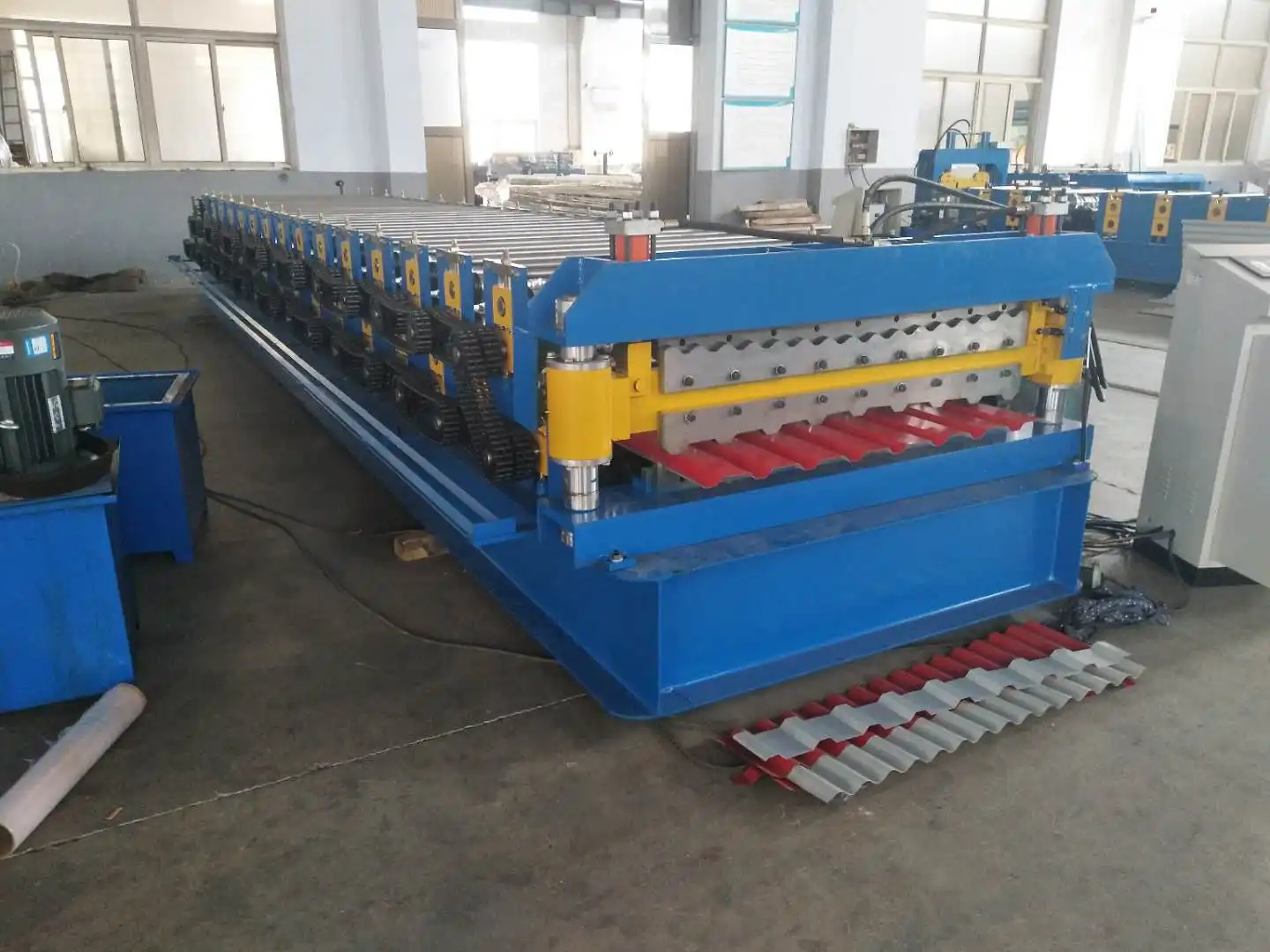
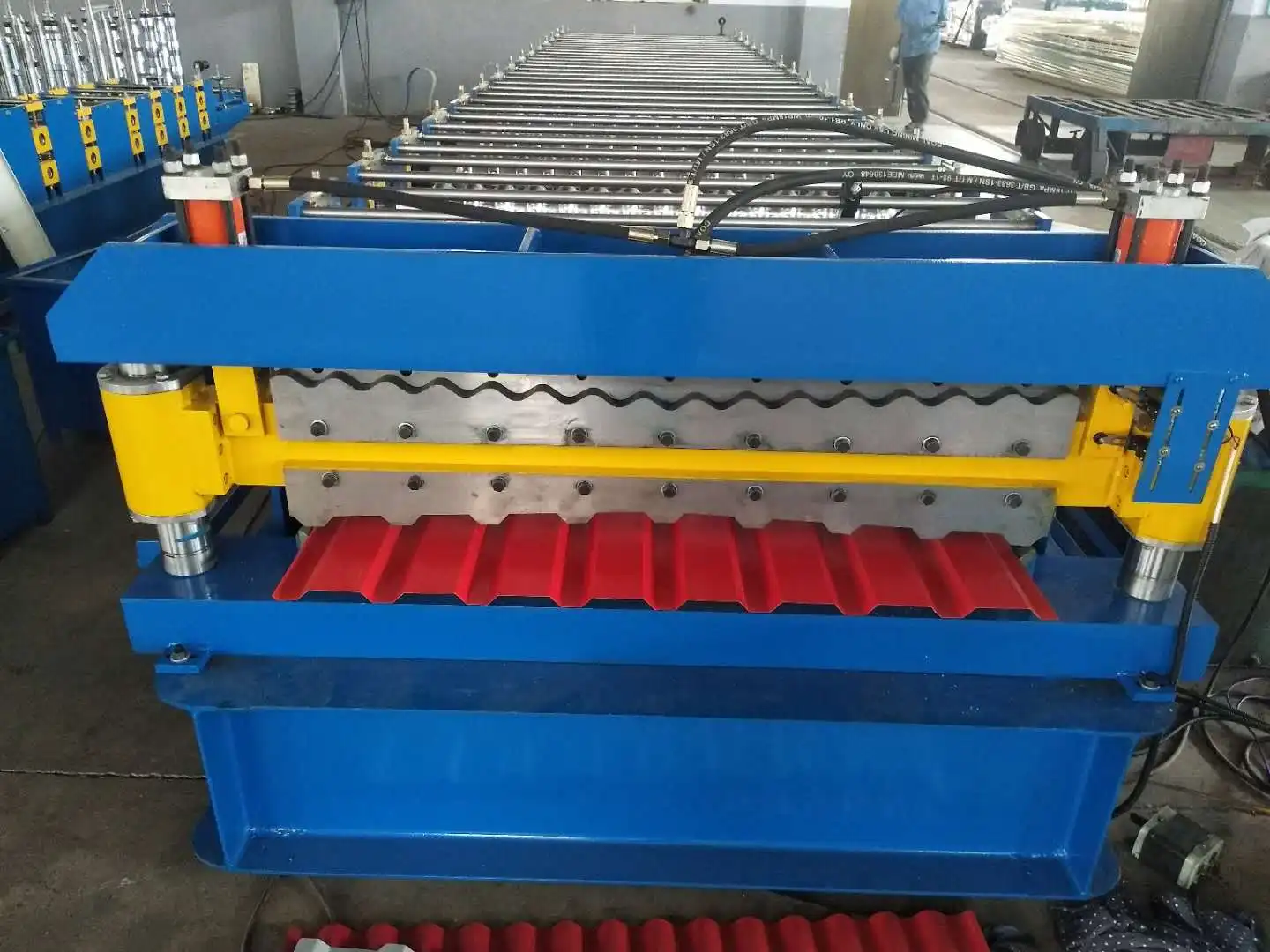
With a dual-level manufacturing station, the entire roll-change breakdown isn't required. Profile A is on the upper deck; Profile B is on the lower deck. When an order changes, the user selects the target deck via the PLC interface, and the double deck roll forming machine re-indexes. It doesn’t take hours to change; it takes minutes.”
Dual-Level Forming Stations
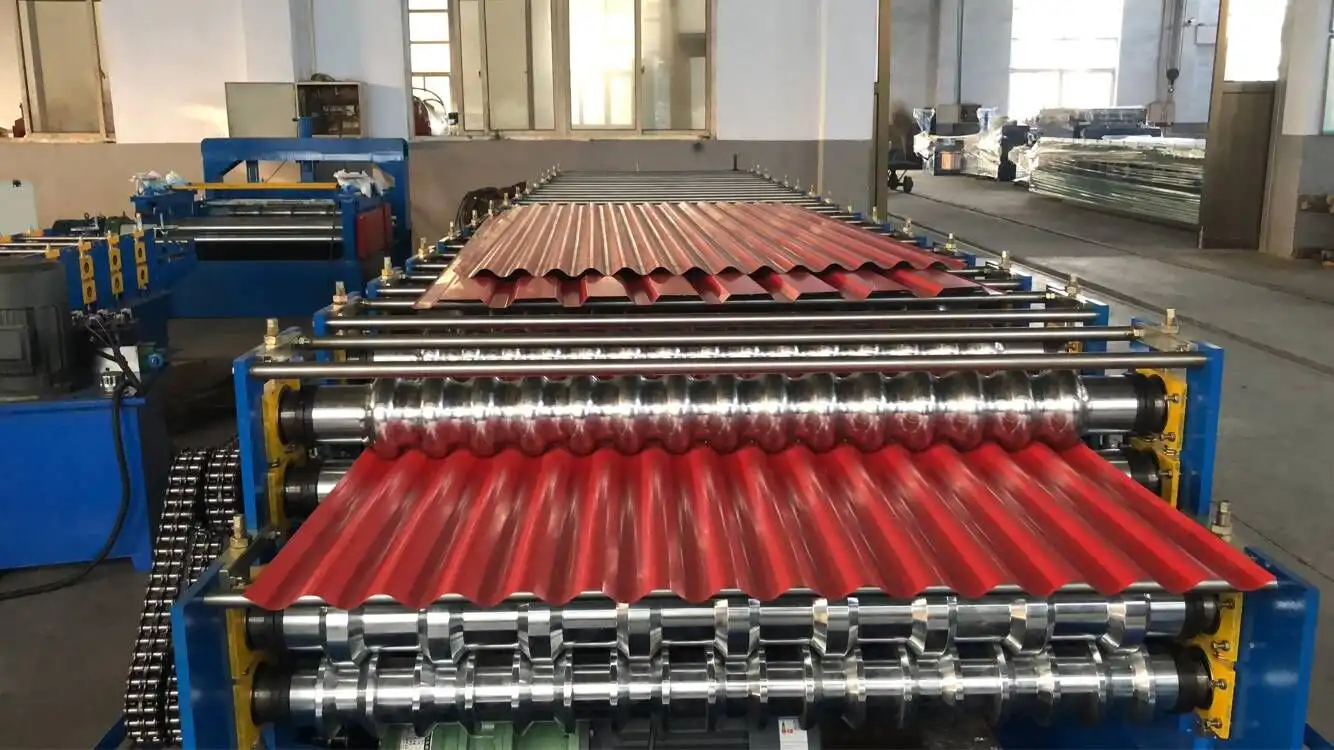
ZTRFM’s double-deck roll forming machine includes two decks of rollers, both made from No.45 steel and chrome-plated. The matching profile shape of the client is already pre-set at the manufacturer for the 95 mm and 120 mm shaping and embossing shafts. The rollers don't move, and the first sheet from the new profile is already in spec, as neither deck is moved during the transfer.
PLC and Frequency Converter Control
All forming parameters for each deck are stored independently in the frequency converter and Siemens-driven PLC system. The CR12 mold steel cutter with quenching treatment maintains the cut length at ±1.0 mm, and the line speed may be regulated to 10 to 20 m/min. In software, it takes roughly two minutes to alter settings, and the system records the occurrence so quality can be monitored.
Power Distribution Across Three Motors
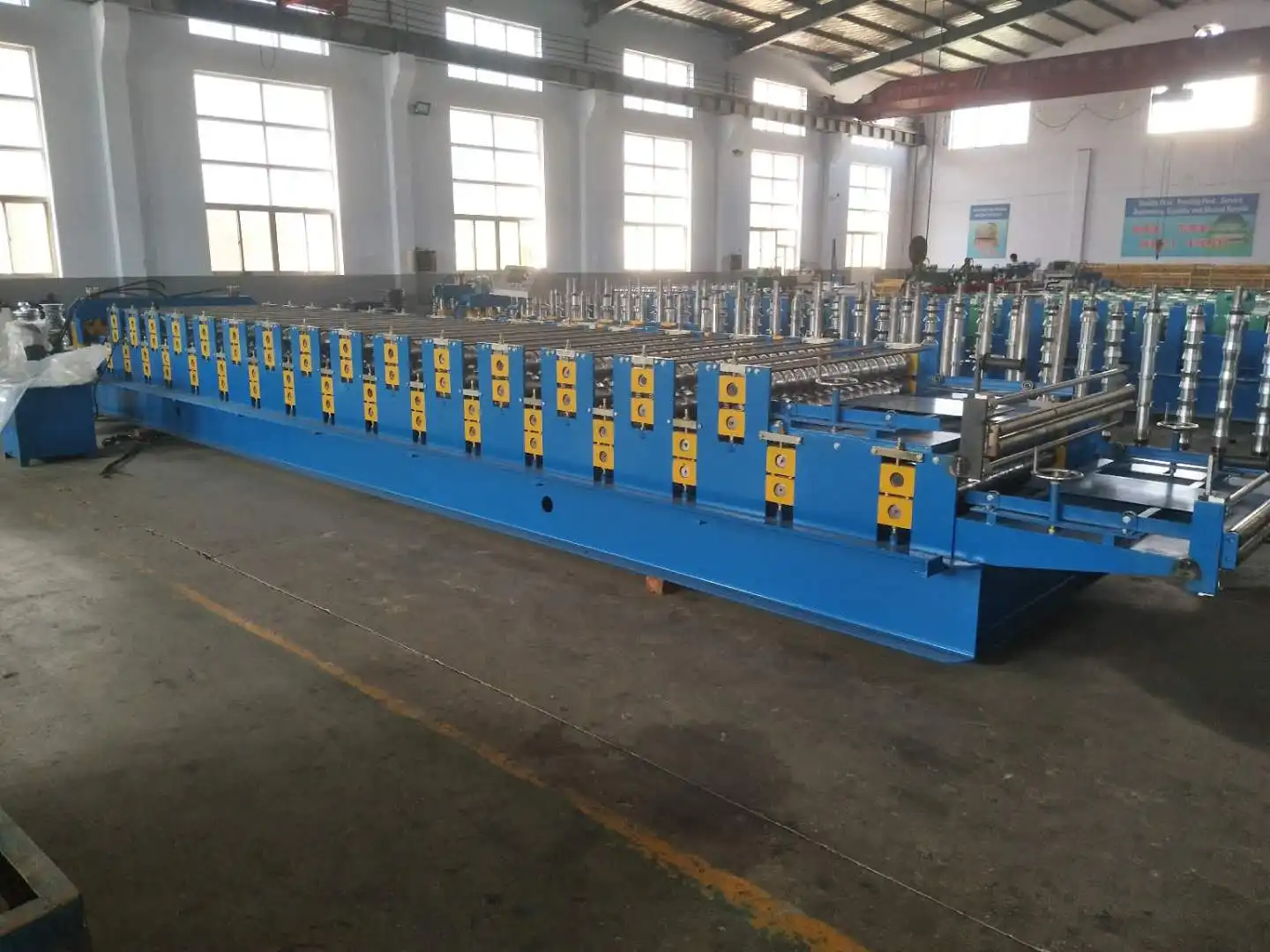
Instead of one huge motor, the primary drive is equipped with three individual 11-kW motors that distribute the torque equally among the forming stands. This arrangement minimizes the mechanical stress on the rollers during the formation of higher yield strength material up to 235 MPa. It also allows one motor segment to be maintained without shutting down the whole line, which comes in handy for keeping things operating smoothly between replacements.
Together, these three design decisions eliminate the bottlenecks of single-deck machines. That’s why there’s a growing line that goes between patterns at a consistent pace with no need for human aid.
Benefits That Matter to B2B Procurement
The capacity to bring about changes that are both tangible and quantifiable in the domains of procurement, production planning, and project execution is a capability that may be brought about by transitions that are shorter in duration. The transitions could be responsible for these improvements that have been made.
Production Flexibility for Mixed-Profile Orders
A contractor supplying both roof deck and composite floor deck to a high-rise tower no longer needs to schedule two separate production runs days apart. Both profiles are available on demand from one machine, which means smaller minimum order quantities become economically viable and last-minute specification changes are manageable.
Labor and Machine Idle Cost Reduction
With manual changeovers removed, the operator team that previously spent half a shift re-rigging roll sets can focus on material handling, quality inspection, and stacking. The 5.5 kW hydraulic unit motor keeps the cut-to-length system responsive throughout the run, so finished panels move off the line at a consistent pace rather than waiting for manual intervention.
Faster Time-to-Market
When a procurement team books an order late in the construction cycle, every day in production matters. The ability to run two profiles in sequence — or alternate between them within a single shift — compresses fulfillment time. For equipment traders supplying construction-boom markets, that speed difference is often the factor that wins repeat business.
These advantages can effectively address the core production problem of rigid, inflexible output schedules that plague single-deck operations serving multi-profile project sites.
Double Deck vs. Single Deck: A Practical Comparison
The total cost of ownership is another aspect that helps separate one piece of machinery from another kind of machinery. The initial purchase price of a piece of equipment is not the only thing that differentiates it from other types of machinery. One of the components that contributes to the differentiation between the various pieces of equipment is this.
Setup Time Comparison
A complete roll-change is normally required to shift the profile families on a single-deck line-forming zinc coil with a thickness of 0.8–1.2 mm. A double deck roll formingmachinedispenseswith that step entirely for the two profiles it carries. Published benchmarks on lean manufacturing show that eliminating two four-hour shift changes per week might save more than 400 hours of labor per year in a two-shift business.
Throughput and Synchronization
The decoiler, straightener, and cut-to-length unit are the same on both decks, so the flow of materials remains in sync. Once the move is accomplished, there is no need to reset the encoder or rethread the coil. Flow predictions are solid and dependable, with line speeds ranging from 10 to 20 m/min, irrespective of the deck in operation.
Total Cost of Ownership
A two-deck machine costs more up front than a single-deck machine. But for firms that frequently run two or more profiles, the money saved by having less downtime, less effort, and not having to pay for a second, separate line generally makes up the price difference in 18-24 months. That payback timeframe is great for composite-slab formwork subcontractors since it fits with a normal multi-story project contract.
Maintenance Practices That Protect Changeover Speed
Even if you maintain the equipment in excellent condition, there is a potential that the switching speed may not increase as the line continues to expand. This is due to the fact that the line will also be growing. This is as a result of the fact that the device will be delivered completely in pristine shape.
Roller and Shaft Inspection Schedule
The chrome No.45 steel rollers on both decks should be inspected for surface wear every 500 hours of operation. Check the 120mm embossing shaft carefully. If the embossing depth is deteriorated, it will directly affect the quality of the composite action, and the profile may be rejected by the structural engineer on site.
Control System Calibration
Make a duplicate of the PLC parameter files for each deck profile and compare them to the factory values every month. If the frequency converter records reveal a gradual speed drift at the faster end of the 10–20 m/min range, the drive settings may need to be changed before the drift compromises the precision of the cut.
Supplier Support and Spare Parts
Having a firm that has CR12 cutter blades, new forming rollers, and hydraulic seals for the 5.5 kW equipment in stock greatly reduces repair wait times. ZTRFM after-sales staff supports equipment operating in more than 150 countries and provide online diagnostic assistance. That way, a US specialist can solve numerous control issues without having to travel into the field.
Conclusion
Changeover time is a genuine expense that can be quantified in any deck manufacturing firm. This is handled in a simple manner by a dual-deck manufacturing line, which removes the need for manual roll changes, saves profile settings in the PLC, and distributes drive power equally over three 11 kW motors for smooth running. The difference in production between a single-deck and double deck roll formingmachineissubstantial for US deck builders, structural fabricators, and composite-slab providers using two or more profile varieties. Look at the number of orders filled, the cost of labor, and the records of when projects are delivered.
FAQ
1. What materials can a double-deck roll forming machine process?
The machine is designed for galvanized and Galvalume coils with a thickness of 0.8–1.2 mm and yield strength of 235 MPa. Both Z275 and Z600 galvanized coatings are compatible. Material must be supplied on decoiler-ready coils.
2. How long does a profile changeover actually take?
On a dual-deck machine with pre-set tooling and stored PLC parameters, an operator can switch active decks in approximately two to five minutes. This compares to three to five hours on a conventional single-deck line requiring manual roll changes.
3. Can the machine produce embossed composite deck profiles?
Yes. The 120 mm embossing shaft on the dedicated embossing station produces consistent indentation depth across the full sheet width, which is required for mechanical interlock between steel deck and structural concrete in composite floor systems.
4. Is the machine configurable for US deck profile standards?
ZTRFM offers OEM tooling designed for US market rib geometries, including 0.6-inch form deck, 1.5-inch A/B rib, and 3.0-inch composite floor deck profiles. Custom profile geometry is available under NDA.
5. What certifications does the machine carry?
The machine is manufactured under ISO 9001, CE, and CAS certification. These credentials satisfy the documentation requirements that structural fabricators and building inspectors typically request on US commercial projects.
Partner with ZTRFM for Your Next Double Deck Roll Forming Machine
Since 2014, ZTRFM has developed and built cold roll forming tools. Ourdouble deck roll forming machinefor salehas a 33 kW three-motor drive system, a Siemens PLC control, hardened CR12 cutters, and OEM tooling that has already been set up at the plant. Some examples of past companies are Tata Group and DS Group. Get in touch with our team at zhongtuorollforming@gmail.comto get project details and a price.
References
1. Fabricators & Manufacturers Association International. Metalforming Magazine. 2022.
2. American Iron and Steel Institute. Steel Deck Institute Design Manual for Composite Decks, Form Decks, and Roof Decks. 2017.
3. Steel Deck Institute. SDI Manual of Construction with Steel Deck. 3rd ed., 2016.
4. Halmos, George T. Roll Forming Handbook. CRC Press, 2005.
5. ASTM International. ASTM A653/A653M: Standard Specification for Steel Sheet, Zinc-Coated (Galvanized) or Zinc-Iron Alloy-Coated (Galvannealed) by the Hot-Dip Process. 2023.
6. International Journal of Advanced Manufacturing Technology. "Process Optimization in Cold Roll Forming of Structural Steel Profiles." Springer, 2021.