- English
- French
- German
- Portuguese
- Spanish
- Russian
- Japanese
- Korean
- Arabic
- Irish
- Greek
- Turkish
- Italian
- Danish
- Romanian
- Indonesian
- Czech
- Afrikaans
- Swedish
- Polish
- Basque
- Catalan
- Esperanto
- Hindi
- Lao
- Albanian
- Amharic
- Armenian
- Azerbaijani
- Belarusian
- Bengali
- Bosnian
- Bulgarian
- Cebuano
- Chichewa
- Corsican
- Croatian
- Dutch
- Estonian
- Filipino
- Finnish
- Frisian
- Galician
- Georgian
- Gujarati
- Haitian
- Hausa
- Hawaiian
- Hebrew
- Hmong
- Hungarian
- Icelandic
- Igbo
- Javanese
- Kannada
- Kazakh
- Khmer
- Kurdish
- Kyrgyz
- Latin
- Latvian
- Lithuanian
- Luxembou..
- Macedonian
- Malagasy
- Malay
- Malayalam
- Maltese
- Maori
- Marathi
- Mongolian
- Burmese
- Nepali
- Norwegian
- Pashto
- Persian
- Punjabi
- Serbian
- Sesotho
- Sinhala
- Slovak
- Slovenian
- Somali
- Samoan
- Scots Gaelic
- Shona
- Sindhi
- Sundanese
- Swahili
- Tajik
- Tamil
- Telugu
- Thai
- Ukrainian
- Urdu
- Uzbek
- Vietnamese
- Welsh
- Xhosa
- Yiddish
- Yoruba
- Zulu
Direct Drive vs Gearbox Drive: Pick by Plate Thickness
Choose the drive for the thickest plate you plan to run, then confirm steel strength and profile shape. Light-gauge plate can often run on a direct drive layout, while thick or high-strength plate usually favors a gearbox because it adds torque reserve and steadier power. On a highway guardrail roll forming machine, the bending moment on the strip rises roughly with the square of plate thickness. A small jump in gauge therefore puts much more demand on shafts, rolls, and the drive. I wrote this guide to help U.S. guardrail manufacturers match the drive to their real coil range. I use our 30 kW gearbox-driven line as the reference.
How Direct Drive and Gearbox Drive Work
Both systems turn the forming shafts, but they deliver power differently. Here is how each one behaves on a guardrail production line.
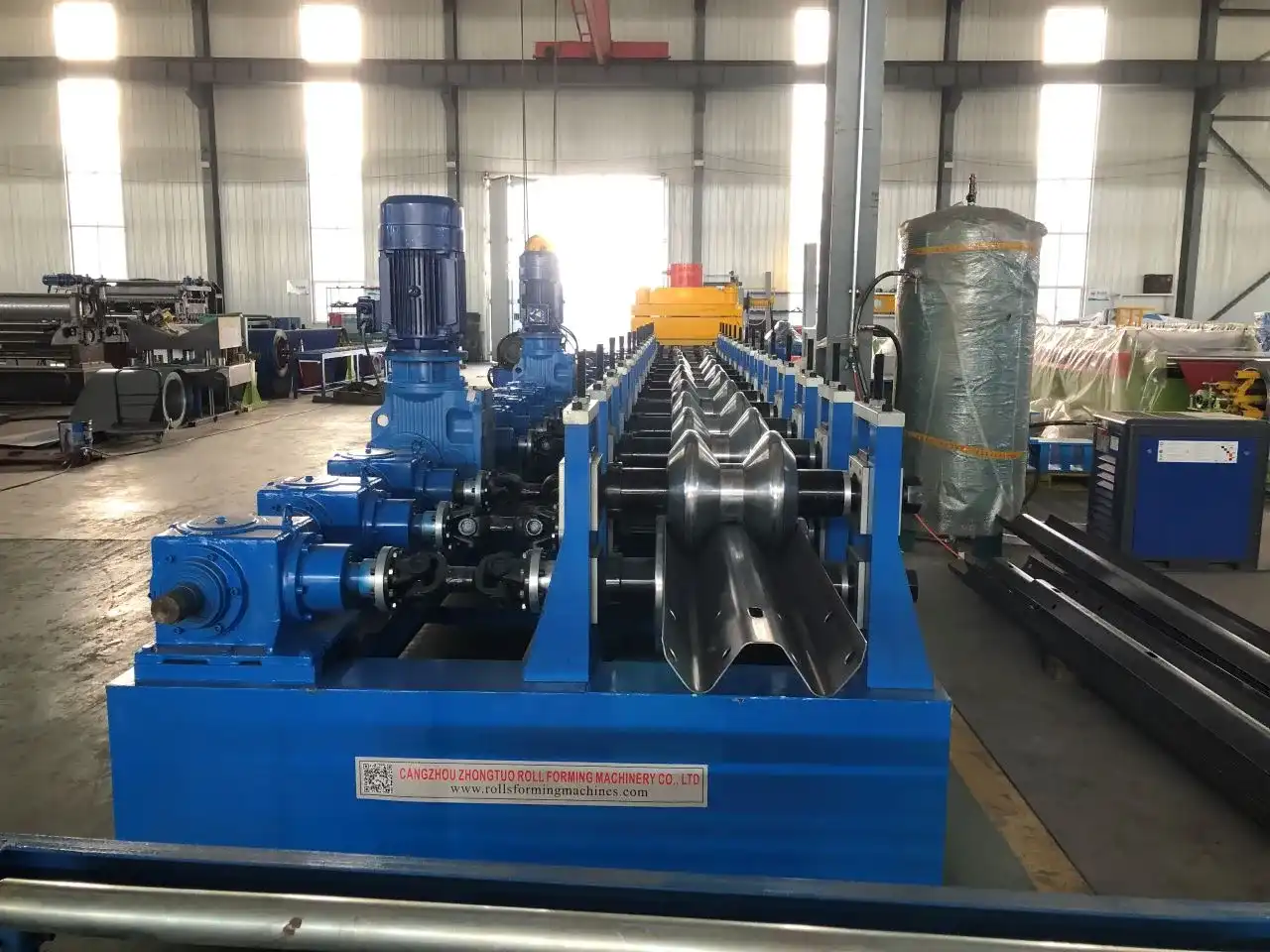
Direct Drive: Short Power Path
The power from the motor is sent to the forming shafts by means of a direct drive, which is a short gearbox route. The motor and the rolls are separated by fewer elements, which might result in reduced backlash and fewer wear areas that need to be inspected. The torque acts as a trade-off. Because the motor is required to deliver the whole shaft torque on its own in the absence of a significant fall in speed, the plate thickness is limited by the size of the motor and the design of the shaft. When it comes to light-gauge work, with regular profiles, and mild shifts, I believe that direct drive makes the most sense. Due to the fact that a drive that can easily handle 2.0 mm plate may experience strain when applied to 4.0 mm plate, it is necessary to do a rigorous torque check on thicker steel.
Gearbox Drive: Torque Multiplication
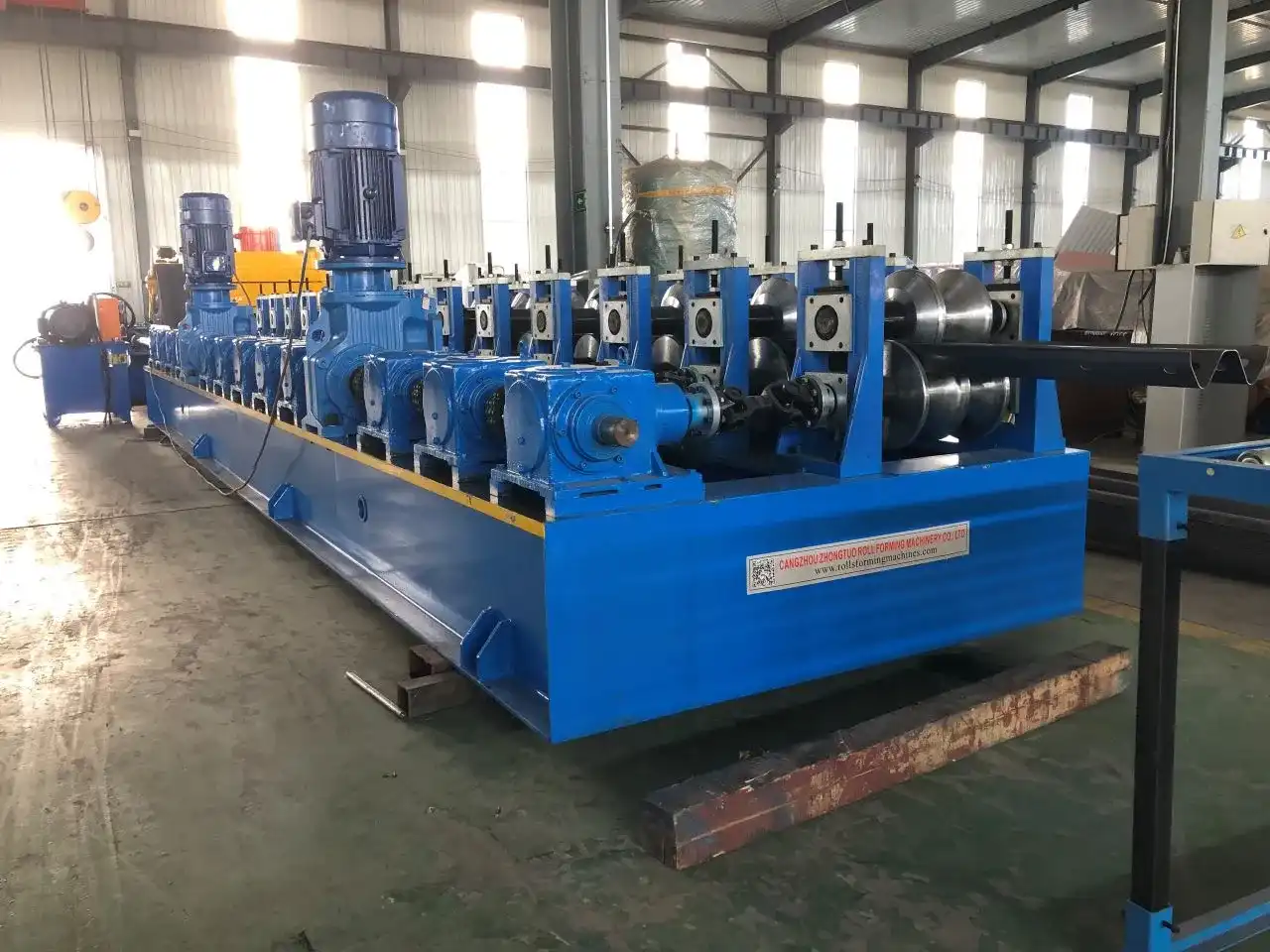
With the exception of certain minor efficiency losses, a gearbox slows down the speed of the motor and increases torque by about the gear ratio. According to the fundamental equation, power is equal to torque multiplied by rotational speed. This means that a slower shaft may carry more torque from the same motor. Because of this reserve, the rolls are able to spin at a regular pace, which ensures that the profile remains uniform over the whole length of the strip. This reserve is helpful whether the strip is thick, hard, or broad. Maintenance is an expense. Gearboxes need the appropriate oil, which must be inspected on a regular basis, and they produce some noise. The gearbox that our machine utilises has a work power of 30 kW, which is suitable for the 2.0–4.0 mm plate range that it requires.
Hybrid Layouts and Other Factors
Some highway guardrail roll forming machine configurations combine both drive systems, using a gearbox on heavy forming stands and a lighter drive on auxiliary sections. Drive type alone does not determine performance. Motor capacity, shaft diameter, reducer ratio, roll tooling, and line speed all work together. Two machines labeled "gearbox drive" may perform differently if one has smaller shafts or fewer forming stations. I recommend comparing continuous torque, peak torque, noise, vibration, maintenance requirements, and long-term operating costs rather than relying on brochure descriptions. An unsuitable choice can lead to downtime, higher energy consumption, and increased guardrail production line costs.
How Plate Thickness Shapes the Drive Choice
Thickness is the first number I ask any buyer for. The next three sections show why it matters and how it connects to common U.S. W-beam gauges.
The Physics Behind Thickness
In the theory of idealised bending, the plastic bending moment per unit of strip width is equal to the coefficient of yield strength multiplied by the square of the thickness, and then divided by four. Taking into account the same steel and bend radius, increasing the thickness from 2.0 mm to 4.0 mm will about treble that moment. As a result of the fact that friction, strip width, and the number of passes are all included in real forming loads, the formula provides guidance rather than offering a precise motor size. Nevertheless, it explains why a drive that seems adequate when it is 2.0 mm might be insufficient when it is 4.0 mm deep. When I size the drive, I always make sure to use the maximum stated plate rather than the average.
Thin, Medium, and Heavy Plate
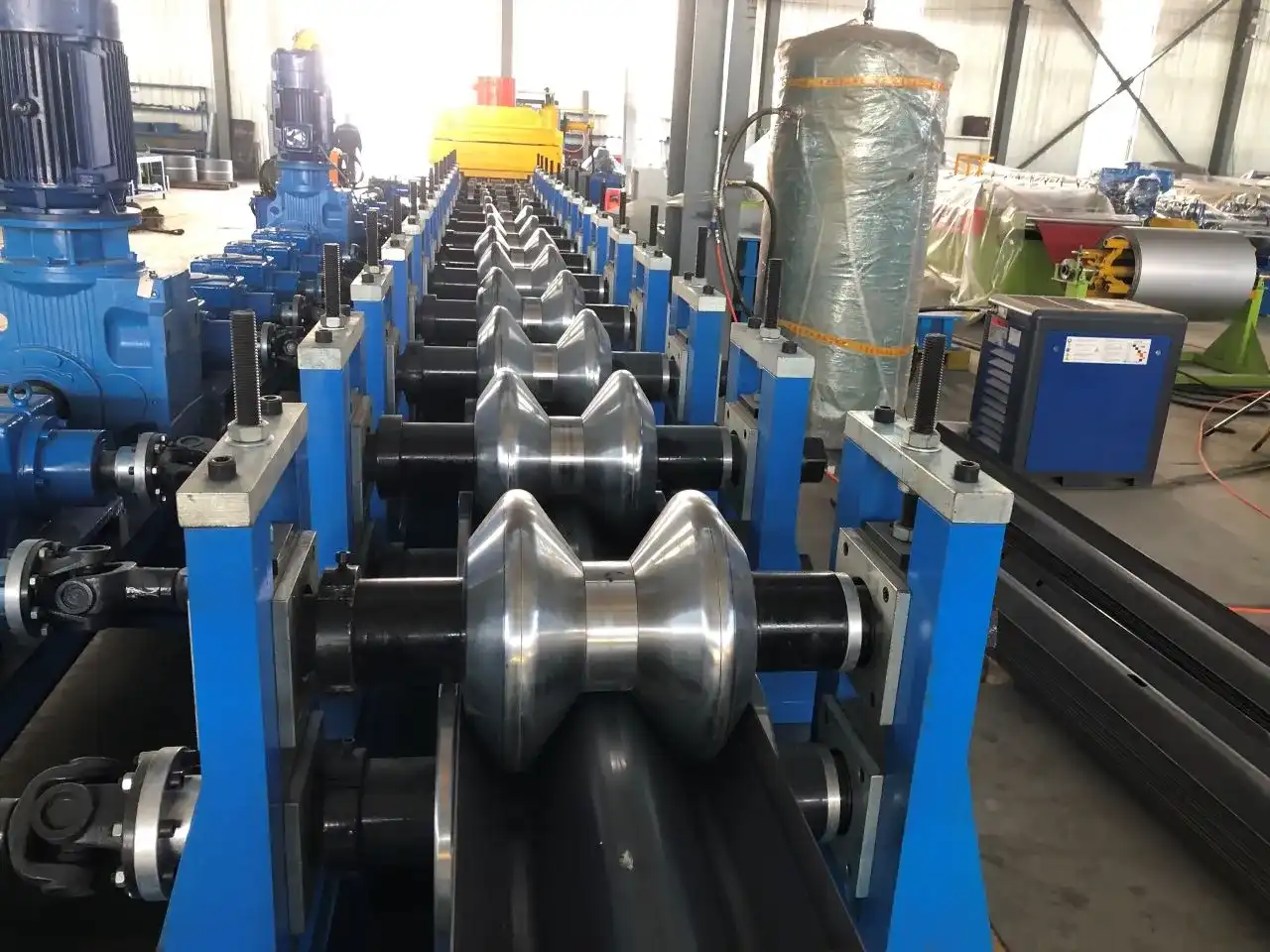
A thin plate provides a load margin that is comfortable, which allows direct drive to function in situations when acceleration demands remain mild. It is necessary to do a thorough analysis of the forming stations, shaft diameter, roll design, speed, and operation hours necessary for medium thickness. When it comes to heavy or high-strength plate, a gearbox is beneficial since it provides a greater torque reserve and offers more consistent power delivery. Class A steel with a nominal thickness of 2.67 millimetres (12 gauge) and Class B steel with a nominal thickness of 3.43 millimetres (10 gauge) are both available for work in the United States. When moving from Class A to Class B, the idealised bending moment increases by about 65 percent. This is because the difference between 3.43 and 2.67 is around 1.65. For your project, make sure you are using the most recent version of the standard.
W Beam and Three Beam Demands
The forming stands are not loaded in the same manner by the W beam and the three beam profiles. The torque that a drive is required to provide may be altered by a number of factors, including profile depth, bend radius, strip width, pass arrangement, and tolerance. It is possible for a W-beam guardrail machine to operate with either a direct or gearbox drive, depending on the material and output. On the other hand, the larger three-beam profile often requires greater torque and more robust equipment. The W-beam profiles that our two-wave guardrail roll forming equipment is designed to work with have a guardrail width range of 310–500 millimetres. The arrangement of the three beams would be distinct from the others. Request that the supplier check interchangeable roll sets, shaft strength, and the maximum load over the whole product range if you wish to use a single line for both profiles.
Choosing and Specifying a Highway Guardrail Roll Forming Machine
Once you know your plate range, the next step is a clear specification. These sections cover what to define, what to compare, and how to decide.
Define the Product Before the Drive
Start by defining the products, output targets, shifts, and maximum material specifications for your highway guardrail roll forming machine. Record plate thickness, steel grade, coil width, coating, yield strength, and hole patterns, as each affects the forming load. Then list the required components: decoiler, leveler, punching unit, cutter, stacker, and PLC control. Our line includes a hydraulic decoiler for 5–10 ton coils, a leveling system, a hydraulic punching press for bolt and post holes, a roll forming section, a hydraulic or flying shear, and an output table or stacker. Once these requirements are clear, select a direct, gearbox, or hybrid drive based on the complete application.
Specifications Worth Checking
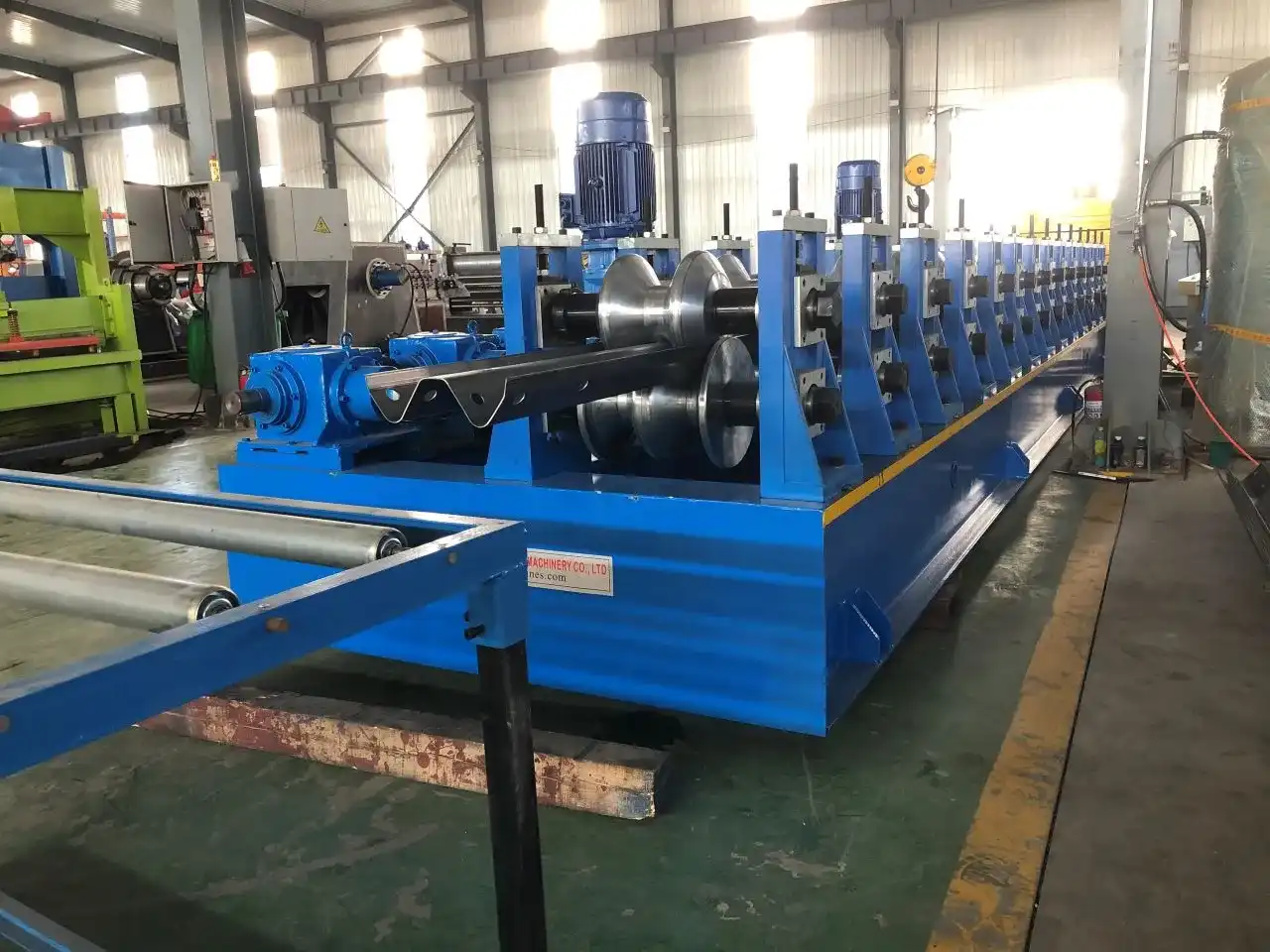
Using our setup as an example, the following is what I look for on any available specification document. Having a diameter of 100 millimetres, the rolling shafts are made of 45-pound steel that has been quenched. These rollers are made of GCr15 and have been heat-treated. The production line is equipped with 19 forming stations, a vertical frame made of cast iron, a body made of welded 400# H steel, and HRB bearings. The operating speed ranges from 6 to 10 meters per minute, and the power output is 30 kilowatts via a gearbox. From 2.0 to 4.0 millimetres, it processes galvanised and hot-rolled steel, and the surface remains smooth and free of scratches throughout the operation. You should get the same information from each of your suppliers, including the voltage, frequency, safety interlocks, and CE or destination-market standards, so that you can compare the quotations in an objective manner.
Cost, Suppliers, and Common Mistakes
The cost of the highway guardrail manufacturing line is not only determined by the size of the motor. The pricing may be altered by a variety of factors, including tooling, plate range, punching, cutting, automation, installation, and training; thus, it is more important to evaluate the scope and total ownership cost than the headline price. I have seen that the most typical mistakes that people make include selecting a drive solely based on the thickness of the plate, relying on the nominal line speed, accepting a thin torque reserve, and omitting a test with the actual material. Due to the fact that coil loading, punching cycles, and stacking all have an impact on production, it is important to request completed pieces per hour rather than merely meters per minute. Additionally, it is important to investigate the guardrail supplier's expertise, testing capabilities, warranty, replacement parts, and after-sales attention.
Quick Decision Guide
Use this as a preliminary screen rather than as a definitive solution. Direct drive is beneficial for standard profiles, light-to-moderate plates, and moderate schedules, which are situations in which a small gearbox and quick reaction are important. Gearbox drives are suitable for use with thick or high-strength steel, as well as with demanding profile geometry and lengthy running hours. For situations in which a single line has to span a wide variety of thicknesses or include extensive automation, a hybrid or bespoke arrangement makes sense. After that, verify the selection by doing actual material tests, obtaining torque data, and obtaining manufacturing records from the provider. The gearbox arrangement that our machine employs is the one that I would recommend using if your plate range is 4.0 millimetres and you want to work high-volume shifts.
Conclusion
Drive selection for a highway guardrail roll forming machine starts with plate thickness but cannot end there. Direct drive offers a short power path and suits lighter gauges, while a gearbox multiplies torque and fits thick or high-strength steel. Because the bending moment rises roughly with thickness squared, the drive must match the maximum plate, and the AASHTO M 180 Class A and Class B gauges show how large that step can be. Steel strength, profile shape, W-beam versus three-beam demands, shaft design, and operating hours also shape the load. Buyers who compare torque data, specifications, scope, and test results, rather than speed or price alone, avoid the mistakes that cause downtime and uneven profiles.
FAQ
1. Is a gearbox drive always better for thick plate?
Not always, but it is often the safer choice. A gearbox adds torque reserve, which helps with thick or high-strength steel. Motor power, shaft diameter, and station count still matter, so judge the full configuration.
2. Can one line produce both W beam and three beam guardrails?
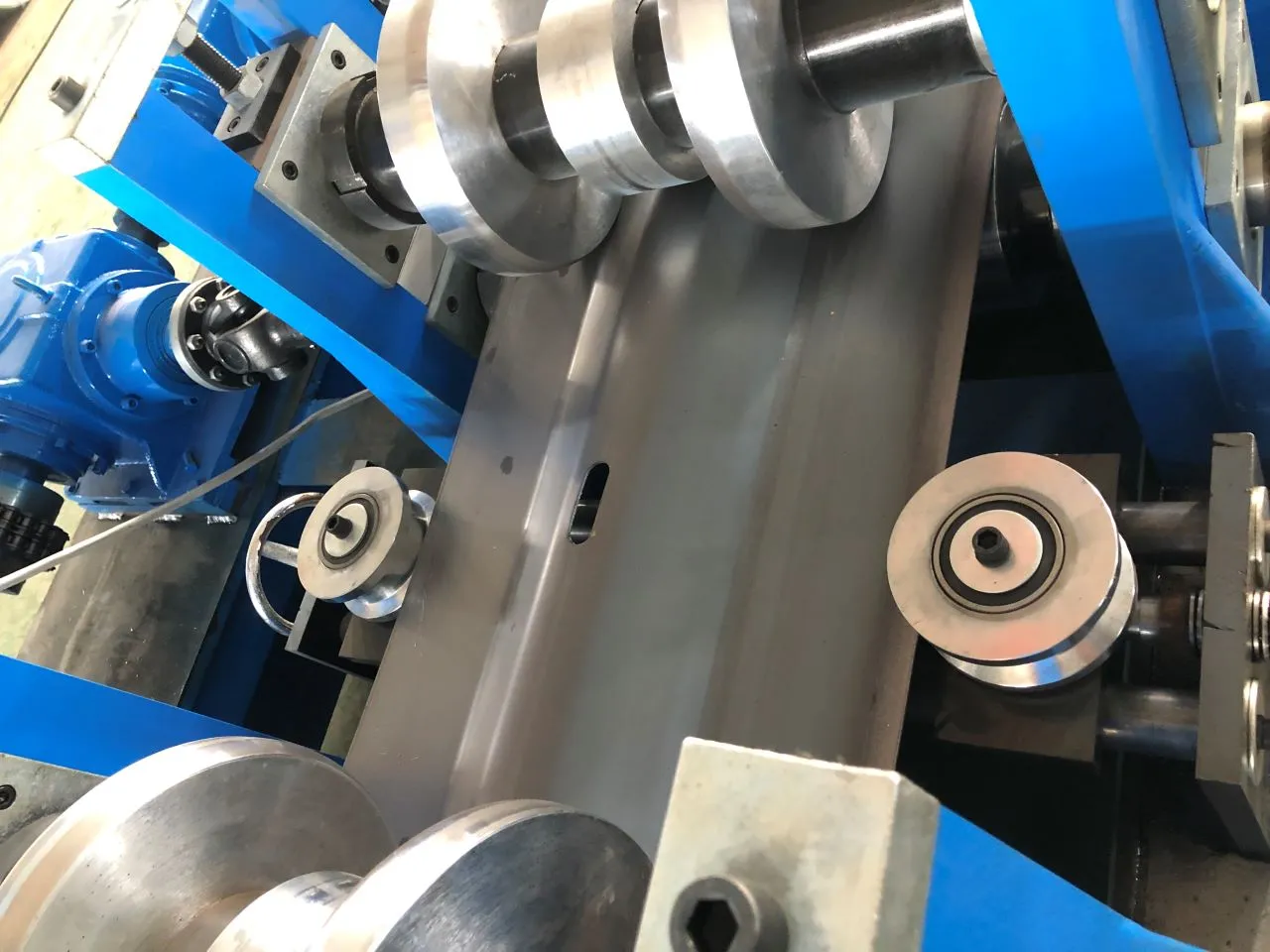
Some designs allow it if the supplier verifies interchangeable roll sets, guide adjustment, and shaft strength for the heaviest profile. The ZTRFM machine described here is a two-wave line.
3. What maintenance does each drive type need?
Direct drive has fewer parts to inspect. A gearbox needs oil checks and periodic inspection. Both need scheduled checks of rolls, bearings, and shafts.
4. What should I send to get an accurate quote?
Send profile drawings, plate thickness, steel grade, coil width and weight, hole patterns, output target, automation level, destination, and electrical standard.
Request a Customized Highway Guardrail Roll Forming Machine Proposal
Cangzhou Zhongtuo (ZTRFM), founded in 2014, holds ISO9001, CE, and CAS certifications and exports roll forming machines to over 150 countries. Looking for a highway guardrail roll forming machine supplier with OEM and ODM service? Email your drawings and plate range to zhongtuorollforming@gmail.com, and our engineers will recommend the drive and line layout.
References
1. Roll Forming Handbook, CRC Press, 2006
2. Shigley's Mechanical Engineering Design, McGraw-Hill, 2020
3. Machinery's Handbook, Industrial Press, 2020
4. Manual for Assessing Safety Hardware (MASH), AASHTO, 2016
5. Roadside Design Guide, AASHTO, 2011
6. Metal Forming Handbook, Schuler / Springer, 1998