- English
- French
- German
- Portuguese
- Spanish
- Russian
- Japanese
- Korean
- Arabic
- Irish
- Greek
- Turkish
- Italian
- Danish
- Romanian
- Indonesian
- Czech
- Afrikaans
- Swedish
- Polish
- Basque
- Catalan
- Esperanto
- Hindi
- Lao
- Albanian
- Amharic
- Armenian
- Azerbaijani
- Belarusian
- Bengali
- Bosnian
- Bulgarian
- Cebuano
- Chichewa
- Corsican
- Croatian
- Dutch
- Estonian
- Filipino
- Finnish
- Frisian
- Galician
- Georgian
- Gujarati
- Haitian
- Hausa
- Hawaiian
- Hebrew
- Hmong
- Hungarian
- Icelandic
- Igbo
- Javanese
- Kannada
- Kazakh
- Khmer
- Kurdish
- Kyrgyz
- Latin
- Latvian
- Lithuanian
- Luxembou..
- Macedonian
- Malagasy
- Malay
- Malayalam
- Maltese
- Maori
- Marathi
- Mongolian
- Burmese
- Nepali
- Norwegian
- Pashto
- Persian
- Punjabi
- Serbian
- Sesotho
- Sinhala
- Slovak
- Slovenian
- Somali
- Samoan
- Scots Gaelic
- Shona
- Sindhi
- Sundanese
- Swahili
- Tajik
- Tamil
- Telugu
- Thai
- Ukrainian
- Urdu
- Uzbek
- Vietnamese
- Welsh
- Xhosa
- Yiddish
- Yoruba
- Zulu
Comprehensive Guide to Rack Roll Forming Machines for Efficient Production
A pallet rack roll forming machine makes straight columns, beams, braces, and shelf panels out of steel coil all at once. You can make production more efficient in four ways: match the line to your profile drawings, judge output instead of speed, choose the right level of automation, and work with a supplier that tests and backs up the equipment. This guide is based on what we did at ZTRFM, so you can use clear criteria to compare lines before you ask for a quote.
How a Pallet Rack Roll Forming Machine Works What the Machine Does
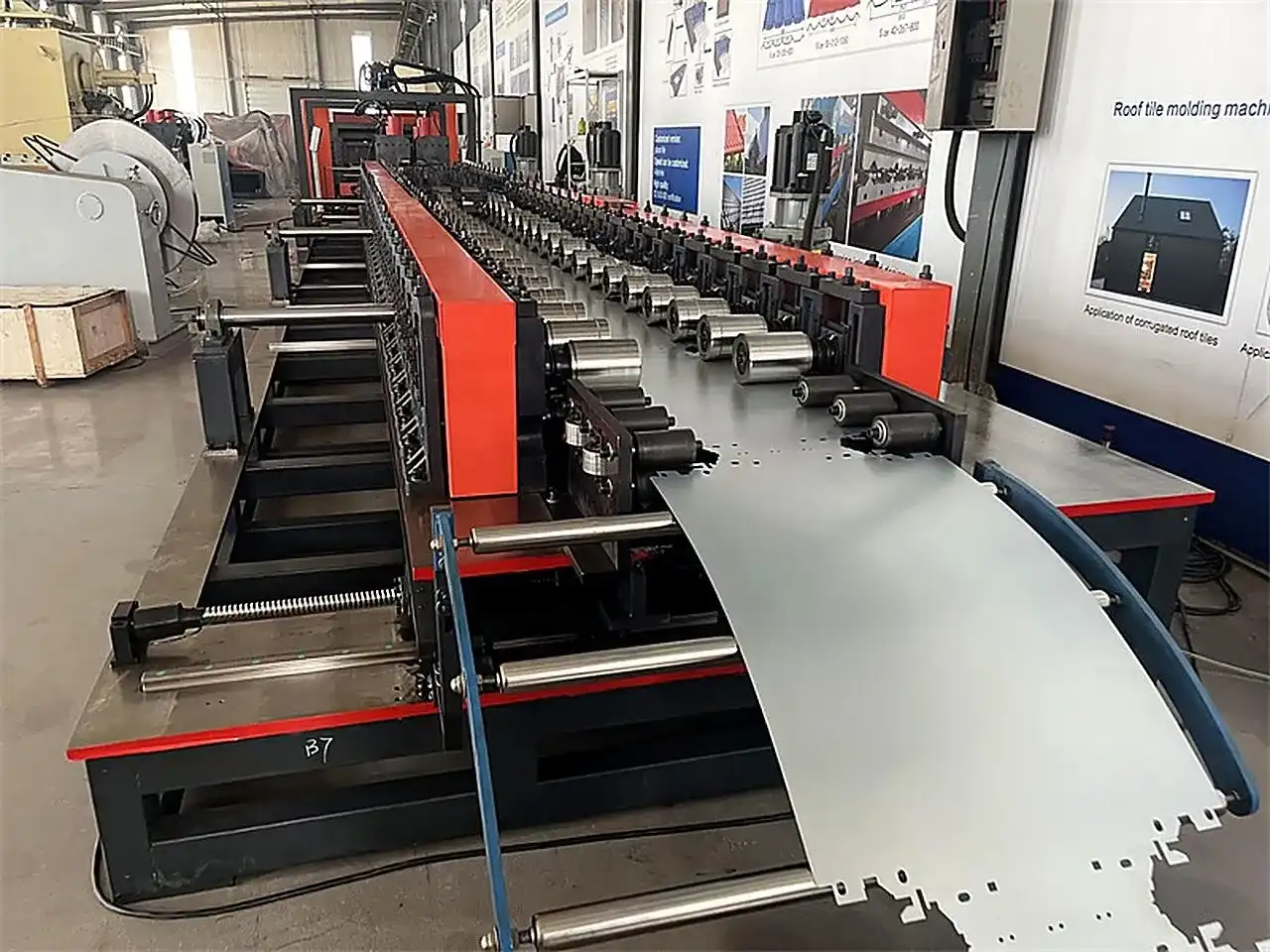
Inside a pallet rack roll forming machine, paired rollers are used to feed flat steel strip through the machine. There is a slight increase in the amount of the strip that is bent at each station until the shape is finished. The uprights, beams, rails, and decking panels that you need can be obtained in this manner, eliminating the need to make them by hand. It is possible to punch holes and cut parts to length using the same line. Compared to press-brake forming, roll forming produces more consistent sizes and results while also producing less waste. A smaller number of workers on the floor is also required. Additionally, there are written rules for the design of racks. As an illustration, the Rack Manufacturers Institute's ANSI MH16.1 provides information regarding the design, testing, and utilization of industrial steel storage racks in the United States. That your profile and the grade of the material are important right from the beginning is what this means.
From Coil to Finished Profile
A decoiler and a coil loader set the stage for the majority of lines. After that, there is a leveler and a servo feeder that maintain the strip at the correct length and ensure that it is flat. The next step is punching, which can take place either before or after the forming process, depending on the way the holes are shaped and configured. As the strip travels through the roller stations, it is meticulously aligned in order to prevent it from twisting or scratching the surface of the roller. First, a hydraulic, mechanical, or servo cutter is used to cut each individual piece to the desired dimensions, and then a run-out table is used to collect the finished components. The rack's length, width, holes, and straightness are all evaluated during the trial runs that we conduct. This is due to the fact that even a minor error in the punching can prevent it from being assembled on site.
Main Components and Specifications to Check
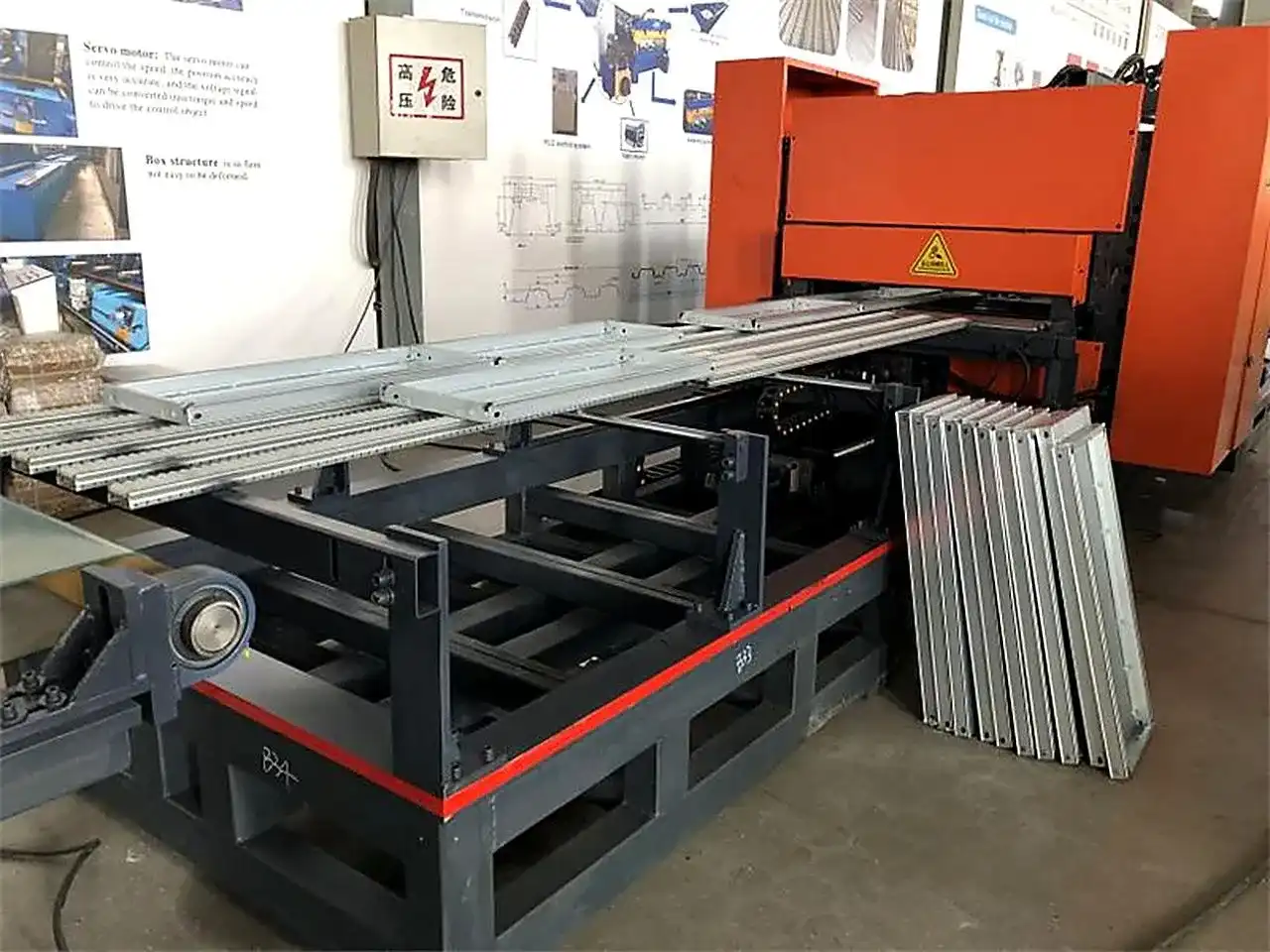
The decoiler, the leveling unit, the servo feeder, the forming mill, the punching system, the cutting unit, the PLC cabinet, the hydraulic station, and the run-out table are the primary components of the machine. Next, you need to make sure that you are aware of the type of material that you intend to use, whether it be galvanized, cold-rolled, or already painted. Additionally, don't forget to record the weight, thickness, width, and yield strength of the coil. The number of forming stations, the power of the motor, the precision of the punching, the cutting tolerance, and the floor space are all important numbers to consider. Rather than focusing on the number of meters per minute, I always recommend to buyers that they look at the number of finished pieces produced during each shift. How often you punch and how long you cut will determine the actual outcome of the situation.
Profile Types and Production Configurations
Uprights, Beams, Braces, and Panels
Every part of the rack has its own needs. Uprights need precise punching and stable forming because the shape and spacing of the holes affect how well they fit together and how much weight they can hold. Shapes of beams like box and step beams must be exactly matched, cuts must be clean, and ends must be ready for connectors. Thinner steel and easier-to-use tools are often used for braces, guide rails, and decking panels. A lot of places, like distribution centers, cold stores, factories, and third-party warehouses, use selective shelving. Profiles need to be different for drive-in, drive-through, and heavy-duty systems. If you send us your drawings early, our engineers can check to see if one line can handle your range or if you need two separate lines.
Single-Profile Versus Multi-Profile Lines
A single-profile pallet rack roll forming machine is better for large orders with a fixed design because it works faster and is easier to use. Custom orders can be made on a multi-profile machine, but it takes longer to change over and costs more for tools. Think about how often you change your order mix. A dedicated line is worth the money if you ship the same upright every week. If the slot pattern or connector changes for every project, it makes more sense to use flexible tools or profile-to-order rollers. Think about what will come out in the future too. It's easier to add a beam or panel machine later if the first line was planned as part of a whole system.
Automatic Versus Semi-Automatic Machines
All of the following operations are carried out on automatic lines: decoiling, feeding, punching, cutting, stacking, and data control. They are suitable for manufacturers who produce standard items and dislike having to handle them by hand. In the beginning, semi-automatic machines are less expensive, but they require more effort from the operator. Small shops, new product lines, and orders that don't come in very often are all good candidates for their implementation. It is important to take into consideration a number of factors, including annual production, the availability of labor, the frequency of changeovers, maintenance skills, and floor space. It is not always the case that the purchase price imparts all of the necessary information to you. It is possible that an automatic line will be more expensive in the long run than a machine that is less expensive but requires two more workers per shift.
Raising Output and Judging Cost
Where Production Time Gets Lost
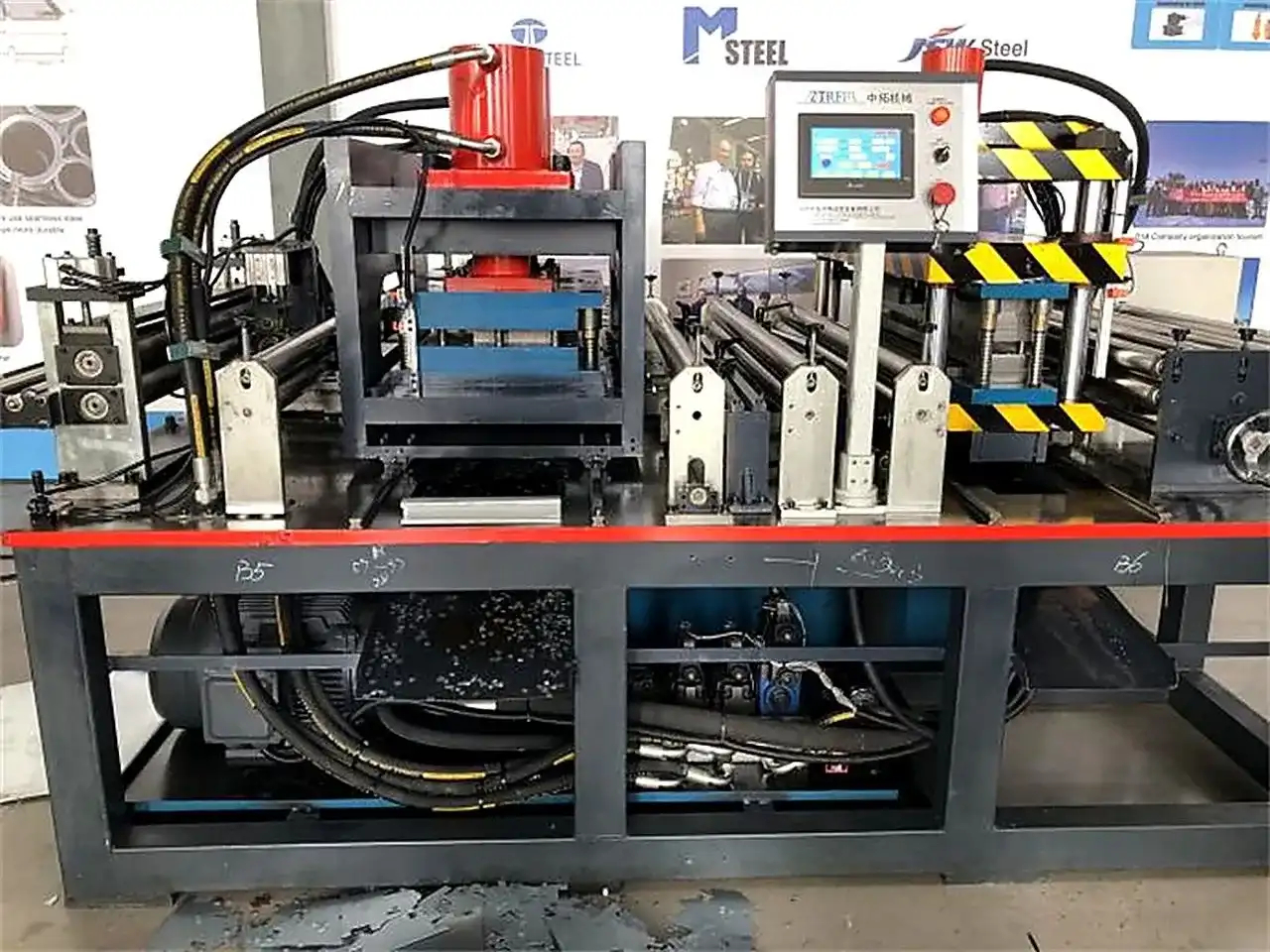
Before you make any purchases, you should first examine the current output, as well as the downtime, labor hours, scrap, rework, and changeover time available. Punching by hand, feeding incorrectly, making frequent adjustments to tooling, moving materials slowly, and stopping without planning to do so are all examples of common bottlenecks. Servo feeding, PLC control, automatic length measurement, in-line punching, flying cutting, stacking, and remote diagnostics are all methods that can be utilized to directly address and resolve these issues. Nevertheless, a faster formation does not necessarily mean that more work is completed. It is important to keep an eye on things such as the hole position, the scrap rate, and the amount of downtime that occurs during each shift. Compare the planned speed to the actual finished output. The following list will show you the areas in which your next investment will yield the highest returns.
Buying Guide and Acceptance Testing
Set clear goals for the material, the annual output, the target market, and the profile of the people you want to reach. First, get a technical proposal based on your actual drawings. Next, make sure you agree on the punching patterns, tolerances, automation, installation, training, and warranty. For U.S. plants, find out if they follow electrical rules. Electrical rules for industrial equipment are set by NFPA 79, and many buyers also want UL or ETL paperwork. Compare prices that include everything, like tools, accessories, shipping, setup, and spare parts. Lastly, write down criteria that can be used to measure the output, dimensions, hole positions, straightness, and cut length. Before they are shipped, a video acceptance test lets your team check them without having to travel.
Price, ROI, and New Versus Used Equipment
The price of a pallet rack roll forming machine is based on the speed of the line, the complexity of the profile, the thickness of the material, the need for punching, automation, tooling, stacking equipment, certifications, and the scope of the service. Ask for detailed quotes and look at prices for similar setups. For ROI, you should look at things like more sales, lower costs, less outsourcing, less waste, less energy use, less maintenance, and a longer expected service life. Although used equipment is cheaper up front, it comes with more risk due to things like worn-out tools, old controls, missing paperwork, and a lack of spare parts. A new machine usually comes with a warranty, technical support, and more years of use. That's important when a line break causes shipments to customers to be late.
ZTRFM Shelf Panel Line, Support, and Industry Trends
Automatic Shelf Panel Roll Forming Machine Specifications
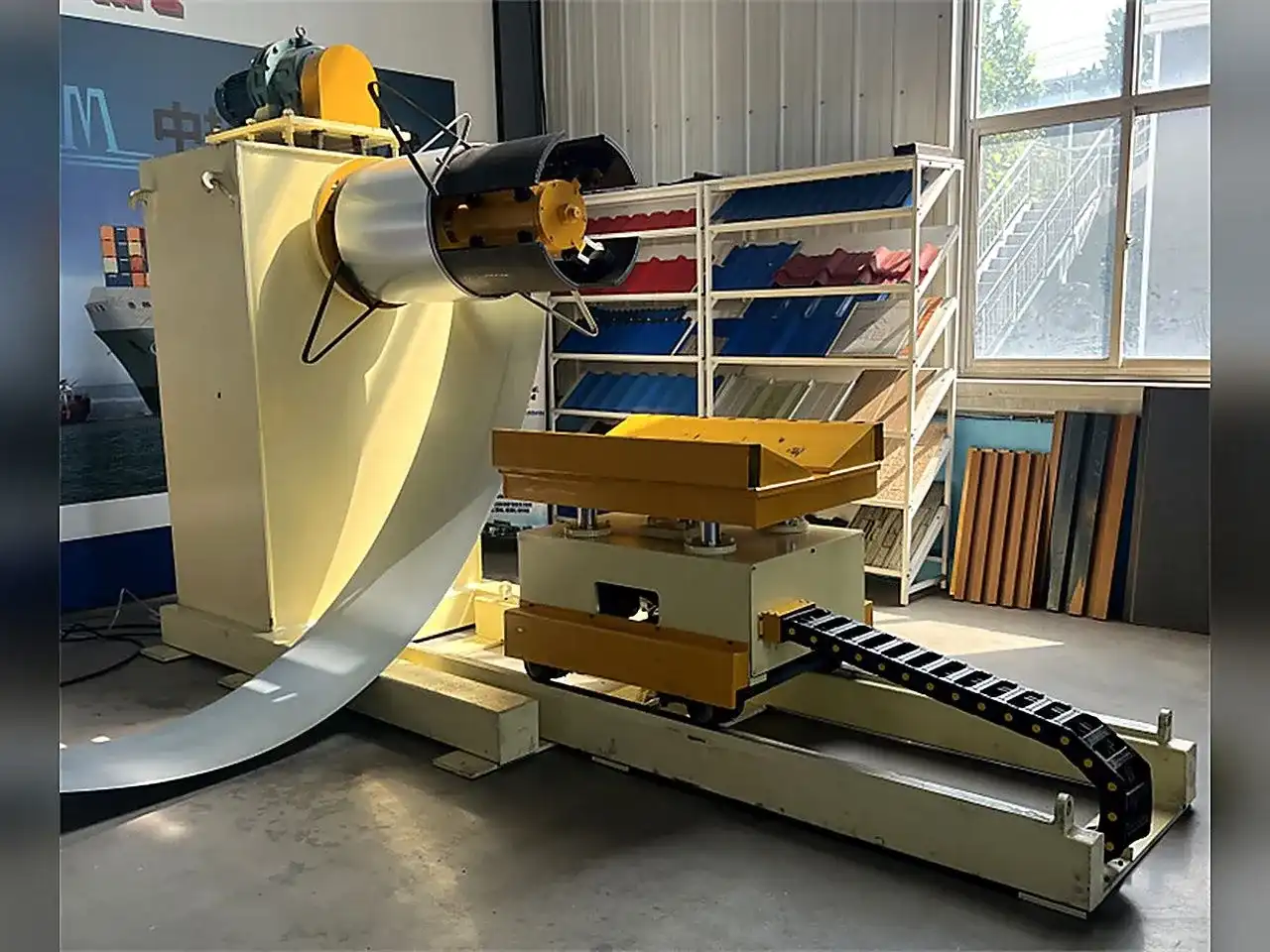
Box profile panels, rack decking panels, and shelf panels are all products that are manufactured by our Automatic shelf panel roll forming machine, which is a line of fully automatic machines that are designed for use in grocery stores. Using it, cold-rolled coils with thicknesses ranging from 0.7 to 1 mm and widths ranging from 300 to 640 mm can be produced. Coils with an inside width of 450–550 millimeters and an exterior width of up to 1300 millimeters can be handled by the decoiler, which has a capacity of 5 tons. The line is comprised of 36 forming stations, each of which has a solid shaft measuring 50 millimeters. As well as being made of Cr12MoV, the cutter is also made of this material. The rollers are treated with vacuum heat to HRC55–58. This line is powered by a main motor that is 25 kW in capacity, and the voltage is 380 V, 50 Hz, three-phase; however, it is able to be altered to meet your specific requirements. The programmable logic controller (PLC) is responsible for handling batch, length, and quantity settings, and size adjustment allows you to adjust panel profiles.
Customization, Packing, and Installation Support
Altering the panel size, material, punching design, and production speed are all options that are available to you. A steel frame is used to mount the main machine, and we take precautions to prevent water and moisture from entering the electrical cabinet. In order to prevent rust from forming on rollers and other mechanical components, they are oiled. Additionally, spare parts and tools are stored in their own special wooden cases. Containers of either 20GP or 40HQ can be handled by the machine. In addition to offering installation drawings, operation manuals, and electrical diagrams, we perform quality assurance checks and test runs on the production before we send it out to customers. From a single machine to an entire line that includes a decoiler, former, stacker, and spare parts, we are able to handle everything in a single location by providing comprehensive services. To assist you in getting up and running, our commissioning engineers are available.
Choosing a Manufacturer and Watching Industry Trends
Be sure to investigate the engineering team of a supplier, as well as their capacity to machine, the standards for assembly, the testing methods, and their expertise in designing rollers. Because every shipment needs to have the appropriate paperwork, logistics, and service, it is essential to have prior experience in the exporting industry. Cangzhou Zhongtuo is a national high-tech company that was established in 2014 and possesses certifications in the areas of ISO9001, CE, and CAS. Our machines are currently being utilized in over 150 different countries. We are able to remotely monitor and repair cloud Internet of Things lines because we collaborate with Siemens. It is becoming less common for machines to operate independently, and it is becoming more common for lines to have digital monitoring, recipe management designed to facilitate faster changeovers, and predictive maintenance designed to reduce the number of unplanned stops.
Conclusion
A pallet rack roll forming machine takes coil and shapes it into uprights, beams, braces, and panels with consistent sizes and less waste. However, the results depend on how well the line fits the product. The shape is decided by profile drawings, the grade of the material, its thickness, and the pattern of the holes. The amount of orders and the need for changeover determine the type of design (single or multi-profile) and the level of automation (fully or partially automatic). More than forming speed, finished output per shift, accuracy, and downtime are better ways to measure productivity. It is smart to buy something that meets standards like ANSI MH16.1 and NFPA 79, the total cost of ownership, and written acceptance criteria. This article talks about a shelf panel line that fits these criteria in terms of specifications, automation, and packing details.
FAQ
1. What does a pallet rack roll forming machine produce?
It can make uprights, beams, braces, rails, and panels out of steel coil, depending on the tools and station design.
2. How should I compare production speed?
Not just forming speed, but also the number of finished pieces per shift. How often you punch, how long you cut, how thick the material is, and how automated you are all affect real output. Ask the supplier to run your profile through a test run first.
3. Is an automatic line better than a semi-automatic one?
It depends on how loud you are. Automatic lines work well for making a lot of the same thing. Small businesses and new product lines can use semi-automatic lines. Compare the total cost of ownership, which includes repairs and labor.
Request a Pallet Rack Roll Forming Machine Solution from ZTRFM
ZTRFM makes pallet rack roll forming machines and has ISO9001, CE, and CAS certifications. They also offer OEM and ODM tooling and one-stop service. Send your profile drawings, the grade of steel, the thickness, and the amount of work you want to be done to zhongtuorollforming@gmail.com, and our engineers will put together a technical proposal.