- English
- French
- German
- Portuguese
- Spanish
- Russian
- Japanese
- Korean
- Arabic
- Irish
- Greek
- Turkish
- Italian
- Danish
- Romanian
- Indonesian
- Czech
- Afrikaans
- Swedish
- Polish
- Basque
- Catalan
- Esperanto
- Hindi
- Lao
- Albanian
- Amharic
- Armenian
- Azerbaijani
- Belarusian
- Bengali
- Bosnian
- Bulgarian
- Cebuano
- Chichewa
- Corsican
- Croatian
- Dutch
- Estonian
- Filipino
- Finnish
- Frisian
- Galician
- Georgian
- Gujarati
- Haitian
- Hausa
- Hawaiian
- Hebrew
- Hmong
- Hungarian
- Icelandic
- Igbo
- Javanese
- Kannada
- Kazakh
- Khmer
- Kurdish
- Kyrgyz
- Latin
- Latvian
- Lithuanian
- Luxembou..
- Macedonian
- Malagasy
- Malay
- Malayalam
- Maltese
- Maori
- Marathi
- Mongolian
- Burmese
- Nepali
- Norwegian
- Pashto
- Persian
- Punjabi
- Serbian
- Sesotho
- Sinhala
- Slovak
- Slovenian
- Somali
- Samoan
- Scots Gaelic
- Shona
- Sindhi
- Sundanese
- Swahili
- Tajik
- Tamil
- Telugu
- Thai
- Ukrainian
- Urdu
- Uzbek
- Vietnamese
- Welsh
- Xhosa
- Yiddish
- Yoruba
- Zulu
Cold roll forming vs hydraulic press differences
The main difference between hydraulic pressing and cold roll forming is whether the work is done all at once or in batches. A cold roll forming door frame machine moves a steel coil between a set of rollers, as far as I can tell. As it is built to punch and cut, it can make profiles that are always the same at high speeds. One blank at a time is shaped in a hydraulic press by a die. It works well for making parts that are deep, heavy, or unique, but you need to be more careful between steps. Roll-forming is often the best way to make a lot of standard steel fire-rated and security door frames because it lets you make more doors per hour and charge less per unit. If you want to be sure, I'll show you how both ways work below.
What Are the Core Differences Between Cold Roll Forming and Hydraulic Press Forming? How Cold Roll Forming Works
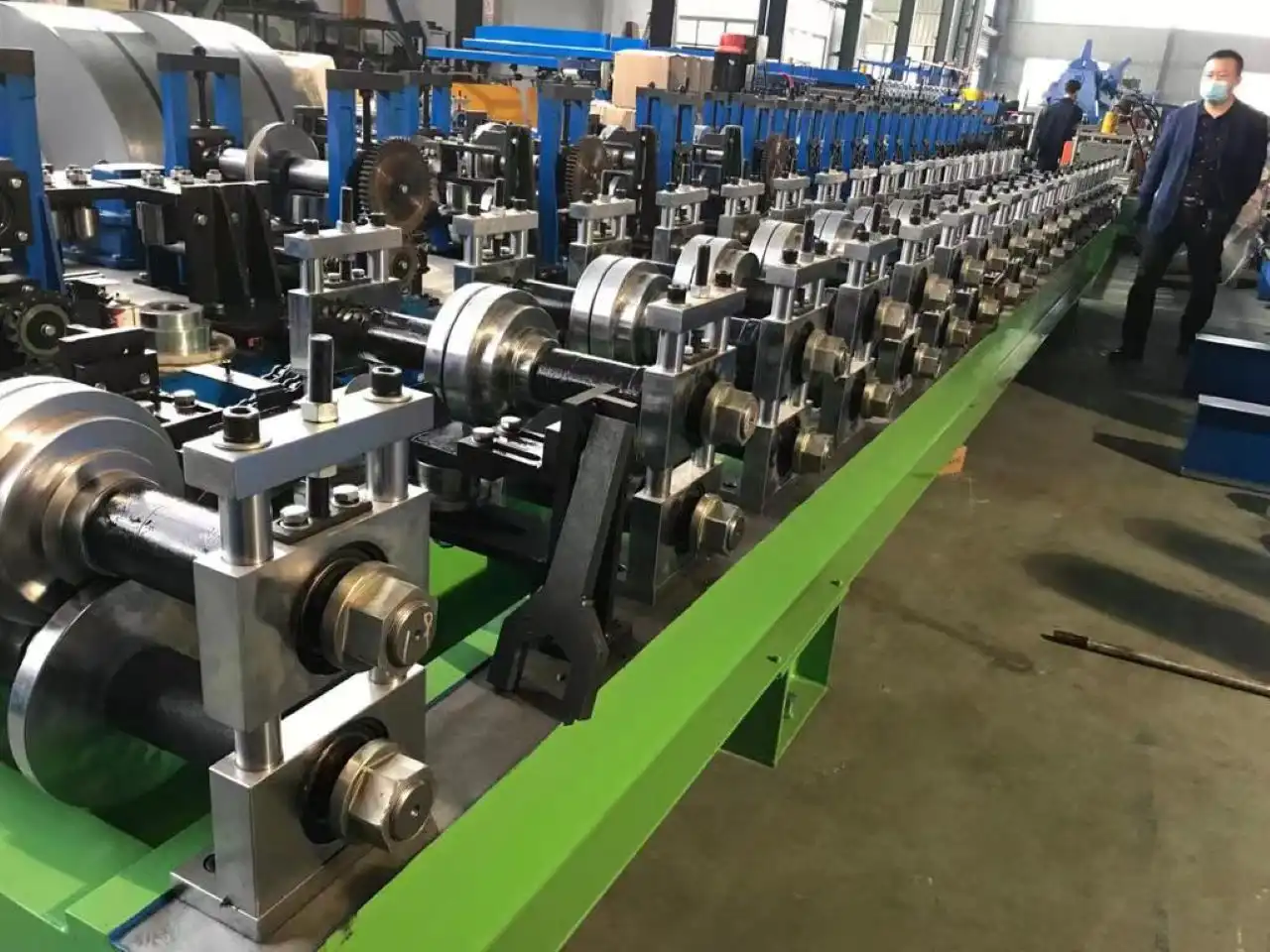
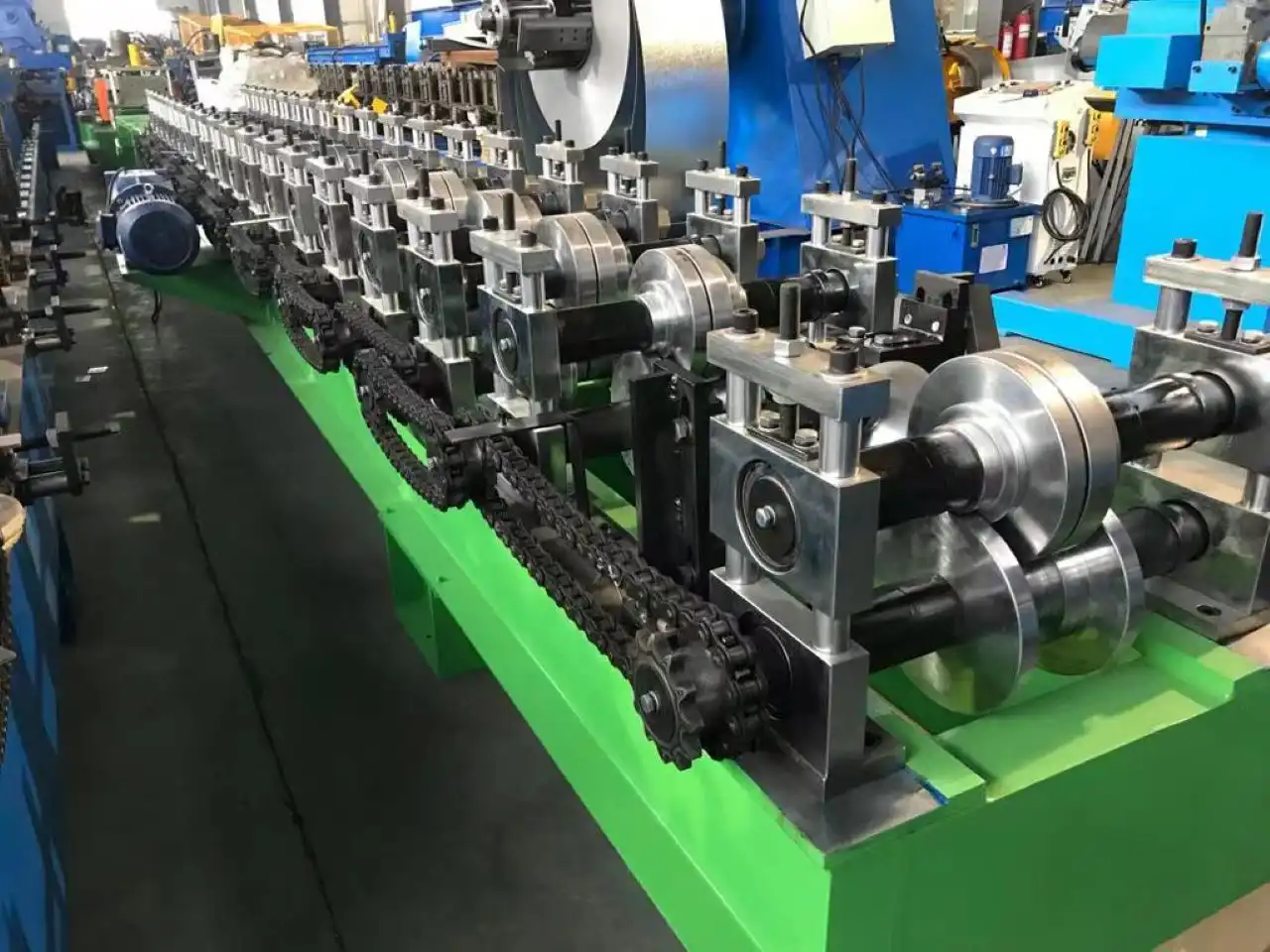
A flat piece of steel is cold rolled and slowly bent as it moves through two roller dies. A little more bend is added at each station until the whole profile can be seen. A normal door frame machine can decoil, level, punch, form, and cut at the same time. In addition, it can servo feed. At speeds of 15 to 25 meters per minute, this kind of machine can usually shape steel that is 0.8 mm to 2.0 mm thick, such as galvanized, cold-rolled, and stainless steel. Because the strip moves all the time, the process doesn't have to load over and over, which slows down batch work. Besides that, each frame leaves the line with the same width.
How a Hydraulic Press Works
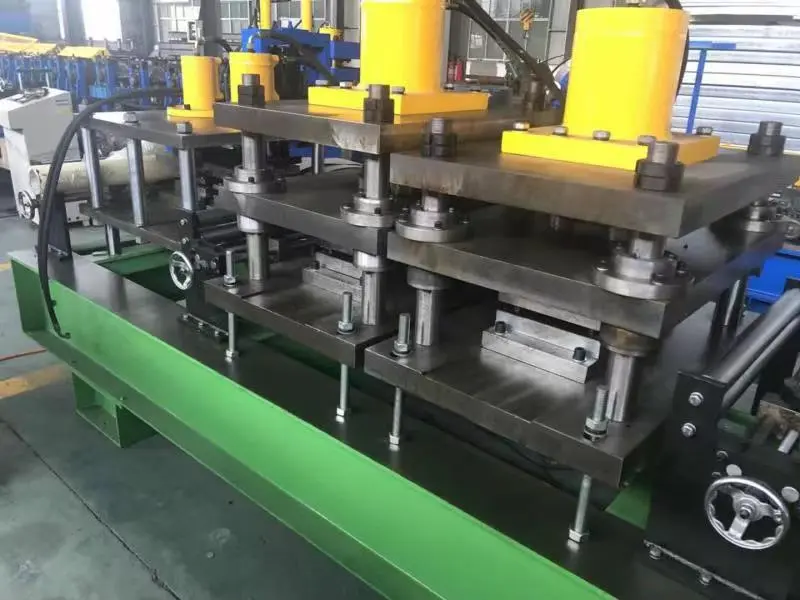
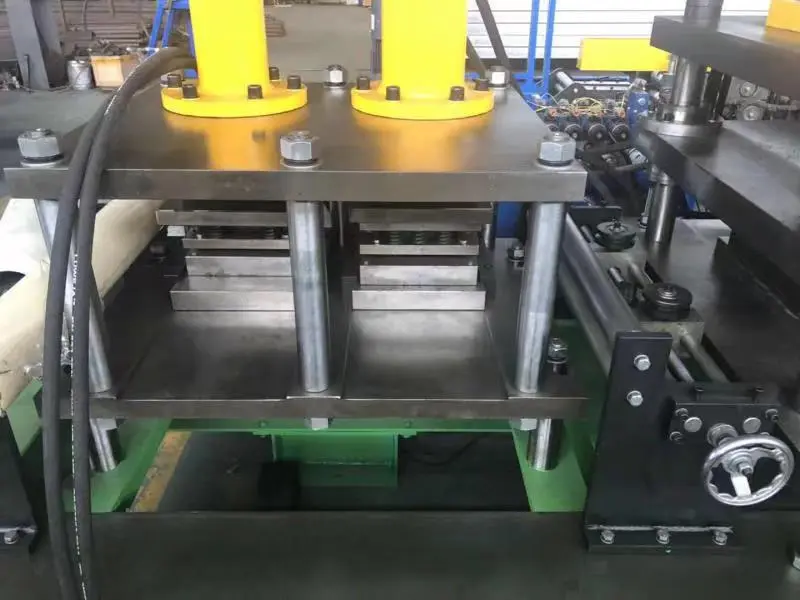
A hydraulic press shapes one blank or part at a time inside a die. Either a person or a loading system puts the blank in. The part is then pulled out by the ram's controlled stroke and force. Heavy-gauge sections, deep draws, embossing, and corner work can all be done with this method because it gives a lot of force in a short stroke. Process time is the cost. It takes more work to prepare, load, unload, and check the blank, and most of the time, a new shape needs its own die. When orders are small or don't come in very often, being able to be flexible can be worth the extra time it takes.
Continuous Bending Versus Batch Forming
How they deal with time and matter is what makes them unique. How much is made depends on how fast the line is moving and how long the cut is. Because pressing starts with blanks, the output depends on how quickly it is done and how it is looked after. There are times when neither method works better than the other. It depends on how complicated the profile is, the grade of steel, the amount that needs to be made each year, how much automation is needed, and how close the tolerances need to be. First, I always ask buyers how many frames they need every month, how thick their steel is, and how many profile options they have. Those answers quickly narrow down the choices, so you don't have to make bad tool choices later on.
Cold Roll Forming vs Hydraulic Press: Performance Comparison
Speed and Repeatability
The fastest way to make standard frames is to roll form them. The line can go 15 to 25 meters per minute and make long pieces without stopping. The feeding can be kept within 0.5 mm of where it should be by servos. This is possible because each frame goes through the same roller stations. The output depends on how long it takes to load and unload the dies and cycle them. One part can be the same quality on both presses. People who want to buy something from me are told not to rely on the brochure's maximum line speed. Instead, they should check the real frames per hour, reject rate, and changeover time.
Accuracy, Springback, and Surface Quality
Surface marks, springback, and distortion must be able to be handled in both ways. In roll forming, engineers make the roller flower with points that bend too far to stop the steel from going back to its original shape. This makes sure that the profile stays at 90 degrees. For installation on-site, it's important that the profile twist is less than 1 mm every 3 meters and the cut-length error is less than ±1.0 mm every 6 meters. Chrome-plated rollers help protect surfaces that have already been painted or galvanized from scratches. Shape can be changed by the press's die design and tonnage, but moving sheets from one station to another can leave marks if not done carefully.
Material Use and Tooling Life
When coil-fed roll forming is used, sections are cut straight to length, which means there is less waste. Presses often start with blanks that have already been cut, so there is a lot of waste. The best roll forming rollers are made of GCr15 or Cr12MoV steel quenched to HRC 58–62 so they don't wear out in long runs. The main shafts are usually made of heat-treated 45# steel. With cassette or cantilever designs, profile changes can be done faster, which cuts downtime from hours to minutes. Press dies last a long time too, but each new frame shape needs a new set of dies. It costs more and takes up more room to store all the different catalogs.
Which Technology Fits Different Door Frame Applications?
Standard Steel and Hollow Metal Frames
Roll forming is often the best way to make doors for apartments, commercial buildings, and homes that are already put together. Standard interior frames, even knock-down types, move quickly. Automatic 45-degree hydraulic shearing lets manufacturers flat-pack frames so that they can be put together quickly on-site, which reduces the amount of shipping that needs to be done. With spacers or automated width systems, one door frame machine can work with wall thicknesses from 100 mm to 250 mm. This is because it doesn't need to change roller tools. When holes for hinges and locks are punched out ahead of time, they stay in the continuous flow. But the plan has to take into account that holes will become warped near bend lines.
Fire-Rated and Security Door Frames
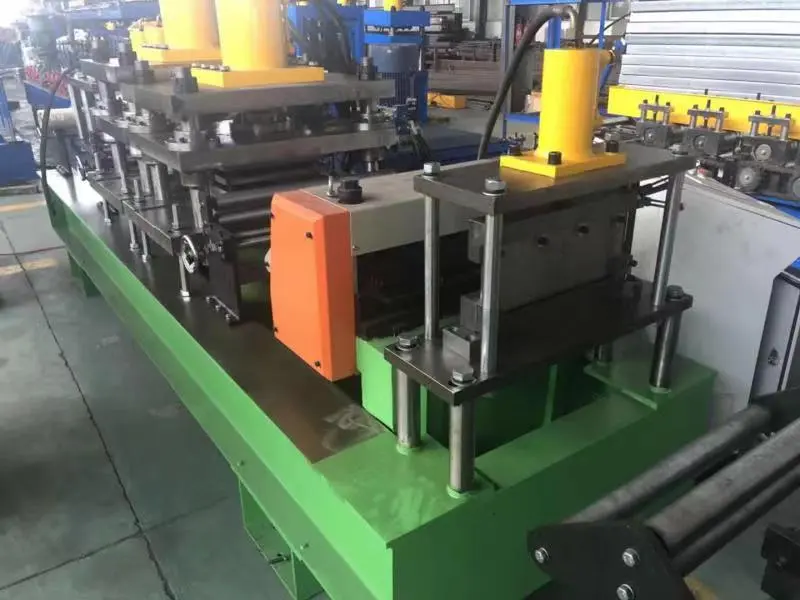
For fire-rated frames to work properly in a fire, the gap between the frames must be very small. Heavy-duty metal that has been galvanized is often used. Fire door assemblies also need to meet standards like NFPA 80. Buyers should check with their certification body to make sure they know what they need to do. Safety frames often need profiles with more than one step so they can fit stronger locking systems with more than one point. Roll-forming can make these shapes, and it also makes the steel stronger by working it hard. To make sure the corners fit well and the thickness stays the same, it's important to pay close attention to the accuracy of the punching in both cases.
Heavy-Gauge, Custom, and Hybrid Production
This is the best way to make thick sections, deep shapes, and one-of-a-kind designs when strength is more important than speed. If your plant makes a lot of standard profiles but also needs pressed corner parts or special reinforcements, a hybrid line is a good choice. To make the continuous section, rolls are used, and hydraulic punching, pressing, and welding are used to make the extras. I think you should send drawings and samples of the materials to the supplier to see if they can be used before you decide. Real examples are the only way to show how springback and punching work.
How to Choose the Right Door Frame Machine
Compare Total Investment and Return
Don't just look at how much the door frame machine costs. Costs of tooling or dies, coil handling, punching units, installation, commissioning, shipping, and importing are all added up to get the total cost of the investment. It is usually cheaper to do roll forming as the volume goes up because continuous processing cuts down on waste, labor, and unit cost. For small or variable runs, a press might cost less up front, but it takes more work to move it around and do other tasks. When making a useful return model, one needs to think about things like output, selling price, material cost, labor savings, scrap reduction, maintenance, and funding. When you make that model, I believe you should use real-order forecasts instead of best-case speeds.
Avoid Common Buying Mistakes
Most people get it wrong when they only compare price or top speed. There is a chance that a cheaper line will need more work, produce more waste, or make it harder to use certain tools. Another mistake is choosing a machine before the shape of the profile is set in stone. The wrong tools might be used or the profile might get messed up because of this. People also forget about the steps that come after, like stacking, packaging, notching, welding, and putting together the corners. In the end, make sure you have written confirmation that spare parts are available, that the warranty covers what you need, that there is software support, and that service response times are reasonable before you sign.
What to Expect from a Door Frame Machine Supplier
A good supplier looks over drawings, material data, tolerances, and output goals before confirming that the job is possible. It has been since 2014 that ZTRFM has planned and built cold roll forming machines. You can get OEM, ODM, and service from us that brings together raw materials, machines, and parts in one place. More than 150 countries have bought our goods, and they are approved by ISO9001, CE, and CAS. When you look at a line, you should check how stable it is hydraulically at 12–16 MPa, how well its PLC works when it's being used for a long time, and how a test run on real steel turned out. High-end models often come with Siemens or Mitsubishi PLCs.
Conclusion
Pressing and cold rolling can both be used to solve different production problems. In roll forming, a coil is moved through roller stations over and over again. This makes profiles that are high-speed, repeatable, and combine punching and cutting. It also lowers the cost per unit for standard steel, fire-rated, and securitydoor frame machines. Hydraulic pressing can make deep, heavy-gauge, or custom parts when a lot of force is put on a single blank. But the time it takes to handle and cycle the die must be thought about. How accurate it is depends on how well you can control the springback, how good the tools are, and how clean the cuts are. The best choice depends on the shape of the profile, the thickness of the material, the amount that needs to be made, and the automation requirements. A hybrid line is useful for many things. Buyers can make the best comparisons when they check out more than just price or speed claims. Plus, they should check the total amount spent, the actual output, the waste, and the support given by suppliers.
FAQ
1. Can one door frame machine produce different frame widths?
Yes. Machinery that can be changed can work with wall depths from 100 mm to 250 mm without having to change the roller tools. This is possible with spacers or automatic systems that change the width.
2. Is pre-punching or post-punching better for door frames?
It is common to pre-punch before forming hinge and lock patterns that are hard to understand. This keeps production going. Near bend lines, the plan has to let holes change shape.
3. How does roll forming handle springback in high-tensile steel?
So that the material doesn't stretch, engineers change the roller gaps and add over-bending stations. This makes sure that the profile stays at 90 degrees.
4. Does a large line need a special foundation?
Some machines are small and have a flat base. A concrete base with leveling bolts is often needed for larger high-speed lines to keep the line straight and stop it from shaking.
Request a Door Frame Machine Quote from ZTRFM
Are you beginning a new line? ZTRFM has been making door frame machines since 2014 and is certified by ISO9001, CE, and CAS. It sends its goods to over 150 different countries. Email your profile drawings, the grade of the material, the thickness, and the result you want to zhongtuorollforming@gmail.com, and our engineers will help you figure out the best way to set it up. You can get service from OEM and ODM.
References
1. Roll Forming Handbook, 2006
2. Manufacturing Engineering and Technology, 2014
3. Fundamentals of Modern Manufacturing, 2020
4. ANSI/SDI A250.8 (SDI-100) Recommended Specifications for Standard Steel Doors and Frames, 2014
5. NFPA 80: Standard for Fire Doors and Other Opening Protectives, 2022
6. ISO 9001: Quality Management Systems – Requirements, 2015