- English
- French
- German
- Portuguese
- Spanish
- Russian
- Japanese
- Korean
- Arabic
- Irish
- Greek
- Turkish
- Italian
- Danish
- Romanian
- Indonesian
- Czech
- Afrikaans
- Swedish
- Polish
- Basque
- Catalan
- Esperanto
- Hindi
- Lao
- Albanian
- Amharic
- Armenian
- Azerbaijani
- Belarusian
- Bengali
- Bosnian
- Bulgarian
- Cebuano
- Chichewa
- Corsican
- Croatian
- Dutch
- Estonian
- Filipino
- Finnish
- Frisian
- Galician
- Georgian
- Gujarati
- Haitian
- Hausa
- Hawaiian
- Hebrew
- Hmong
- Hungarian
- Icelandic
- Igbo
- Javanese
- Kannada
- Kazakh
- Khmer
- Kurdish
- Kyrgyz
- Latin
- Latvian
- Lithuanian
- Luxembou..
- Macedonian
- Malagasy
- Malay
- Malayalam
- Maltese
- Maori
- Marathi
- Mongolian
- Burmese
- Nepali
- Norwegian
- Pashto
- Persian
- Punjabi
- Serbian
- Sesotho
- Sinhala
- Slovak
- Slovenian
- Somali
- Samoan
- Scots Gaelic
- Shona
- Sindhi
- Sundanese
- Swahili
- Tajik
- Tamil
- Telugu
- Thai
- Ukrainian
- Urdu
- Uzbek
- Vietnamese
- Welsh
- Xhosa
- Yiddish
- Yoruba
- Zulu
Box Beam vs Step Beam Racking: Which Line to Buy
Utilising a box beam roll forming machine is the most robust option when it comes to the construction of heavy-duty pallet racks. It manufactures closed beams that are resistant to torsion and can withstand high load levels. To accommodate ordinary pallet racking that requires decking support and simple accessory connection, a step beam line is an appropriate option. In order to choose which line to purchase, you should consider your completed profile, load objectives, steel thickness, and order mix. Our box beam roll forming machine can produce material with a thickness of 2.0-3.0 millimetres at a rate of 15-20 meters per minute, and it can be operated by a single person. Have a look at the following to compare the two lines, consider the prices, and make an informed decision.
Box Beam vs Step Beam Racking: Structural and Application Differences How the Cross-Sections Differ
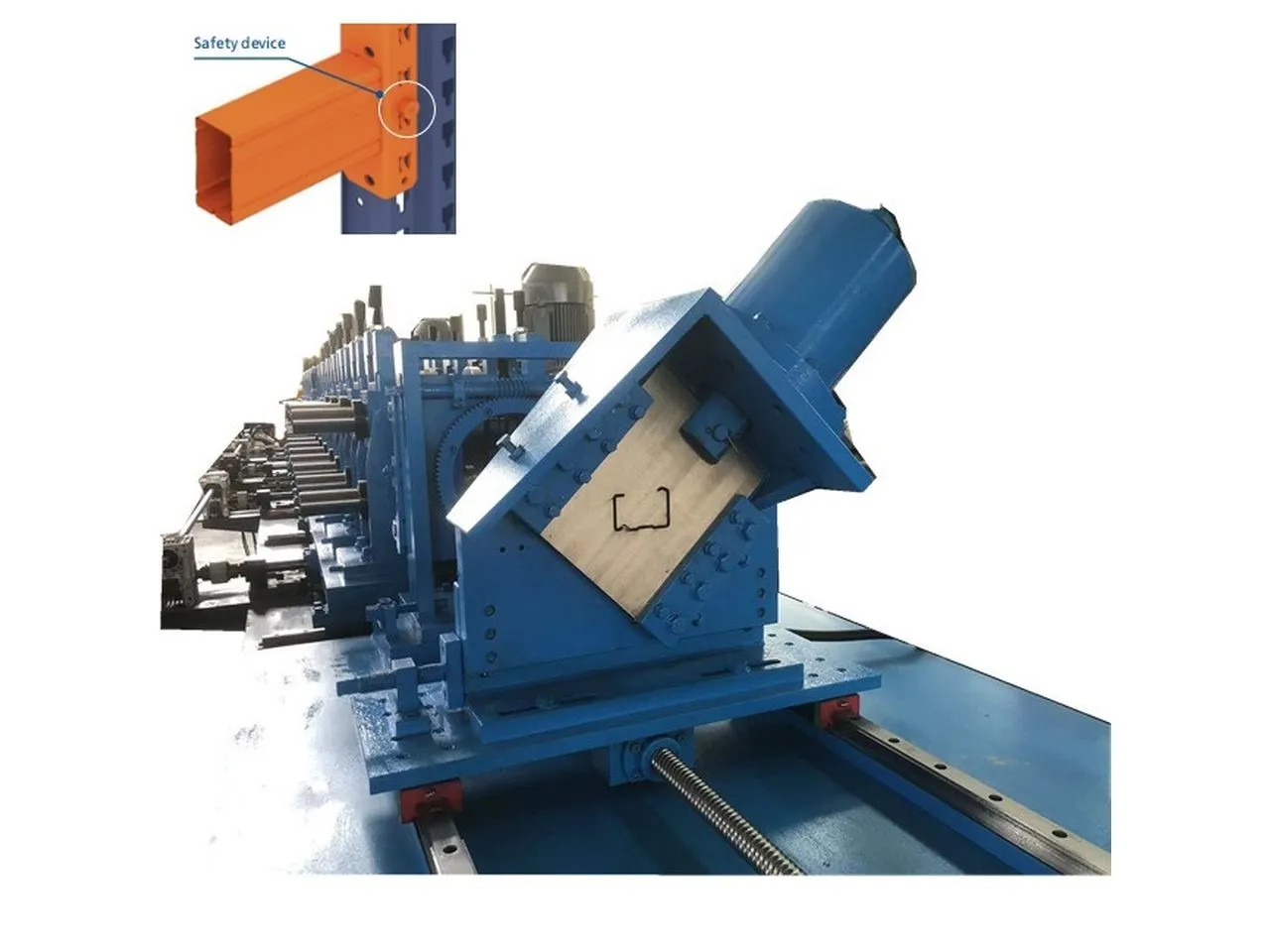
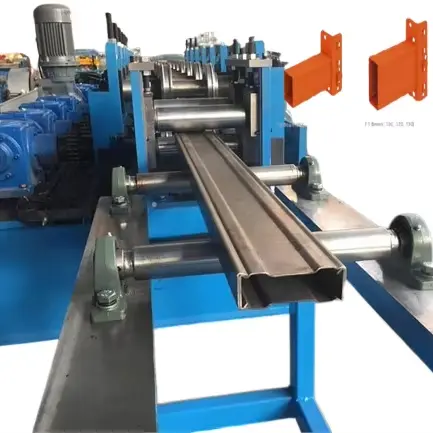
A closed rectangular tube is what is known as a box beam. Two C profiles are made in our line, and then they are linked together, which results in the formation of a hollow section that has a high level of torsional resistance. The term "step beam" refers to an open portion that has a created ledge and is used to support wire decking or pallet board. It is possible to easily produce open sections, although they twist more when subjected to unequal stresses. When pallets are placed off-center by forklifts, closed parts are better able to maintain their initial form. In addition, the forming sequence, roller design, and quality checks are all different due to the fact that the forms are different.
Where Each Beam Performs Best
In situations when deflection and twist are of the utmost importance, such as high-bay storage, big pallet loads, and mezzanine joists, box beams are used. Standard selected pallet racking, shelving with wire decking, and other types of systems that often change configuration are all suitable for step beams. Those who manufacture fixtures for supermarkets often use box beams because they are rigid and provide shelf fronts a clean appearance. In order to achieve a higher rate of production, steel-profile service centers may use step profiles. Load ratings in the United States are determined by beam testing and design standards such as ANSI MH16.1, which means that your profile drawing and test results should be the primary factors in making the selection.
Why You Should Approve the Profile Drawing First
Before you ask for pricing, you need to have your CAD design approved first. Because the roller sets used in box beam and step beam lines are distinct from one another, it is uncommon for a single standard machine to be able to accommodate both profiles without requiring modifications. All of the following information should be included in your drawing: thickness, steel grade, flange widths, connection slot locations, and size range. Following the comparison of these particulars with the 2.0-3.0 mm forming range and the 20-station architecture, our engineers determine whether or not the profile is suitable for the line under consideration. This early inspection will avoid any surprises about the tooling and will provide you with a precise price. Use the same connection layout if you are required to match the uprights that are already in place.
How a Box Beam and Step Beam Roll Forming Line Works
The Process From Coil to Finished Beam
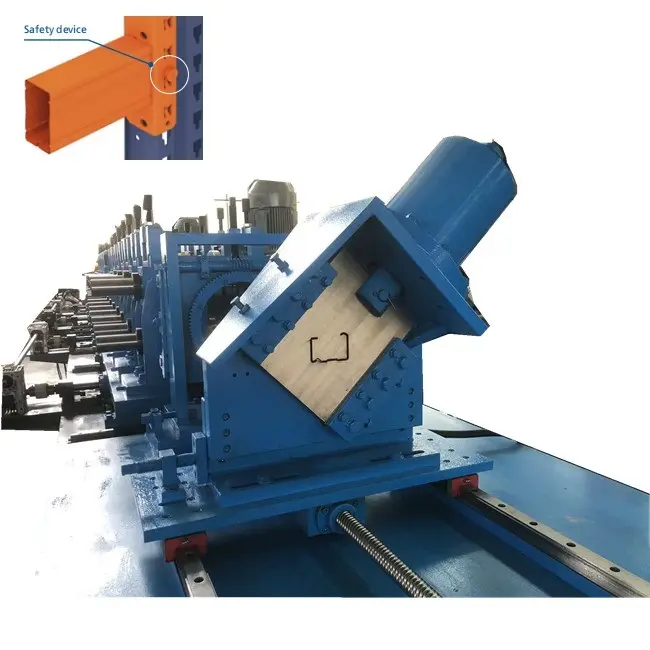
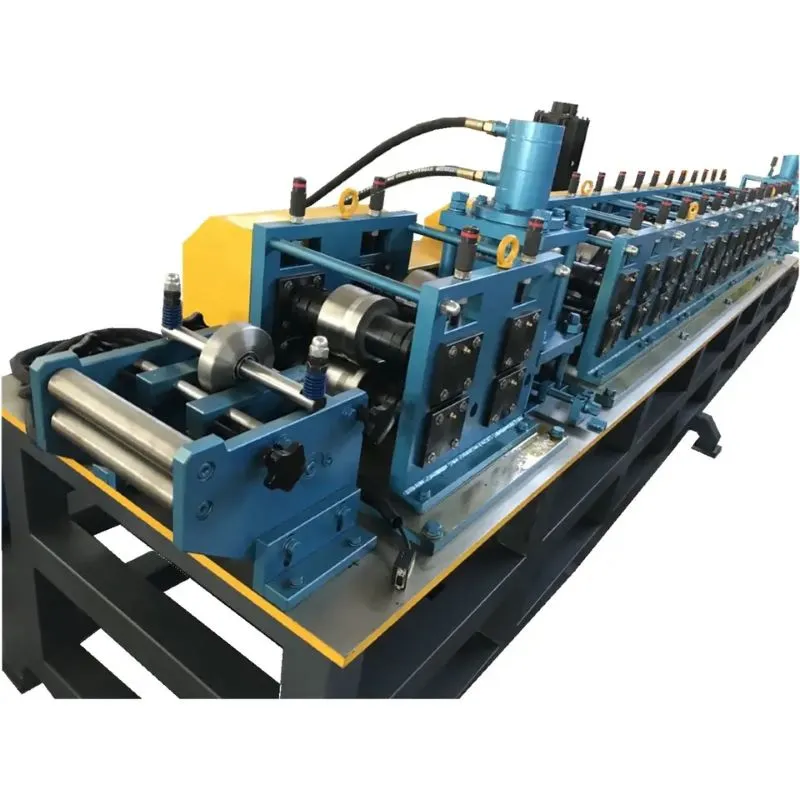
Uncoiling the strip, guiding it, forming it via paired rollers, cutting it, and delivering completed lengths are all tasks that are performed by a racking beam line. Our box beam roll forming machine adds two steps. In the beginning, it creates the C profiles. After that, the conveying system transfers them to the locking machine without requiring any intervention from the operator, and the locking unit combines two C profiles into a single box beam. The finished beams move to a receiving table. The forming, transporting, locking, and collecting processes can all be run by a single operator. Controlling the settings and providing both English and multi-language interfaces are the capabilities of a Delta PLC.
Core Specifications of the ZTRFM Box Beam Line
The numbers are the first thing most buyers enquire about; therefore, here they are. The line forms galvanized steel (GI) or aluminium from 2.0 to 3.0 mm thick at 15–20 m/min through 20 customizable forming stations. On an 80 mm solid shaft that is housed inside a 500H heavy-duty steel frame, GCr12MoV rollers are positioned. The shafts are turned by a chain drive coupled with a primary motor that is 7.5 kW, and the Cr12MoV cutter is powered by a hydraulic system that is also 7.5 kW. We need to know the electrical supply of your facility as soon as possible, since the standard power is 380V/50Hz three-phase.
Automatic Size Changing and Quick Changeover
In racking factories, the order mix is subject to rapid fluctuation. The forming moulds are moved down the shafts by our PLC in order to alter the C profile sizes within the range that was planned. This allows the operators to avoid having to switch out a whole roller set for each size. This helps to reduce setup problems and saves time during changeovers. Our initial step is to examine the profile since step beams often need a different roller design than other types of beams. In the event that you want to run both forms, we may explore the possibility of setting up separate tooling or a multi-profile configuration depending on the designs and volumes you provide.
Which Racking Beam Roll Forming Line Fits Your Production Needs?
Match the Line to Your Product Mix
When the majority of your orders consist of heavy-duty pallet racking, mezzanine joists, or stiff shelf beams, you should go with a box beam line construction. Choosing a step beam line is the best option if your sales are being driven by regular pallet racking with decking support. Racking manufacturers that are increasing beam capacity often begin with the profile that does the best in terms of sales and then increase tooling later on. Prior to making a decision, supermarket fixture manufacturers and steel-profile servicing centers should first identify the top five beam diameters and monthly tonnage that they produce. The following list illustrates whether a dedicated line or an automated size shifting configuration provides a higher value.
Total Cost and Return on Investment
When estimating total cost, include steel scrap, labour, tooling, spare parts, installation, and downtime. A line that only requires one operator rather than numerous may rapidly reduce the amount of money spent on labour in a facility that operates on two shifts. In order to ensure that the estimates are comparable, wholesale purchasers should request a price per line that includes a list of die sets, the kind of decoiler, and replacement parts. Make sure you have a written assurance that the beams are straight, since the cost of reworking bent beams is far more than a slight price difference. After that, calculate the payback based on the yearly production and the effective operating hours.
Automation Level: Manual or Automatic Decoiler
Our box beam roll forming machine can be configured with a manual or automatic decoiler. Manual decoilers are cost-effective and suitable for operations with low volume. An automated decoiler reduces the amount of time spent handling coils and is suitable for operations that produce large quantities of product. In the event that your beams need holes for upright clips, you should include connection piercing, and if your design requires it, you should enquire about inline welding. Choose a level that corresponds to the volume you are now experiencing, and make sure to allow room in the plan for improvements. Decoilers, formers, stackers, and replacement parts are all included in our one-stop supply, which may be provided via a single point of contact.
How to Evaluate a Beam Roll Forming Machine Manufacturer
Certifications and Track Record
Verify the evidence before you make a deposit payment. In 2014, the company ZTRFM, which is a trademark of Cangzhou Zhongtuo, was established in Botou, Cangzhou, which is a significant center for roll forming equipment in China. All of our machines are certified to meet the standards of ISO9001, CE, SGS, UL, and CAS, and they are used in more than 150 countries. Customers such as Tata Group, DS Group, and HADDAD SET are examples of reference customers. In addition, we collaborate with Siemens on cloud Internet of Things and remote maintenance, as well as with Yanshan University and the National Cold Roll Forming Institute. Ask any potential provider for samples of beams that you can measure, as well as certifications and references.
Testing, Samples, and Documentation
In most cases, purchasers from the United States wish to see the equipment in operation before it is sent. In addition to requesting a video acceptance test with your material, you should also request sample beams that demonstrate the height, breadth, locking quality, and straightness of the beams. Check the guarding and emergency stops to ensure that they comply with OSHA machine guarding regulations. Ensure that the cutter leaves clean ends that are free of scratches or distortion during use. Put in a request for the handbook, the electrical drawings, and the list of spare parts. The main machine is secured to a steel frame by our export packaging, the electrical cabinet is shielded from moisture, rollers are coated with anti-rust oil, and replacement parts are sent in wooden boxes.
Installation, Maintenance, and Troubleshooting
Before delivery, make sure that the foundation, power supply, coil area, and guarding are all prepared. During the trial runs, you should measure the length of the cut, the locking strength, and the profile dimensions. Cleaning the rollers, lubricating the chains and bearings, verifying the alignment of the shaft, and examining the hydraulic oil and cutter clearance are all important aspects of routine maintenance. When beams are twisted, it is often because of a misaligned roller or a change in the coil, and incorrect lengths are frequently traced back to the settings of the encoder or cutter. Spare cutters, bearings, seals, and sensors should be kept on hand at all times. Remote maintenance assistance, which is made possible by our collaboration with Siemens, enables our staff to identify errors more quickly.
Conclusion
The requirements for racking are varied for box beams and step beams. Box beams, which are constructed from two C profiles that are locked together, provide closed-section rigidity for heavy pallet loads, mezzanines, and shelf fronts. In addition to being able to accommodate regular racking, step beams have open parts that can hold decking. Due to the fact that each profile has its own roller design and drawing approval, the selection of the profile should occur before the selection of the machine. The box beam roll forming machine described here forms material 2.0–3.0 mm thick at 15–20 m/min. It has twenty stations, automated size changing, and a locking device that may be operated by a single operator. Not only does pricing have a role in total cost, but scrap, labour, tooling, and downtime all play a role. Use test results, certifications, and written specifications to evaluate whether the supplier can deliver the required profile.
FAQ
1. Can one machine make both box and step beams?
The two profiles usually require different tooling. We can review your drawings and discuss separate tooling or a setup for both profiles.
2. What thickness can the box beam line form?
Our line forms galvanized steel or aluminium from 2.0 to 3.0 mm thick at 15–20 m/min using 20 customizable forming stations.
3. What should I send for a quotation?
As well as your electrical supply, a CAD design or sample, the kind of material and its thickness, beam lengths, connection hole pattern, and the output you want to achieve should be sent. After that, we verify the delivery terms, the kind of decoiler, and the tooling.
4. How many operators does the line need?
Forming, transporting, locking, and completed beam collection are all tasks that may be managed by a single operator.
Request a Box Beam Roll Forming Machine Proposal from ZTRFM
Send ZTRFM your beam drawing, material grade, thickness, beam lengths, connector hole pattern, and target output for a box beam roll forming machine proposal. Email zhongtuorollforming@gmail.com. Our engineering team will review the tooling, decoiler, locking unit, and delivery requirements. We can also arrange a video acceptance test before shipment.