- English
- French
- German
- Portuguese
- Spanish
- Russian
- Japanese
- Korean
- Arabic
- Irish
- Greek
- Turkish
- Italian
- Danish
- Romanian
- Indonesian
- Czech
- Afrikaans
- Swedish
- Polish
- Basque
- Catalan
- Esperanto
- Hindi
- Lao
- Albanian
- Amharic
- Armenian
- Azerbaijani
- Belarusian
- Bengali
- Bosnian
- Bulgarian
- Cebuano
- Chichewa
- Corsican
- Croatian
- Dutch
- Estonian
- Filipino
- Finnish
- Frisian
- Galician
- Georgian
- Gujarati
- Haitian
- Hausa
- Hawaiian
- Hebrew
- Hmong
- Hungarian
- Icelandic
- Igbo
- Javanese
- Kannada
- Kazakh
- Khmer
- Kurdish
- Kyrgyz
- Latin
- Latvian
- Lithuanian
- Luxembou..
- Macedonian
- Malagasy
- Malay
- Malayalam
- Maltese
- Maori
- Marathi
- Mongolian
- Burmese
- Nepali
- Norwegian
- Pashto
- Persian
- Punjabi
- Serbian
- Sesotho
- Sinhala
- Slovak
- Slovenian
- Somali
- Samoan
- Scots Gaelic
- Shona
- Sindhi
- Sundanese
- Swahili
- Tajik
- Tamil
- Telugu
- Thai
- Ukrainian
- Urdu
- Uzbek
- Vietnamese
- Welsh
- Xhosa
- Yiddish
- Yoruba
- Zulu
How to control the production cost of roll forming?
To keep the cost of roll forming under control, keep an eye on how much each finished square meter costs instead of just the price of the machine. Less coil scrap, fewer stoppages, a configuration that fits your order volume, and quotes that list every part are the four areas where a tr4/ tr5 roof sheet machine can save you the most money. People who buy from ZTRFM save the most money when they set a baseline early on and keep track of it often. For TR4, TR5, and TR6 trapezoidal profiles, this guide shows you how to do that.
Analyze the Main Factors That Drive TR4 and TR5 Roll Forming Costs Material Yield Starts With the Coil
Since coil costs a lot in sheet production, yield is the most important thing. Yield is affected by the working width, profile pitch, coil width, accuracy of feeding, and quality of the tools. When a strip isn't lined up right, it makes wavy edges and wasteful scraps. The chrome finish on the 45# steel we use for our rollers helps protect coated surfaces like PPGI while they are being formed. The line can handle material from 0.3 mm to 1 mm thick, so pick a gauge that is just the right thickness for the job. When you run several coils every week, even a small savings per sheet adds up quickly.
Real Capacity Is Lower Than Rated Speed
Our line moves at 15–25 m/min, but that number only shows how fast it forms. It takes time to load a coil, thread the strip, cut, and unload. To give you an idea, 20 m/min times a 1 m working width equals 1,200 m² per hour on paper. You get 720 m² at 60% of the running time. Ask each supplier for output numbers that are based on how long the machine will actually run. A powered stacker or hydraulic unwinder can help increase that share when orders are steady. On the other hand, a manual run-out table works better when orders are low.
Energy, Labor, and Hydraulic Costs
The cost per square meter changes every shift based on the amount of power used and the number of people working on the job. A 4 kW hydraulic unit powers our cutting system, and the PLC with touchscreen controls the length and quantity settings, so we don't have to measure things by hand as much. Write down the motor ratings and hydraulic data that suppliers give you, then multiply them by the electricity rate in your area. It's cheaper to buy and run a manual decoiler stand. A hydraulic unwinder can cut down on the time it takes to handle heavy coils. Choose the option that fits the weight and volume of your coil every day.
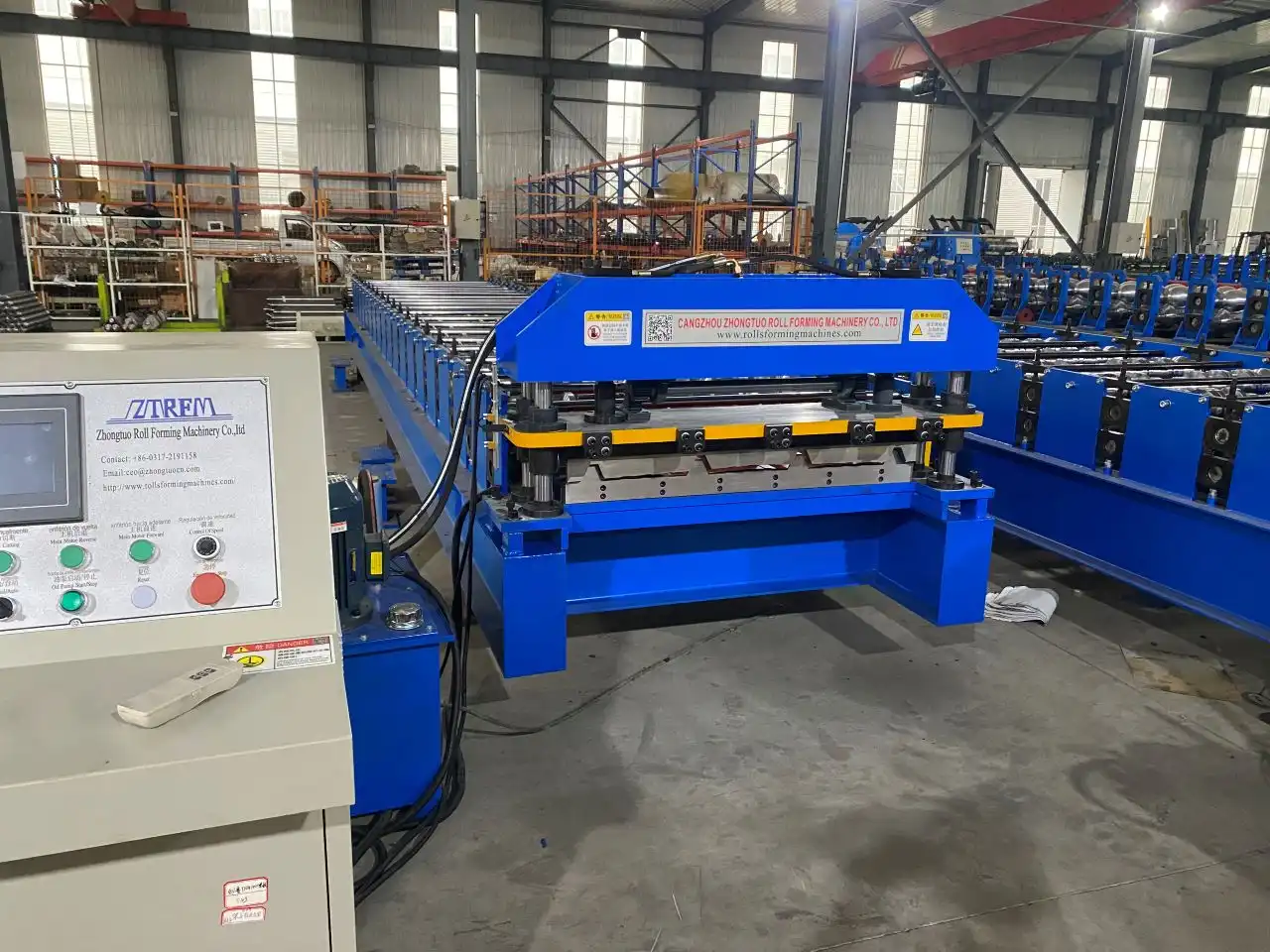
Match the TR4 and TR5 Roll Forming Machine Configuration to Your Orders
Dedicated Line or Interchangeable TR4/TR5 Tooling
A single-profile line costs less up front and can handle steady, high-volume demand for just one profile. It takes longer to set up and change over tools for an interchangeable line, but it's worth it when customers want different profiles. For shops that make a lot of different profiles, ZTRFM has quick-change cassette tooling available. Our lines include TR4, TR5, and TR6 trapezoidal shapes. We make profile-to-order tools, so if your customers in the U.S. also ask for PBR or R-panel, send us the drawing. Don't add flexibility until the extra profiles start making money.
Decoiler, Forming Stations, and Cutting
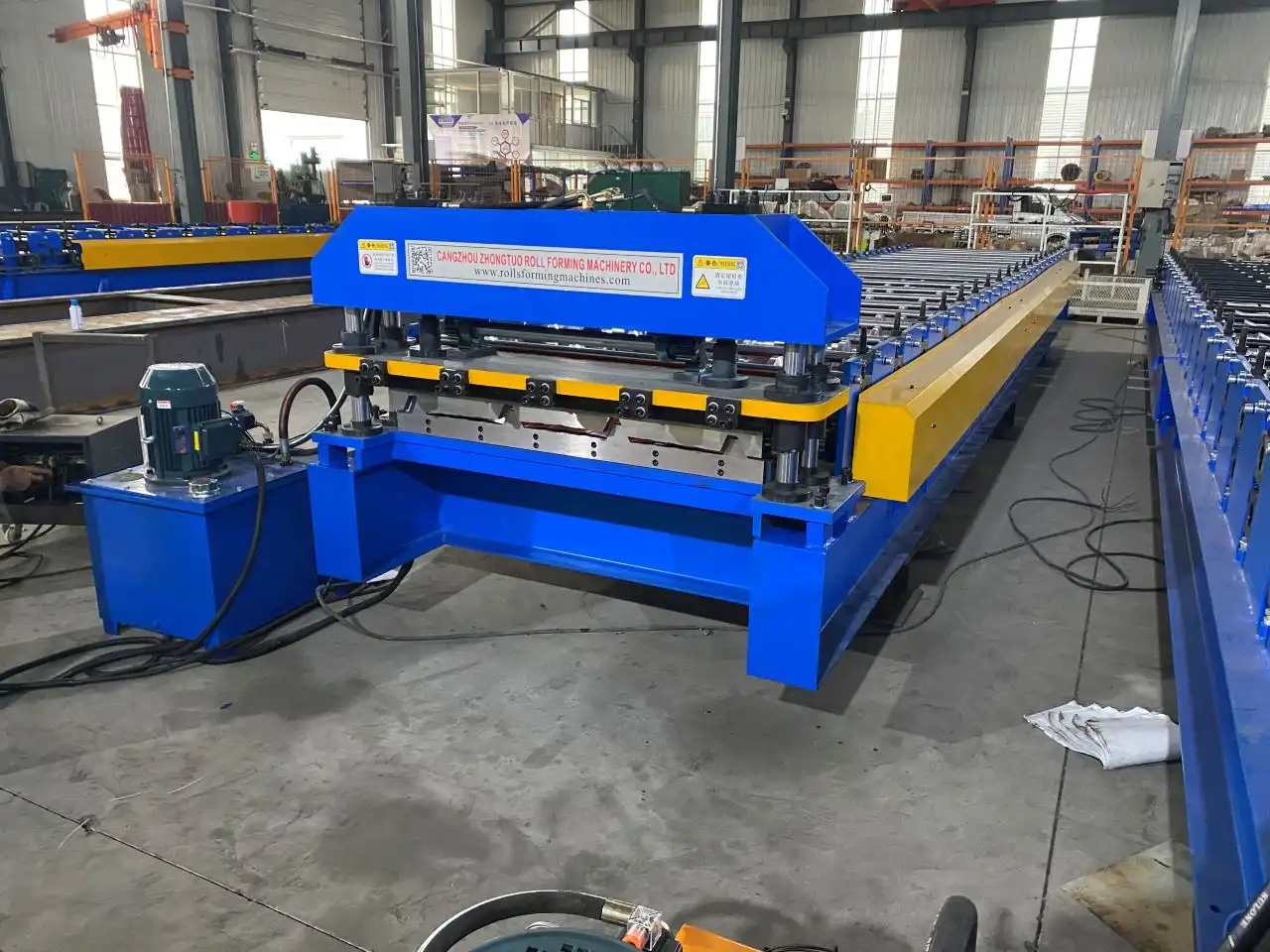
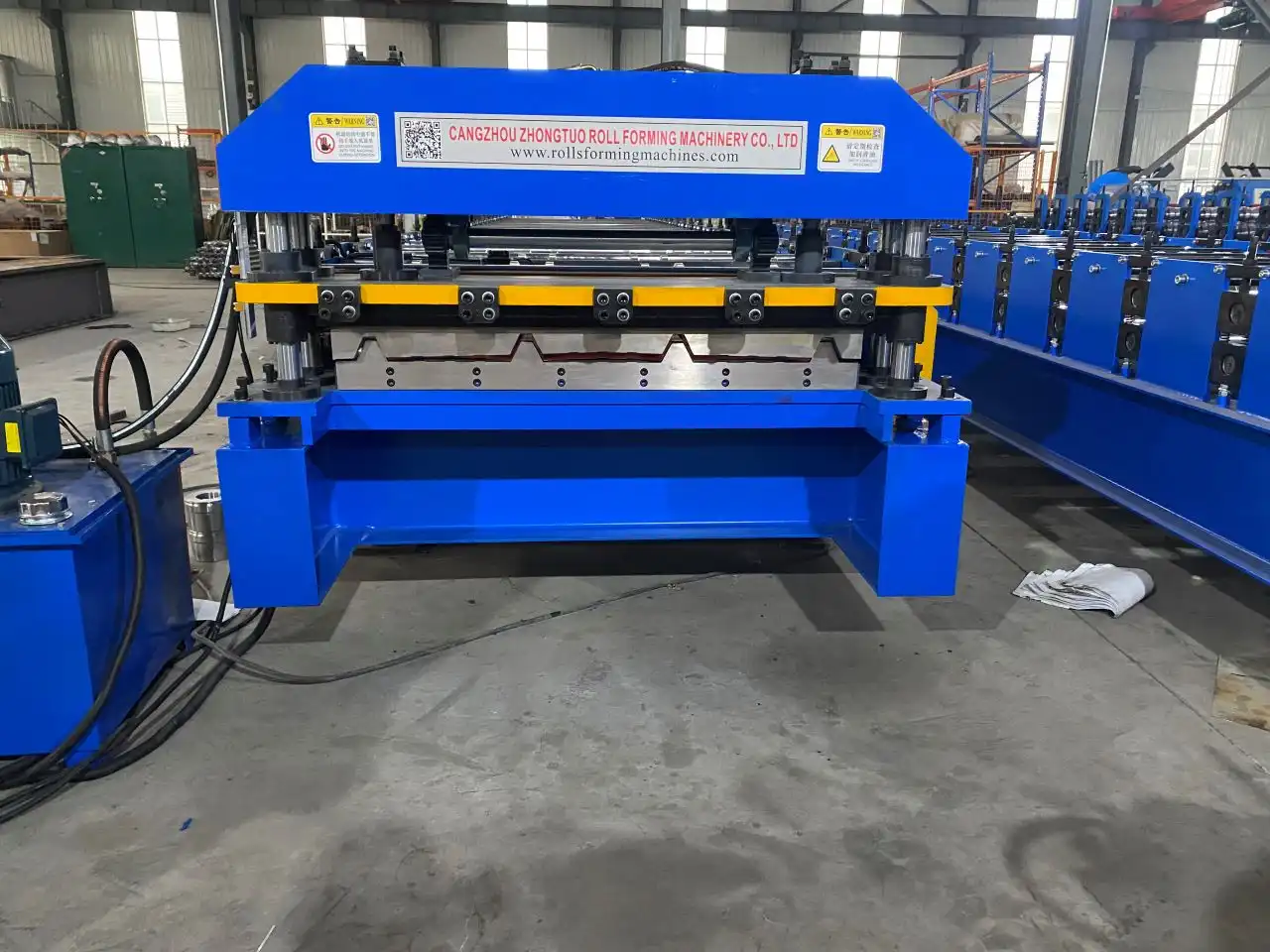
Each part should fit your coil and profile. Based on the profile, our machines have between 13 and 15 forming stations and an 80 mm roller shaft. Decoilers can be either a manual stand or a hydraulic unwinder. Many of our models come with a manual decoiler, so make sure that is clear in your quote. During continuous production, the hydraulic cutting unit keeps the length of the tr4/ tr5 roof sheet machinethe same. Skipping extras that aren't needed lowers capital costs, but a decoiler that is too small slows down coil handling.
PLC Control and Stored Settings
So that operators don't have to enter data again and again after each changeover, the PLC with touchscreen stores length, quantity, and profile settings. Less manual entry means fewer sheets that are the wrong length. ZTRFM also has remote diagnostics through the Siemens cloud IoT. This lets our engineers check for problems without having to wait for a site visit. You can keep track of the cost of downtime, and faster fault finding cuts it down. Before you order, make sure you know the voltage and frequency in your area so that the electrical cabinet will work with your plant.
Reduce Waste, Downtime, and Maintenance Expenses
Prevent Common Defects at the First Piece
Edges that aren't straight, coating scratches, wrong sizes, poor overlap, and cutting burrs are all things that turn coil into waste. Every time you set up, check the first sheet. Calipers should be used to measure the cover width, rib height, and pitch. Then, the overlap should be checked against a second sheet. Check the length of the cut and look for sharp edges. Rollers with a chrome finish are less likely to scratch painted coil. A two-minute check at the beginning can keep a full coil from going too far.
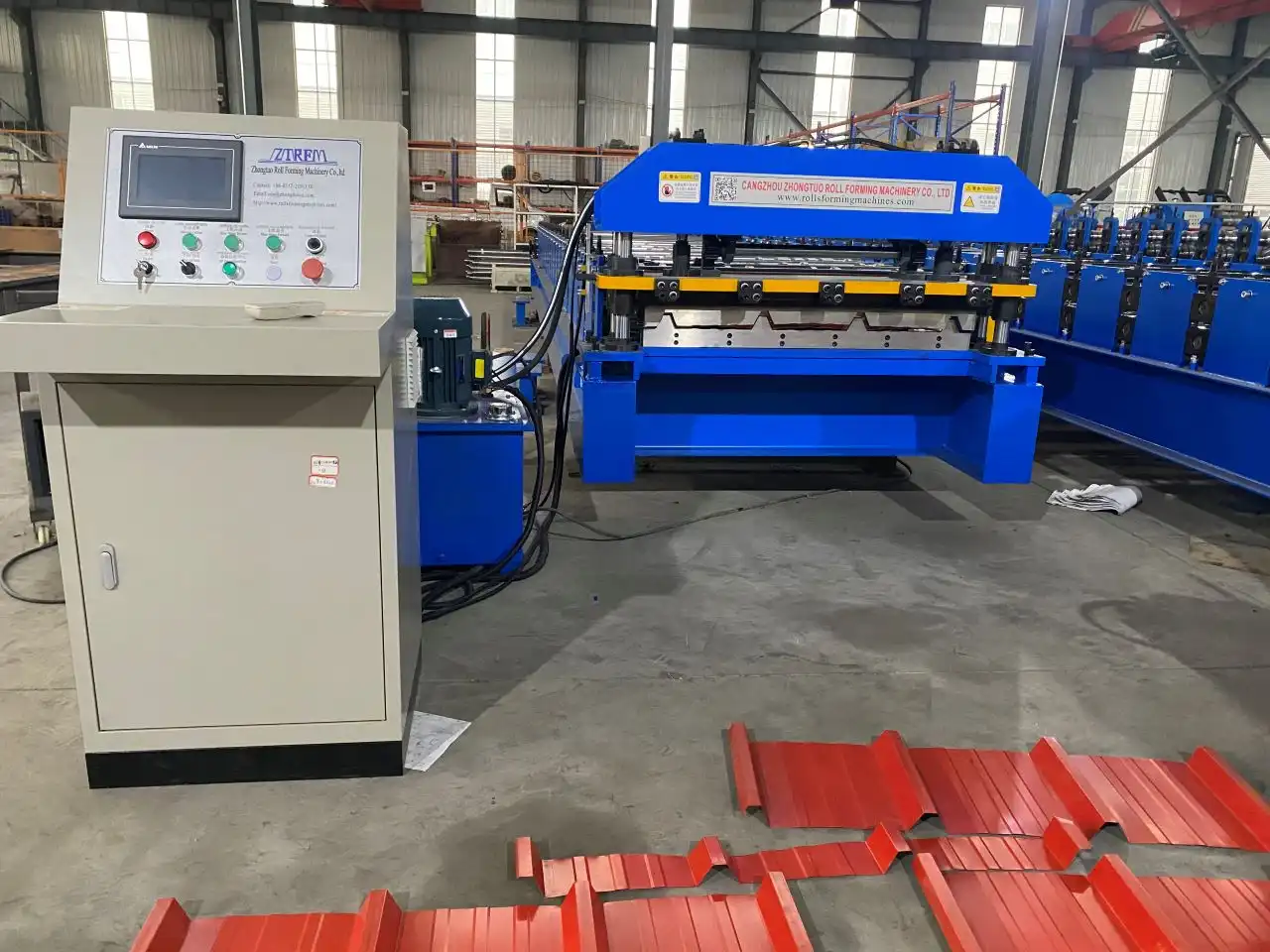
Standardize Changeover and Preventive Maintenance
Write a short changeover checklist and label each set of tools. Remember how the PLC is set up for TR4, TR5, and TR6. Then, make sure that the rollers, bearings, chains, hydraulic oil, blades, sensors, electrical connections, and decoiler brakes are checked regularly. Seiichi Nakajima wrote about the Total Productive Maintenance method in 1988. It is based on planned maintenance to keep things from breaking down. Before comparing prices on a used line, look at how worn out the tools are, how old the controls are, how easy it is to get spare parts, and how much it will cost to fix up.
Track a Baseline After Installation
Write down the amount of raw materials, finished goods, scrap, speed, running hours, downtime, energy use, and changeover time in the first few weeks. Use these numbers as a starting point. Fix issues in this order: feeding and aligning the coil, making sure the profile is correct, setup time, cutting and stacking, and then speed. Every three months, look at the total cost of ownership, which includes things like downtime, energy costs, tooling, and depreciation. Before a package is sent to North America, many buyers want to see a video acceptance test. Ask your supplier to run your own coil on camera.
Compare TR4 vs TR5 Roof Sheet Machine Economics and Buying Steps
Measure Output in Square Meters
It's not always clear how many sheets per hour a tr4/ tr5 roof sheet machineis because TR4 and TR5 sheets have different cover widths and rib counts. To find the scrap rate, multiply the line speed by the working width times 60. In the first example, a scrap rate of 3% means that about 698 m² of output can be sold every hour. After that, compare that number to how much your coil costs per square meter. It's not always cheaper to have a deeper profile because it may use more material per sheet. Always look at sheets of the same thickness, length, and number of hours.
Match the Profile to the Application
With five ribs, the Tr5 profile has a higher section modulus. In windy or snowy places, like warehouses and factories with long spans, that works well. The four-ribbed Tr4 profile works well in agricultural barns and low-cost housing, where the width of the cover and the amount of material used need to be balanced. We make TR6 too. In North America, cold-formed steel design follows AISI S100. Before you decide, have your engineer check the finished panel against local building codes and project needs.
Ask for Quotes You Can Compare
Make sure that all of your suppliers have the same information: the profile drawing, the steel grade, the thickness range, the coil width and weight, the sheet length, the target speed, the voltage, and the needs for stacking. Ask for a detailed quote that includes the machine, the decoiler, the cutting unit, the PLC, the stacker, the tools, the spare roller sets, shipping, installation, packing, and the warranty. Then compare factory testing, experience with exporting, and customer service after the sale. In over 150 countries, ZTRFM's machines are in use. They have ISO 9001, CE, and CAS certifications. Some clients that can be used as examples are Tata Group, DS Group, and HADDAD SET.
Conclusion
To keep roll forming costs down, you need to look at how much each finished square meter costs instead of the price of the tr4/ tr5 roof sheet machine. That’s based on coil yield, real running time, energy use, and work. Configuration should depend on demand: a dedicated line works well for steady output of a single profile, while tooling that can be switched out is useful when orders change. Teams waste less time and money when they check the first piece, label the tools, save the PLC settings, and keep the rollers, blades, hydraulics, and brakes in good shape. Instead of sheets per hour, you should compare the TR4 and TR5 based on their output in square meters, their use, and the structure they need to build. Quotes with specifics and a baseline that is recorded after installation help people make decisions based on facts. If a buyer does these things, they can use the total cost of ownership to judge any line.
FAQ
1. Can one machine produce both TR4 and TR5 profiles?
Yes. Either a double-layer design or a cassette-change system can be used to make both. Double-layer units take up less room on the floor, and cassette tooling makes changeover faster. Always check to see if it works with your approved drawing.
2. What thickness can the machine form?
The normal range for us is 0.3 to 1 mm. Let our engineers know about your coil so they can look at the tooling and motor needs if you need a different gauge range.
3. What should a complete quotation include?
There should be a list of everything that comes with the machine, including the decoiler, cutting unit, PLC, stacker, tools, spare roller sets, shipping, installation, packing, and warranty. Itemized quotes make it fair to compare prices and keep you from being surprised by costs later on.
Request a ZTRFM Cost Analysis for Your TR4/ TR5 Roof Sheet Machine
Your TR4/ TR5 roof sheet machine price can be determined by ZTRFM based on your actual coil, profile, and output goal. Since 2014, we have been a tr4/ tr5 roof sheet machine manufacturer in Botou, Cangzhou, offering OEM and ODM services. We will make a cost analysis based on your drawing, coil details, and voltage. Please send them to zhongtuorollforming@gmail.com.
References
1. Roll Forming Handbook (George T. Halmos), 2005
2. North American Specification for the Design of Cold-Formed Steel Structural Members, AISI S100, 2016
3. ASTM A653/A653M, Standard Specification for Steel Sheet, Zinc-Coated (Galvanized) or Zinc-Iron Alloy-Coated (Galvannealed) by the Hot-Dip Process, 2020
4. ISO 9001: Quality Management Systems – Requirements, 2015
5. Introduction to TPM: Total Productive Maintenance (Seiichi Nakajima), 1988
6. Lean Thinking (James P. Womack and Daniel T. Jones), 2003