- English
- French
- German
- Portuguese
- Spanish
- Russian
- Japanese
- Korean
- Arabic
- Irish
- Greek
- Turkish
- Italian
- Danish
- Romanian
- Indonesian
- Czech
- Afrikaans
- Swedish
- Polish
- Basque
- Catalan
- Esperanto
- Hindi
- Lao
- Albanian
- Amharic
- Armenian
- Azerbaijani
- Belarusian
- Bengali
- Bosnian
- Bulgarian
- Cebuano
- Chichewa
- Corsican
- Croatian
- Dutch
- Estonian
- Filipino
- Finnish
- Frisian
- Galician
- Georgian
- Gujarati
- Haitian
- Hausa
- Hawaiian
- Hebrew
- Hmong
- Hungarian
- Icelandic
- Igbo
- Javanese
- Kannada
- Kazakh
- Khmer
- Kurdish
- Kyrgyz
- Latin
- Latvian
- Lithuanian
- Luxembou..
- Macedonian
- Malagasy
- Malay
- Malayalam
- Maltese
- Maori
- Marathi
- Mongolian
- Burmese
- Nepali
- Norwegian
- Pashto
- Persian
- Punjabi
- Serbian
- Sesotho
- Sinhala
- Slovak
- Slovenian
- Somali
- Samoan
- Scots Gaelic
- Shona
- Sindhi
- Sundanese
- Swahili
- Tajik
- Tamil
- Telugu
- Thai
- Ukrainian
- Urdu
- Uzbek
- Vietnamese
- Welsh
- Xhosa
- Yiddish
- Yoruba
- Zulu
Grain Silo Pillar Forming: Heavy Gauge Requirements
Heavy-gauge grain silo pillar forming needs a rigid roll forming line, tooling matched to the steel's thickness and yield strength, accurate punching, and a drawing-based setup. An upright rack roll forming machine can form similar load-bearing sections. The pillar profile, steel grade, and hole pattern decide whether a standard line works or a reinforced design is needed. At ZTRFM, we start every heavy-gauge project with the profile drawing and coil data. This guide covers material needs, machine structure, production checks, and buying steps so you can plan your line with confidence.
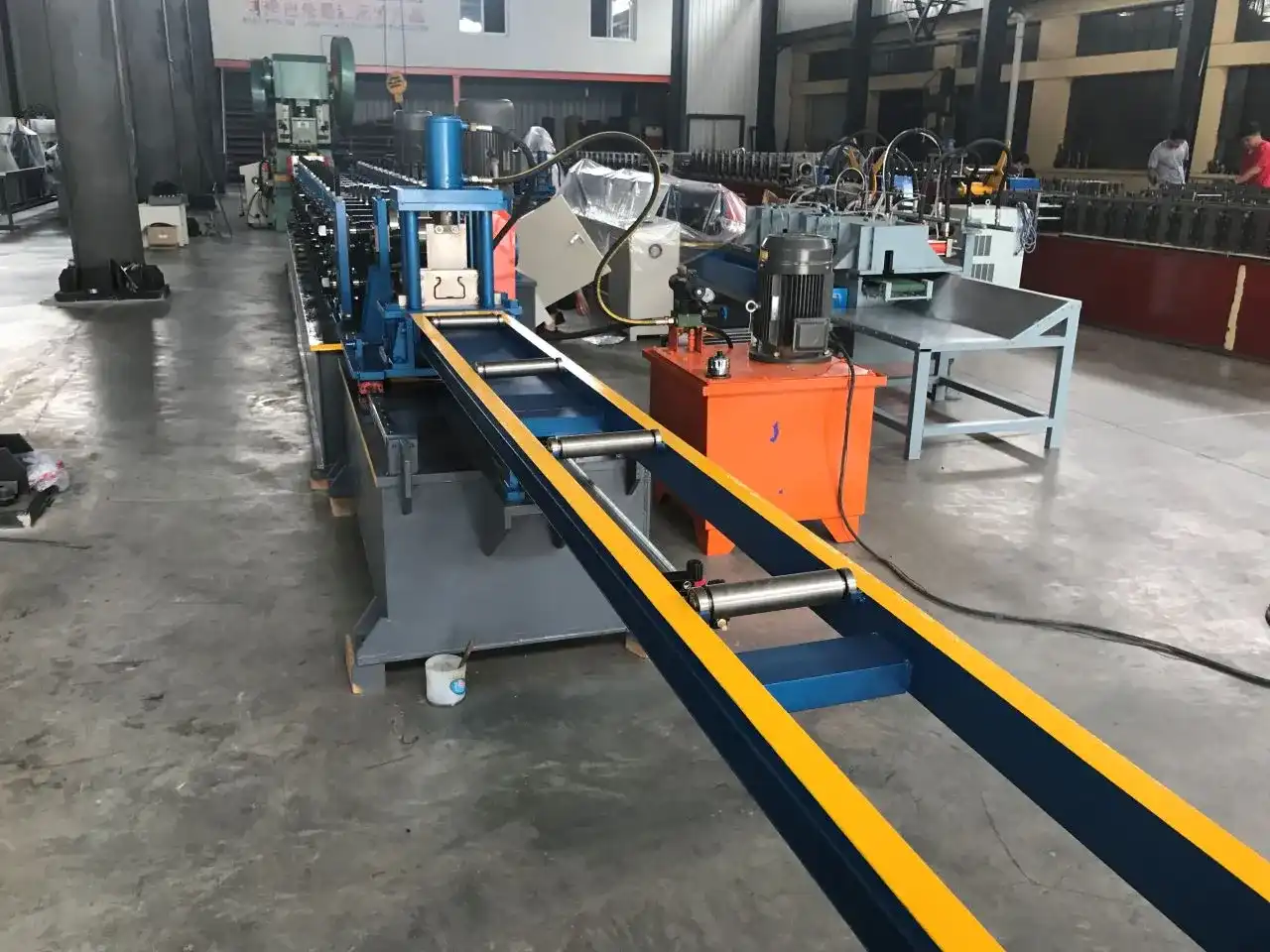
Heavy-Gauge Requirements for Silo Pillars and Rack Uprights
Why Gauge Changes the Machine
Silo pillars and pallet rack uprights both carry vertical load, so they need to be the same size and have the right places to connect. The way they are planned is different, though. For silos, rules for adding grains like Eurocode 1 Part 4 are used. For rack uprights, ANSI MH16.1 rules for storage racks are used. The frame, shafts, rolls, and cutter must all be stronger because steel that is thicker makes the machine stronger. It can bend or wear out quickly if you put heavy coil on a light-duty line that was made for thin shelf posts. Why don't we just pick a machine by its name? For that reason, we look at the profile drawing, the steel data, and the tolerances.
Steel Grades and Coil Data to Share
Both the tools used and the way the machine is set up depend on the material that is chosen. Galvanized steel, cold-rolled steel, treated and oiled steel, and high-strength low-alloy steel all shape in different ways. ASTM A653 talks about hot-dip galvanized sheet and its coatings. If you tell us the grade and coating names, we can give you the right price. Tell us the coil's inner diameter, its thickness, its strip width, its yield and tensile strengths, and the largest weight it can hold. On our standard straight line, we can form GI and low-carbon steel at 1.5 to 2 mm. Heavy frames for 3 mm gauge work that are 2.0 to 3.0 mm thick are made at our plant. Our engineers look over every drawing before they sign off on the design.
Springback, Coating, and Tooling Wear
Here are three problems that often happen with thick, strong steel. Springs open up the strip a bit when it comes off the rolls, so the pass design needs more space to bend. Coated steel can get marks or lose its zinc if the roll sides aren't smooth or lined up correctly. On thick edges with sharp bends, cracks can form. Lots of information is given in books like Halmos's Roll Forming Handbook about how to form things. We make sure that every roll pass on our normal line fits your coil perfectly. It has Cr12 making rollers and Cr12MoV cutting blades. First, the pass design was put on a clear picture that showed the holes, ribs, lips, slots, and gap between holes. After that, we cut the rolls.
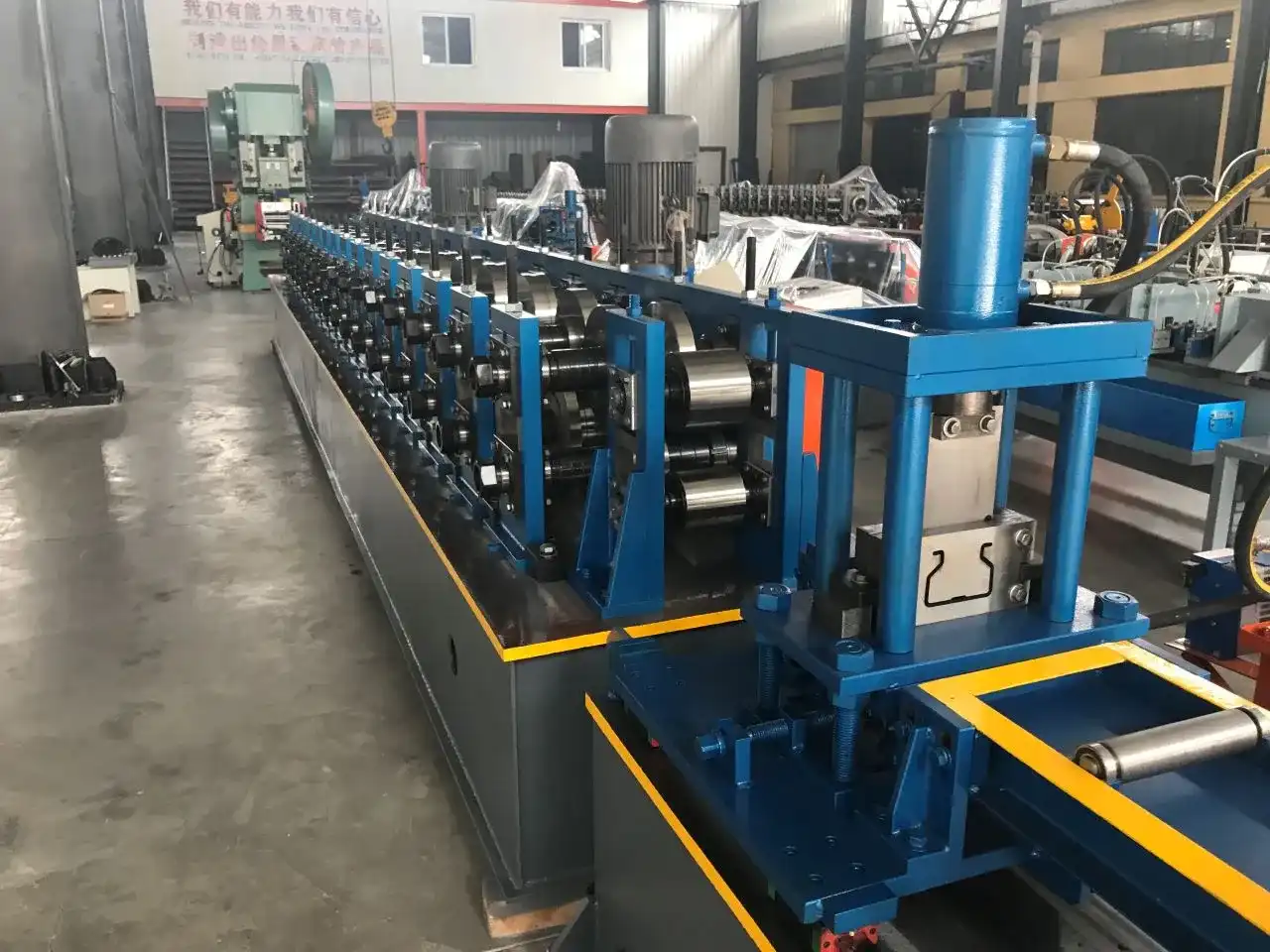
How a Heavy-Gauge Upright Rack Roll Forming Machine Works
From Coil to Cut Length
A set order tells the line how to decoil, level, feed, punch, roll, and cut the coil into finished columns. The feeder brings the strip to the punch at a certain length, the leveler makes the coil flat, and the decoiler holds the coil. Then, the making mill slowly bends the strip at each station, while the PLC keeps track of how long it is and how many pieces there are. An upright rack roll forming machine cuts each upright to the right size. Our normal line moves at a speed of 0 to 15 m/min. Once the first pieces are finished, check the surface condition, cut length, burrs, twist, profile size, and straightness. After that, start the whole run.
Punching Before or After Forming
Rack uprights need to have many round, square, or teardrop-shaped slots in order to connect beams. It is easiest to make dies for flat strips when you punch them before you shape them, so the holes stay in the same place. Before punching, holes are made in the walls of the profiles that have been formed. But punching dies are more complicated. Because the bolt holes in different silo pillars may need to be spaced out in different ways, this choice is based on the pattern of the holes. Our CNC multi-station punching, accurate teardrop tools, and quick die change make it easy to change shapes on the same line. For people who want to buy from us as an OEM, we can sign an NDA on the plans and make test uprights to test the load before we make a lot of them.
Structure Features That Carry the Load
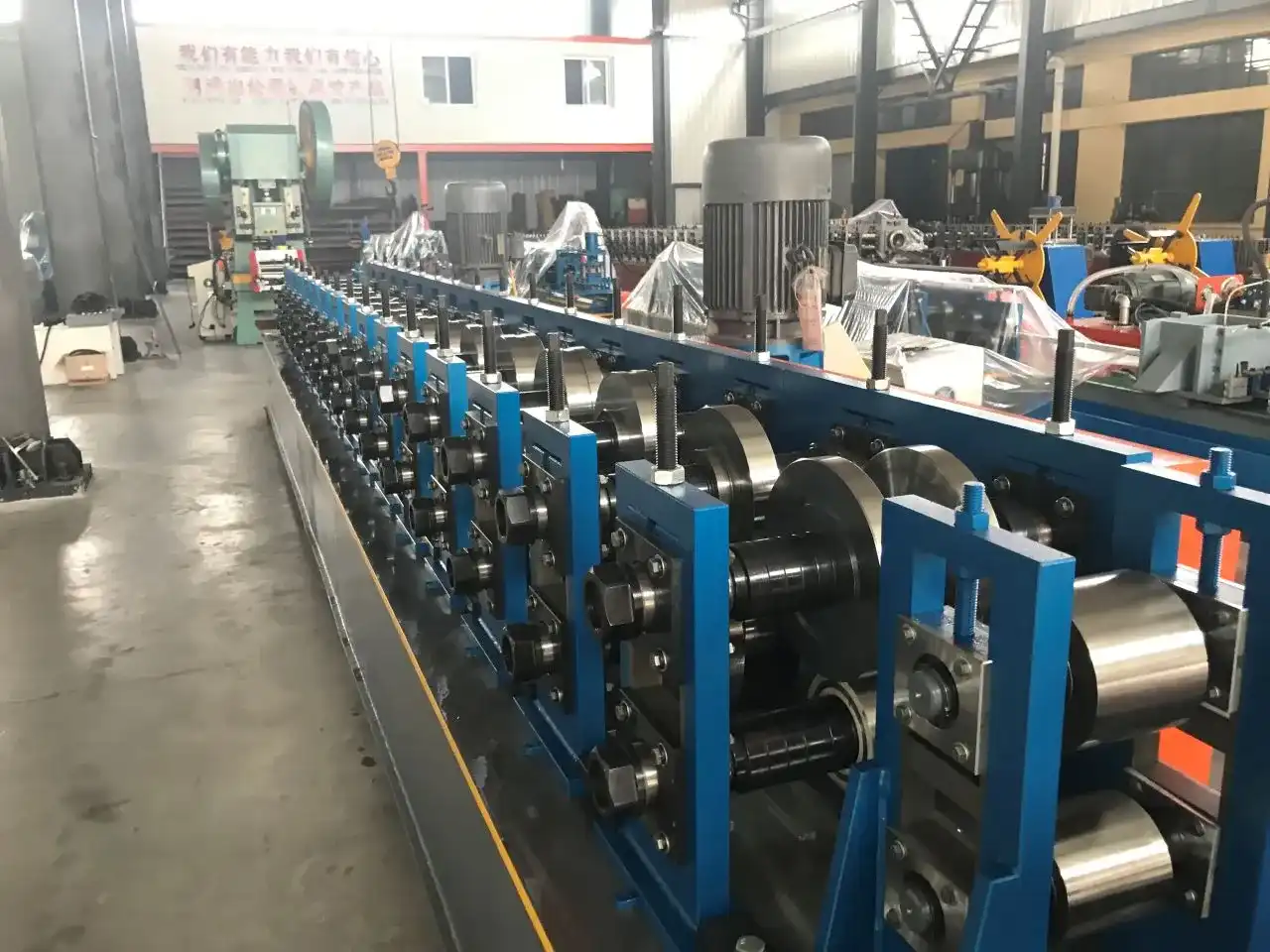
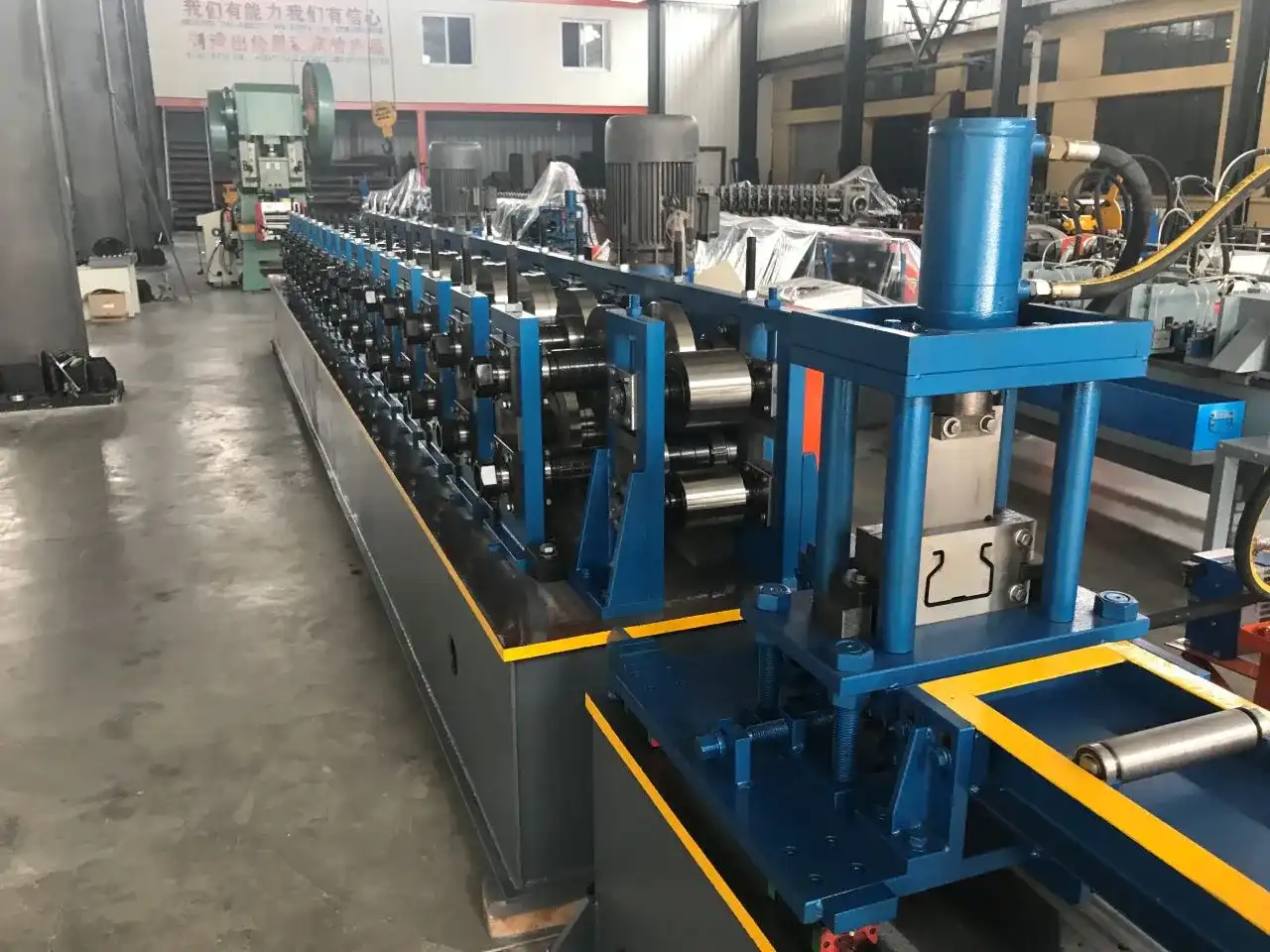
The basic machine has 19 tempered 45# steel Cr12 rollers on 70 mm rods. The main motor has 33 kW and is driven by either a chain or a gearbox. The stronger frame doesn't bend during long runs that never stop, and the PLC makes sure that the length is always correct. Based on your plant, you can set the voltage to 380V, 440V, or 220V. Our 1.5–2.0 mm line is shown by these lines. If your pillar needs a bigger gauge, we compare the shaft size, frame strength, and motor power to the plan. This is due to the fact that larger pieces of steel are heavier. Yanshan University also helps us with our building planning work.
Buying a Heavy-Gauge Pillar Forming Line
Configuration and Real Output
Automatic lines give more uniform results and require less work for large runs of the same shape. Setups that are only partly automatic work well for custom designs or small batches. Check out how much a line makes per shift instead of its top speed. Because of changes to the coil, the punching process, the die, the adjustments, and the checks, the net output goes down. Ask each provider how many pieces they can make in an hour based on the size, shape, number of holes, and length of cuts you need. Early on, let them know if you want to add more sizes of profiles or a stacker. Tools and the layout change. On the same line, we have the decoiler, the maker, the stacker, and extra parts.
Reading a Quotation
Items with a low price may not come with everything they say they do. Ask for a quote that breaks down the prices of the decoiler, punching unit, forming mill, cutter, electrical controls, die sets, training, shipping, warranty, spare parts, and decoiler. Check out how accurate the punches are and how long the tools last. Dies wear out faster on thick steel, so that's something else you should think about. It costs a lot to own something. To get a full picture, add up the money, time, power, work, and repairs. Debugging PLCs is part of our remote support, which helps keep things running smoothly. It might look like a good deal to buy a used upright rack roll forming machine, but you should first check the state of the tools, the support for the controls, and how easy it is to get extra parts.
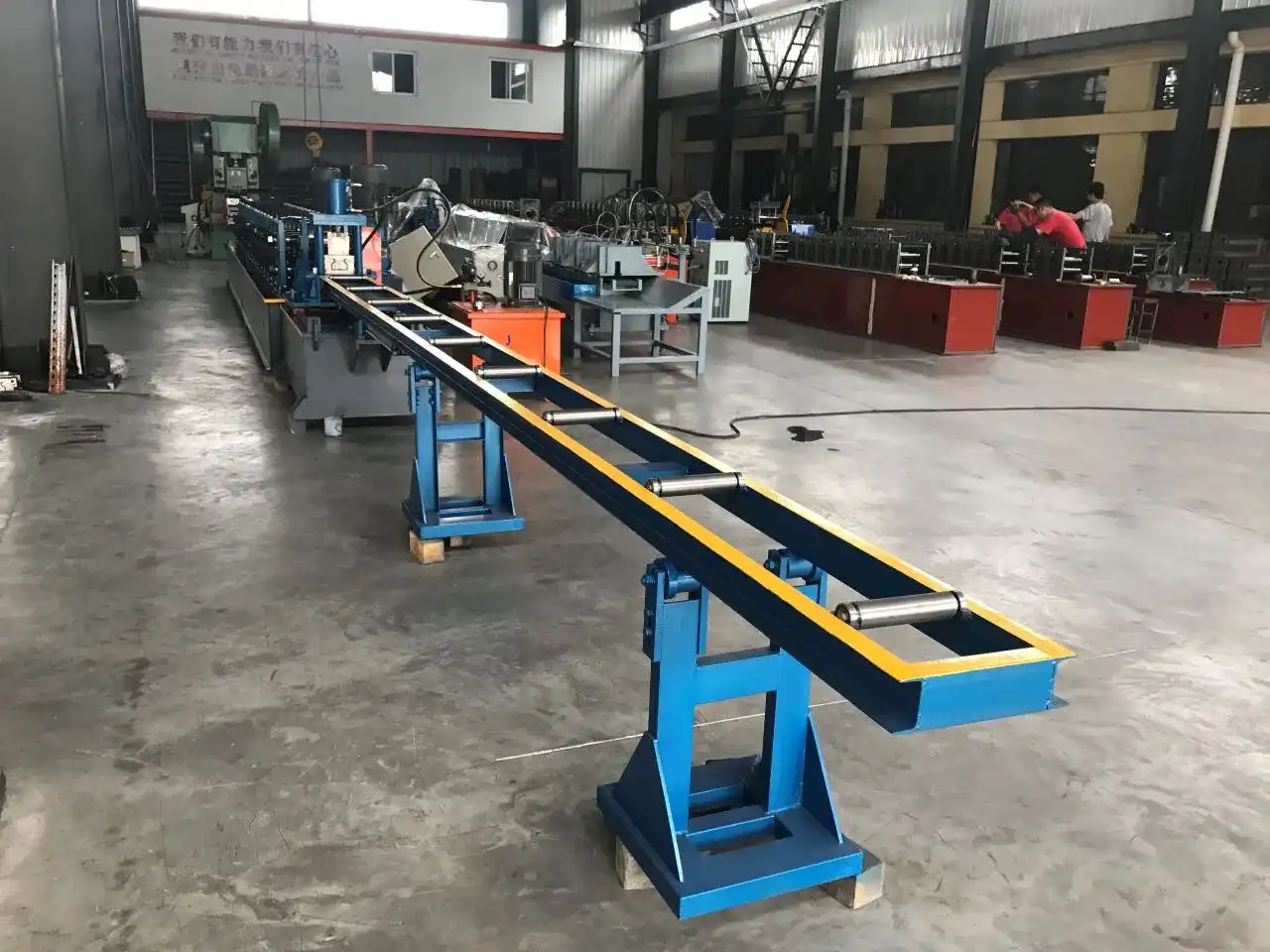
Supplier Checks and Purchasing Steps
ZTRFM was set up in Botou, Cangzhou, in 2014. It makes cold roll forming tools that are certified by CE, CAS, and ISO 9001. Around the world, people buy what we sell. When picking a few sources, you should find out how much experience they have with heavy-gauge, if they have their own tools, if they guarantee speed, whether they offer spare parts, and who owns the plans. Then you need to do four things: make a drawing, pick the material, plan the holes, and set the length range, power goal, output, and floor space. You should then send this information to several makers, have them compare their designs side by side, and write down what needs to be done in order for it to be accepted. Before the goods are sent, people in the US will often want to see a video acceptance test. Make sure you agree to this in writing and include it with the export packing.
Conclusion
When making heavy-gauge silo pillars, the line has to match the grade, thickness, profile, and hole pattern of the real steel. Cold-rolled steel is used to make both rack uprights and silo pillars, and an upright rack roll forming machine can be configured for these production requirements. However, the way they are designed and connected is different, so each model needs to be looked at separately. Thick steel needs frames, shafts, rolls, and cutters that are stronger so they can handle more force, springback, and tool wear. The way you punch, how much you print, and how often you check for quality affect the results just as much as the top line speed. When they compare itemized quotes, supplier experience, and written acceptance criteria, they can look at more than just price. They can see the total cost and long-term support.
FAQ
1. Can an upright rack line form grain silo pillars?
Sometimes. Both are load-bearing pieces that were made when they were cold, but the cross-section, scale, and hole design show what they are. We start by looking at your picture. You might need a heavier frame and new tools for stronger pillars.
2. What steel can your standard line form?
Our normal straight line can shape GI steel and low-carbon steel from 1.5 mm to 2 mm thick. An engineer needs to look at your coil data for other types or bigger coils.
3. Is pre-punching or post-punching better?
People often pre-punch uprights because it works on flat strips and keeps the hole spacing even. Once the walls have been punched, holes are made in them. It's up to you what you draw.
4. What affects the machine price?
The price depends on things like the thickness of the material, the complexity of the profile, the frame's strength, the punching equipment, the cutting method, the level of automation, and the tools that are used.
Request an Upright Rack Roll Forming Machine Quote From ZTRFM
Planning a heavy-gauge pillar or rack upright project? Email zhongtuorollforming@gmail.com your personal picture, the thickness, the grade of steel, and how you want the holes to be made. ZTRFM is a business that makes upright rack roll forming machines. They provide OEM and ODM tools, keep plans secret with an NDA, and have a full supply chain that includes both decoilers and stackers. Our engineers look over your data, make suggestions about how it should be set up, and write a proposal that is just right for your project.
References
1. American Iron and Steel Institute, AISI S100: North American Specification for the Design of Cold-Formed Steel Structural Members, 2016.
2. Rack Manufacturers Institute, ANSI MH16.1 Industrial Steel Storage Racks Specification, 2012.
3. ASTM International, ASTM A653/A653M: Standard Specification for Steel Sheet, Zinc-Coated (Galvanized) or Zinc-Iron Alloy-Coated (Galvannealed) by the Hot-Dip Process, 2020.
4. Halmos, G. T., Roll Forming Handbook, CRC Press, 2005.
5. European Committee for Standardization, EN 1991-4: Eurocode 1, Actions on Structures, Silos and Tanks, 2006.
6. European Committee for Standardization, EN 15512: Steel Static Storage Systems, Adjustable Pallet Racking Systems, Principles for Structural Design, 2020.