- English
- French
- German
- Portuguese
- Spanish
- Russian
- Japanese
- Korean
- Arabic
- Irish
- Greek
- Turkish
- Italian
- Danish
- Romanian
- Indonesian
- Czech
- Afrikaans
- Swedish
- Polish
- Basque
- Catalan
- Esperanto
- Hindi
- Lao
- Albanian
- Amharic
- Armenian
- Azerbaijani
- Belarusian
- Bengali
- Bosnian
- Bulgarian
- Cebuano
- Chichewa
- Corsican
- Croatian
- Dutch
- Estonian
- Filipino
- Finnish
- Frisian
- Galician
- Georgian
- Gujarati
- Haitian
- Hausa
- Hawaiian
- Hebrew
- Hmong
- Hungarian
- Icelandic
- Igbo
- Javanese
- Kannada
- Kazakh
- Khmer
- Kurdish
- Kyrgyz
- Latin
- Latvian
- Lithuanian
- Luxembou..
- Macedonian
- Malagasy
- Malay
- Malayalam
- Maltese
- Maori
- Marathi
- Mongolian
- Burmese
- Nepali
- Norwegian
- Pashto
- Persian
- Punjabi
- Serbian
- Sesotho
- Sinhala
- Slovak
- Slovenian
- Somali
- Samoan
- Scots Gaelic
- Shona
- Sindhi
- Sundanese
- Swahili
- Tajik
- Tamil
- Telugu
- Thai
- Ukrainian
- Urdu
- Uzbek
- Vietnamese
- Welsh
- Xhosa
- Yiddish
- Yoruba
- Zulu
Steel Coil Feeding Instability: Entry Section Fixes
Instability in feeding steel coil generally originates in the entering section; thus, the quickest solutions are there. The first four things I check are coil centering, mandrel grip, strip tension, and speed matching between the uncoiler and the line. The coil is held by the inner diameter by adecoiler/hydraulic-decoiler"> hydraulic decoiler,which delivers strip at a regulated pace and stops the coil promptly when the line ends. These routines work together to reduce looping, drifting, and length mistakes. In this essay, I describe how to determine the problem, perform practical remedies, pick the proper capacity, and maintain the equipment stability over time.
Diagnose the Root Causes of Steel Coil Feeding Instability Check the Coil Before Blaming the Machine
Get the goods. Verify that the coil winding’s weight, breadth, inner diameter, and quality are within the capacity of the hydraulic decoiler. Even with a good line setting, a coil with stretched layers, broken edges, or an out-of-round core will wander about. Material is important, too. Coatings on PPGI and GI strip are easily scratched. This steel is stronger and more springy than mild galvanized strip. I suppose you should write them down on a setup sheet for each coil. Once all the data is in one location, trends immediately appear.
Inspect the Mandrel and Hydraulic Circuit
Now look at the grip. If the mandrel segments do not grow in the same way, the strip will shift to the side. That means the coil is not going to be in the center. When the speed is increased, the coil might break free if the hydraulic pressure is low, the cylinder seals are damaged, or the valve is leaking. Load the coil and watch the pressure gauge. If the pressure continues dropping, this signifies an internal leak. Also check the guide rollers and side guides. If they are not aligned with the line axis, the strip will move. First, solve the mechanical problem. Then adjust the controls.
Review Speed Matching and Control Signals
So many stoppages are timing, not hardware. A coil unwinds gently, and a feeder begins and stops. A strip loop provides a cushion between the two. If the decoiler, straightener, and feeder all operate at different rates, the loop will be too loose or too tight. In most cases, the spikes in tension occur when the machine begins and stops. Look at PLC signals, inverter ramp times, and loop sensor data that is passed from one machine to the other. If the loop goes over the sensor limitations, adjust the ramp first and do not touch the mechanical parts.
Apply Entry-Section Fixes with a Hydraulic Decoiler
Understand How the Decoiler Controls the Strip
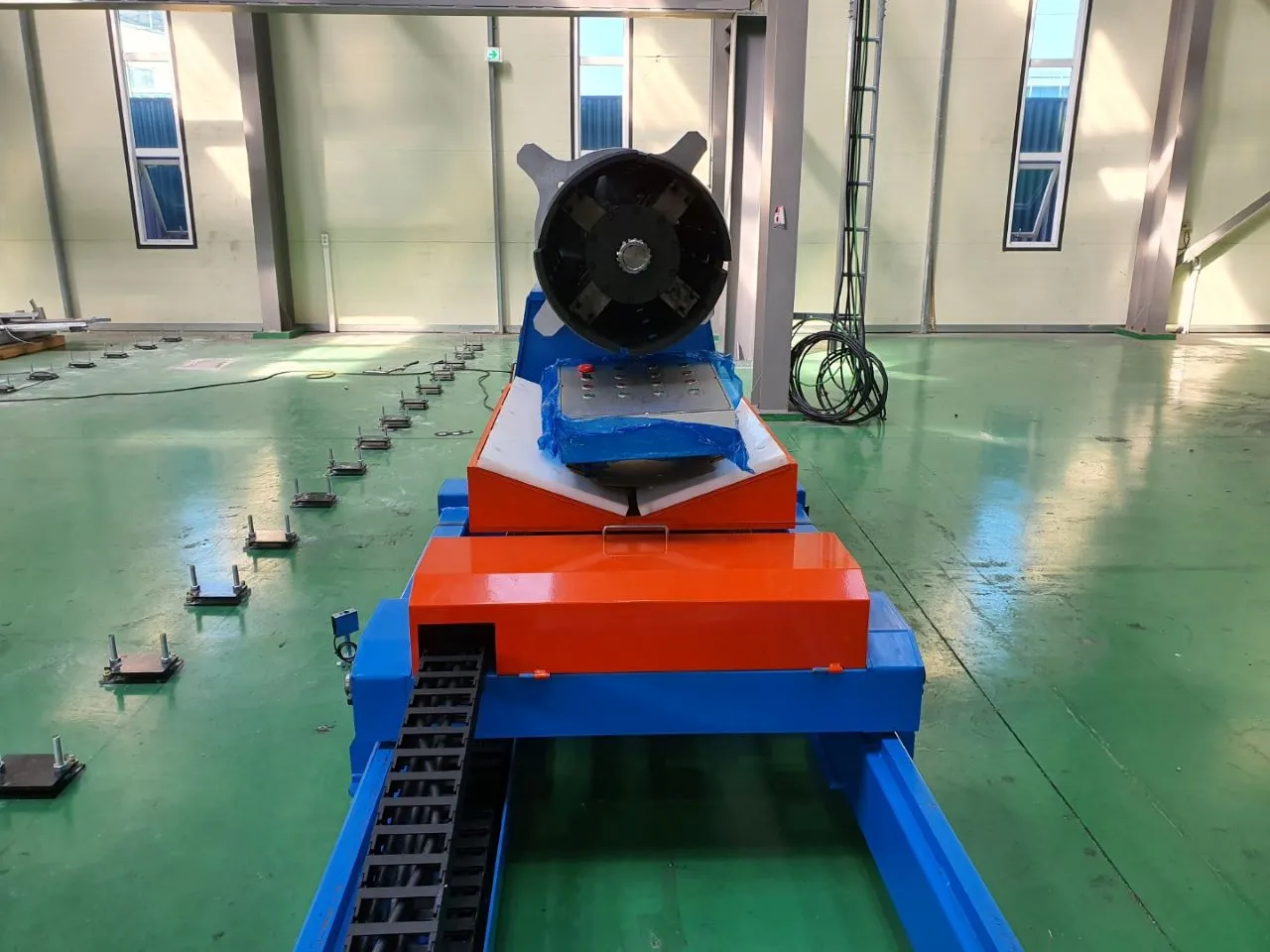
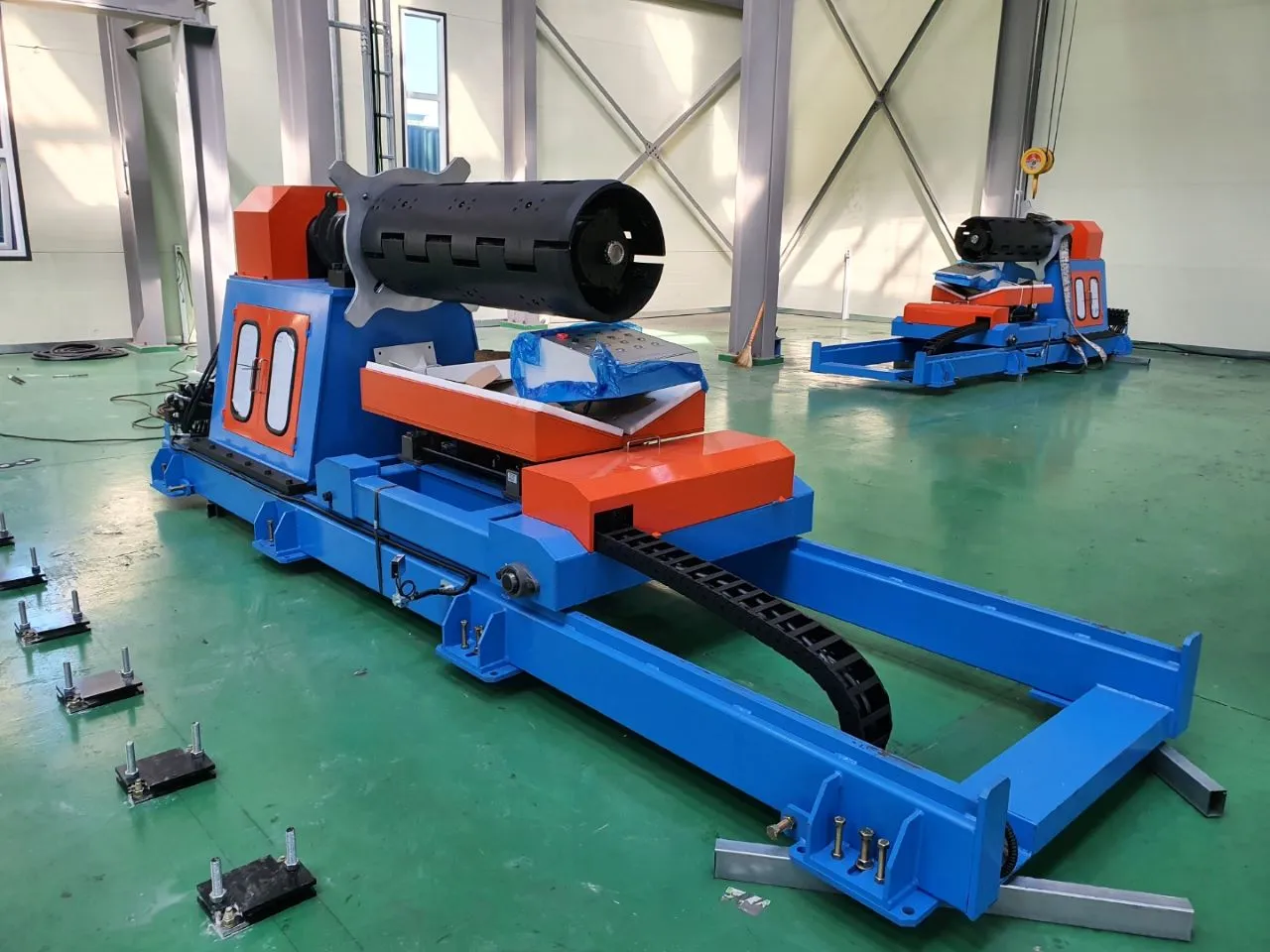
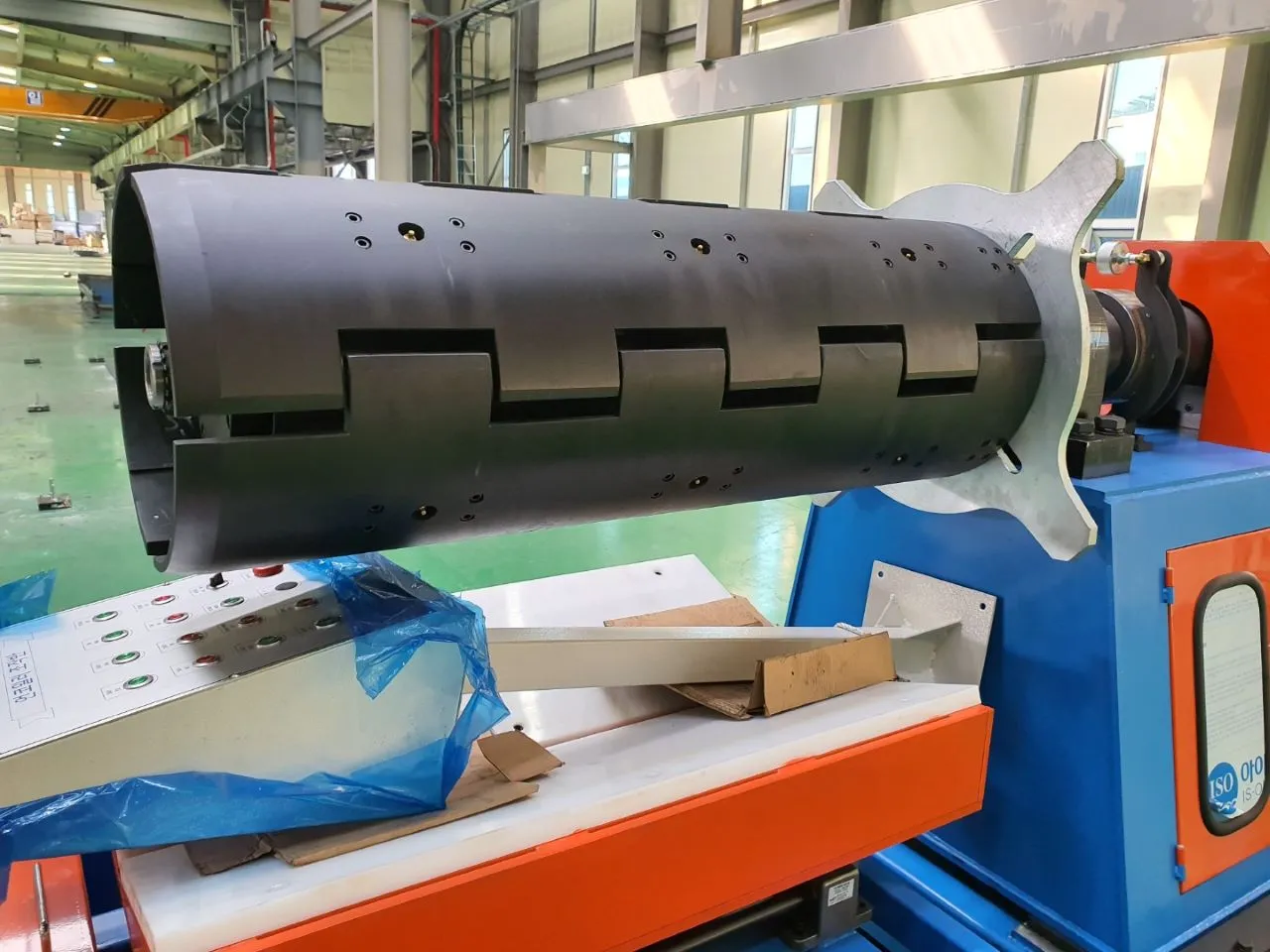
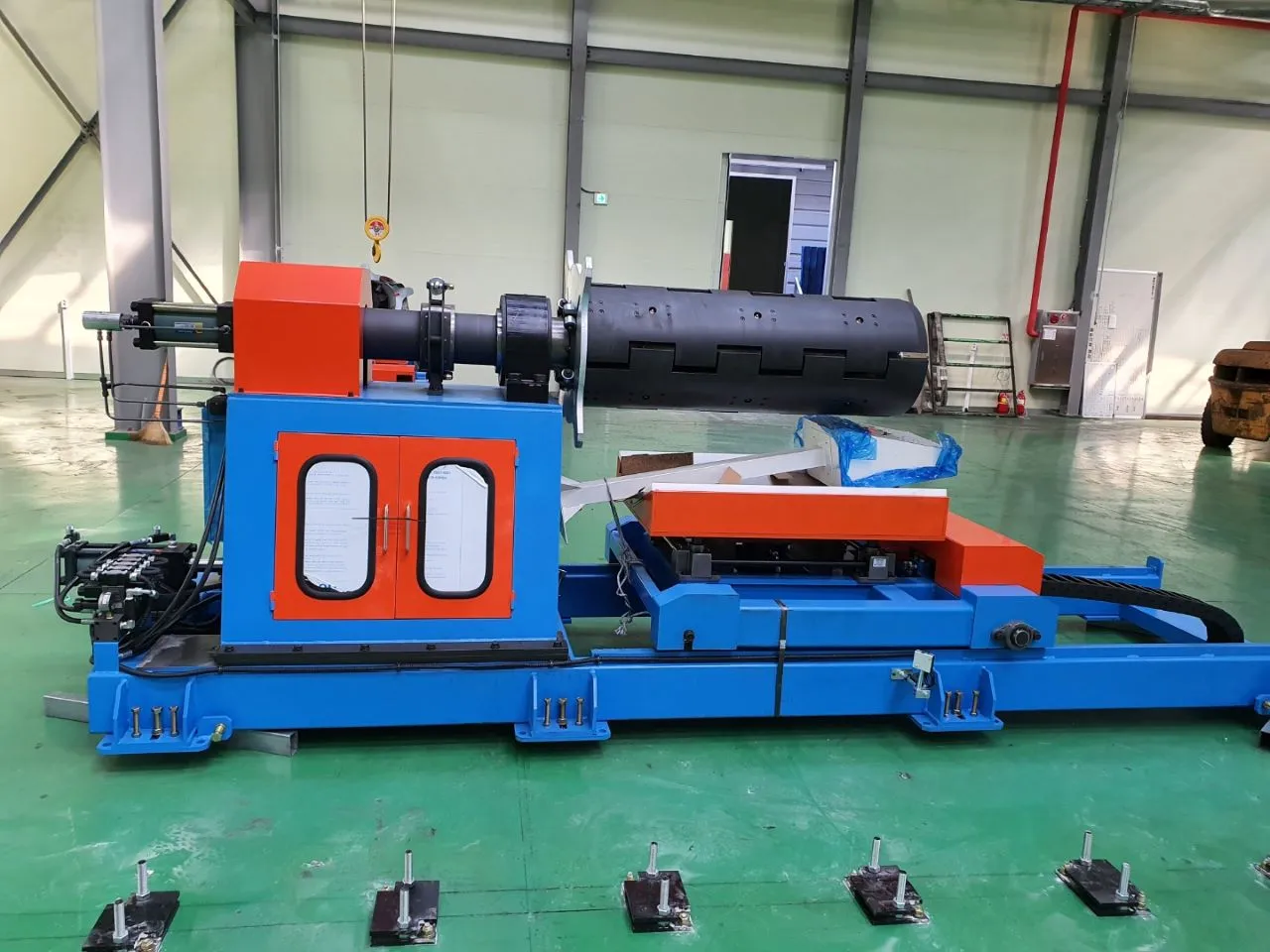
The hydraulic decoiler machine is composed of a frame, an expanding mandrel, a hydraulic power unit, a driving motor, a brake, and sensors. The operator adjusts the mandrel to the inner diameter to center the coil. The drive then rotates the coil, and the loop sensor determines how much strip to release. If the line stops, the brake stops the coil. This avoids overshoot. The decoiler and the machines downstream are working as one system; thus, a correction at one place frequently impacts the behavior at another. I usually re-test the whole entry area once I make adjustments.
Set Pressure, Centering, and the Press Arm
Open the mandrel slowly and lay the coil on the middle line. Cut the straps, but make sure the grip still works. The expansion pressure must be in proportion to the weight, thickness, and surface condition of the coil. If you don't apply enough force, the coil will slide; if you use too much effort, the 0.3–1.0 mm thin strip will bend. A push arm prevents the outer wraps from coming undone when the straps are taken off. The coil remains tight, and the edge of the strip is protected. The side guides should not squeeze the strip but just move it, since lateral pressure causes edge waves and increased drag.
Test Speed Ramps and Record Results
I believe you ought to run the line at low, medium, and maximum production speed once you have made the necessary modifications. Our forming speed range is 0-40 m/min; therefore, test all of those rates. Take good notes on feed accuracy, strip side-to-side movement, loop behavior, and any scrap. Every time you make a change, write it down and the consequence. The pneumatic brake mechanism should stop the coil without any wraps coming off. With a written record, your team can replicate a suitable setup for each material and coil size, therefore saving time at each changeover.
Select the Right Hydraulic Decoiler Capacity and Specifications
Size Capacity by the Heaviest Coil
Don't use your average coil; use your heaviest coil as a reference to figure out how much the hydraulic decoiler can carry, and add a safety buffer. The needed capacity is the maximum coil weight multiplied by a safety factor. ZTRFM ranges from 5 T to 30 T capacity. The coil width may be adjusted from 200 mm to 2000 mm and modified according to requirements. A machine running at its maximum will not be able to handle heavier coils down the road. I recommend you check your projected coil purchases for the next year before you buy.
Match Power, Voltage, and Materials
The hydraulic decoiler for sheet metal coils is powered by a 5.5 kW engine and 4 kW of hydraulic force. Normal supply is 380V, 50Hz, three-phase. Many facilities in the US are on 60 Hz electricity. We can alter the voltage. When you ask, please provide us with the electrical information about your site. Our core business is PPGI, GI, and stainless steel coils. Formed materials include PPGI, GI, and Aluminum from 0.3 to 1.0 mm thick. If you are ordering a coil, be sure the material is shown on both lists.
Compare Configurations and Total Cost
The hydraulic kinds in most cases can handle hefty or varied-sized coils more securely than basic mechanical systems. Cheaper and used for lighter coils are the manual decoilers. We commonly include a manual decoiler free with our forming lines. We pair decoiler engineering with the forming machine for a bundled price. Compare floor space, maintenance, controls, and downtime, not simply purchase price. Ask each provider for drawings and load estimates so that you may compare quotations on equal grounds.
Maintain, Commission, and Verify Performance
Build a Maintenance Routine
The owner's handbook will provide you with information on the frequency with which you should inspect the hoses and fittings, as well as the oil level, filters, cylinders, valves, bearings, mandrel segments, brakes, and sensors. You should not increase the pressure in the system in order to conceal the loss of pressure; rather, you should explore the source. To train operators in emergency stops, threading, mandrel expansion, and coil loading, among other essential skills. On the shelf, you should have extra seals, hoses, and sensors since, in the event that they fail, these components might cause a line to halt. A concise weekly checklist is able to detect the majority of minor leaks before they develop into coil slides.
Follow Safety Standards
Take care to avoid bumping into any of the moving parts or pinch points. Publication 3170 of the Occupational Safety and Health Administration discusses the risks of amputation at such locations, while ANSI B11.18 addresses safety regulations for apparatus that processes strip, sheet, or plate from coil. Before doing any service work, you are required to obey OSHA 29 CFR 1910.147 and implement lockout/tagout procedures. It is important for purchasers in the United States to verify with us which safety measures are included with the equipment and which modifications are required by their site restrictions. Set these particulars up before the delivery in order to prevent any delays during the installation.
Verify Results After Installation
Check that the foundation is level, that the anchors are in the correct locations, that the centerline is aligned, that the power and hydraulic connections are in place, and that the machine is communicating with the straightener or feeder. Following that, keep an eye on the quantifiable indications, which include the sideways strip deviation, feed-length accuracy, coil overrun, downtime, scrap rate, and oil temperature. As ZTRFM collaborates with Siemens on cloud IoT and AI remote maintenance, you should inquire about whether or not this solution is suitable for your line. The figures should be compared to your baseline from before the remedy was made in order to determine whether or not the modification was successful.
Conclusion
There are a number of factors that might contribute to the instability of steel coil feeding at the entrance section. These factors include the condition of the coil, an uneven mandrel grip, pressure loss, misaligned guides, and machines that are not operating at the same speed. These issues are addressed by a hydraulic decoiler, which maintains the coil at its inner diameter, releases the strip at a regulated pace, and brakes the coil when the line comes to a halt. Centering, the application of the appropriate expansion pressure, the use of the press arm, and the recording of tested speed ramps on setup sheets are the first practical improvements. It is important that the capacity corresponds to the heaviest coil plus a safety margin, and that the breadth, power, voltage, and material all correspond to the line. Keeping the improvement in place requires regular maintenance, lockout/tagout procedures, guarding based on standards, and measuring the effects once the improvement has been commissioned.
FAQ
1. What causes steel coil feeding instability?
The usual causes are poor coil winding, uneven mandrel grip, low hydraulic pressure, misaligned guides, and a speed mismatch between the decoiler and the feeder.
2. What capacities and coil widths are available?
Our hydraulic decoilers range from 5 T to 30 T. Coil width runs from 200 mm to 2000 mm, customized on request.
3. Which coil materials can the decoiler handle?
The main body handles PPGI, GI, and stainless steel coils. The formed materials are PPGI, GI, and aluminum at 0.3–1.0 mm.
4. Can the voltage be changed?
The standard supply is 380V, 50Hz, three-phase. We can customize the voltage, so please send us your site details.
5. How do I choose the right size?
Take your heaviest coil weight, add a safety margin, and compare it with the 5–30 T range. Then confirm the coil width and inner diameter.
Request a Hydraulic Decoiler Quote from ZTRFM
Send your coil weight, width, inner diameter, and line speed to ZTRFM at zhongtuorollforming@gmail.com. As a hydraulic decoiler manufacturer founded in 2014 in Botou, Cangzhou, we hold ISO 9001, CE, and CAS certifications and ship machines to more than 150 countries. Our engineers match capacity and voltage to your line.
References
1. Roll Forming Handbook, 2005
2. Manufacturing Processes for Engineering Materials, 2008
3. Fundamentals of Modern Manufacturing, 2020
4. ANSI B11.18 Safety Requirements for Machinery and Machinery Systems for the Processing of Strip, Sheet, or Plate from Coiled Configuration, 2006
5. OSHA Publication 3170, Safeguarding Equipment and Protecting Employees from Amputations, 2002
6. ISO 9001 Quality Management Systems – Requirements, 2015