- คอร์สภาษาอังกฤษ
- อาหารฝรั่งเศส
- ภาษาเยอรมัน
- โปรตุเกส
- สเปน
- รัสเซีย
- ภาษาญี่ปุ่น
- เกาหลี
- อาหรับ
- ไอริช
- กรีก
- ตุรกี
- ภาษาอิตาลี
- เดนมาร์ก
- โรมาเนีย
- ชาวอินโดนีเซีย
- สาธารณรัฐเช็ก
- แอฟริกาใต้
- สวีเดน
- ขัด
- ชาวแบสค์
- คาตาลัน
- ภาษาโลก
- ภาษาฮินดี
- ลาว
- แอลเบเนีย
- อัมฮาริค
- อาร์เมเนีย
- อาเซอร์ไบจัน
- เบลารุส
- ประเทศบังคลาเทศ
- บอสเนีย
- บัลแกเรีย
- ภาษาเซบัวโน
- Chichewa
- คอร์ซิกา
- โครเอเชีย
- Dutch
- เอสโตเนีย
- ภาษาตากาล็อก
- ภาษาฟินแลนด์
- Frisian
- กาลิเซีย
- จอร์เจีย
- ภาษาคุชราต
- ชาวไฮติ
- เฮาซา
- ฮาวาย
- ชาวอิสราเอล
- ชาวม้ง
- ฮังการี
- ไอซ์แลนด์
- Igbo
- ชาวชวา
- ดา
- คาซัคสถาน
- ขอม
- เคิร์ด
- คีร์กีซ
- ละติน
- ลัตเวีย
- ภาษาลิธัวเนีย
- ลักเซมบู..
- มาซิโดเนีย
- มาดากัสการ์
- Malay
- มาลายาลัม
- มอลตา
- ชาวเมารี
- มราฐี
- มองโกเลีย
- พม่า
- ภาษาเนปาล
- นอร์เวย์
- ภาษาปาทาน
- เปอร์เซีย
- ปัญจาบ
- เซอร์เบีย
- Sesotho
- สิงหล
- สโลวัก
- ภาษาสโลเวเนีย
- โซมาลี
- ซามัว
- สาขาสก็อต
- โชนา
- สินธุ
- ซุนดา
- ภาษาสวาฮิลี
- ทาจิกิสถาน
- ่ทมิฬ
- กู
- คอร์สเรียนภาษาไทย
- ยูเครน
- ภาษาอูรดู
- อุซเบก
- เวียตนาม
- เวลส์
- โซซา
- ยิดดิช
- โยรูบา
- พวกสูลู
คู่มือเครื่องขึ้นรูปเสาค้ำองุ่น
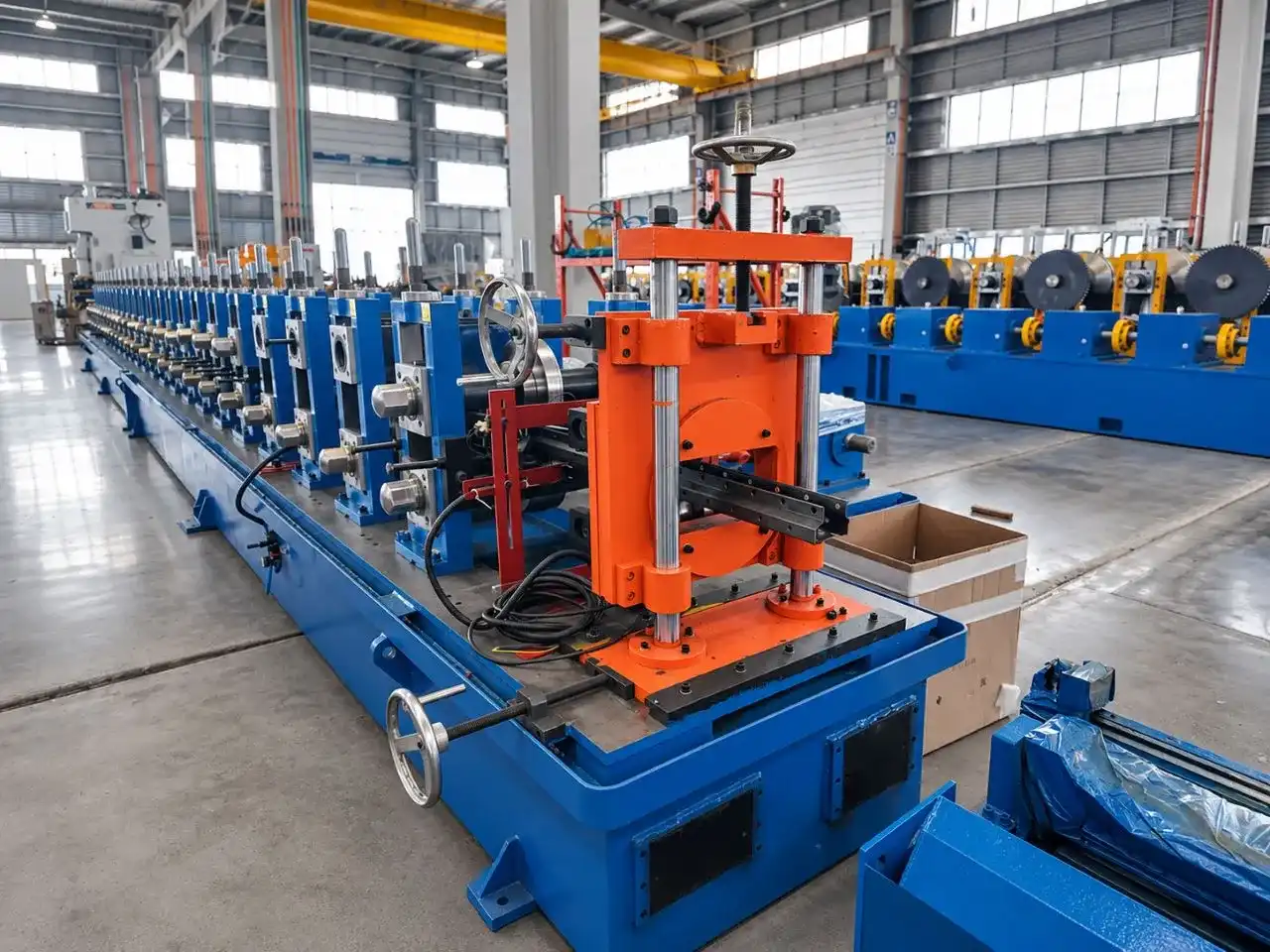
A grape trellis post roll forming machine is a continuous production line that turns galvanized steel coil into vineyard posts with consistent ribs, channels, and holes. The same process drives an เครื่องขึ้นรูปเสาตั้งตรง, which feeds, punches, forms, and cuts steel profiles in one pass. I wrote this guide for vineyard-equipment makers, fencing companies, agricultural suppliers, and OEM buyers in the United States who want to compare machines before they invest. You will find the working principle, key components, material limits, ZTRFM specifications, buying criteria, and maintenance tips, so you can decide with confidence.
How a Grape Trellis Post Roll Forming Machine Works
What the Machine Does and Why Trellis Posts Need It
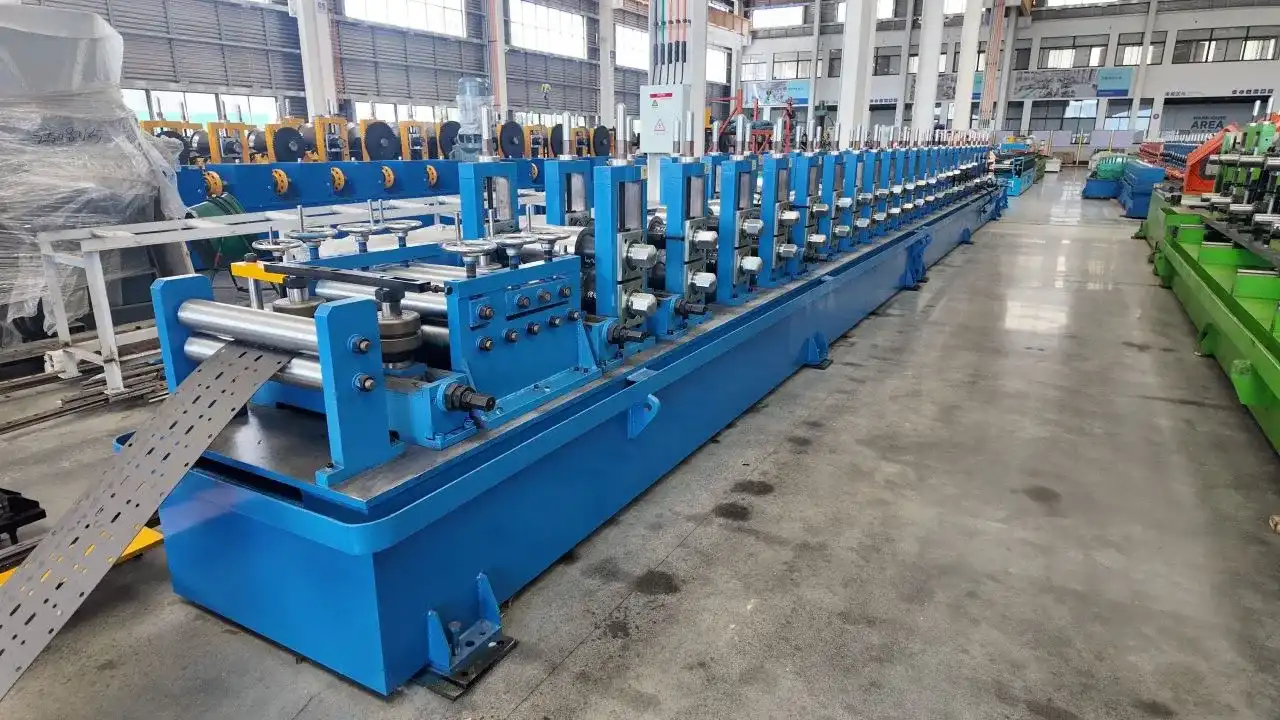
During its journey through paired roller stations, a roll forming line is responsible for bending a flat steel strip into a cross-section that is fixed. The procedure is described as continuous by Halmos, which is appropriate for lengthy portions such as vineyard posts to accomplish. In accordance with the die set, a line is capable of producing profiles that are either C-shaped, U-shaped, omega-shaped, ribbed, or slotted. Although racks, fences, and trellis posts all employ long, punched, cold-formed sections, many providers sell this equipment as an upright pillar rolling forming machine. This is due to the fact that all of these components are cold-formed. When workers are installing rows, and every wire hole needs to match up, it is an important consideration that the output remains constant from the first post to the thousandth post.
ขั้นตอนการผลิตแบบทีละขั้นตอน
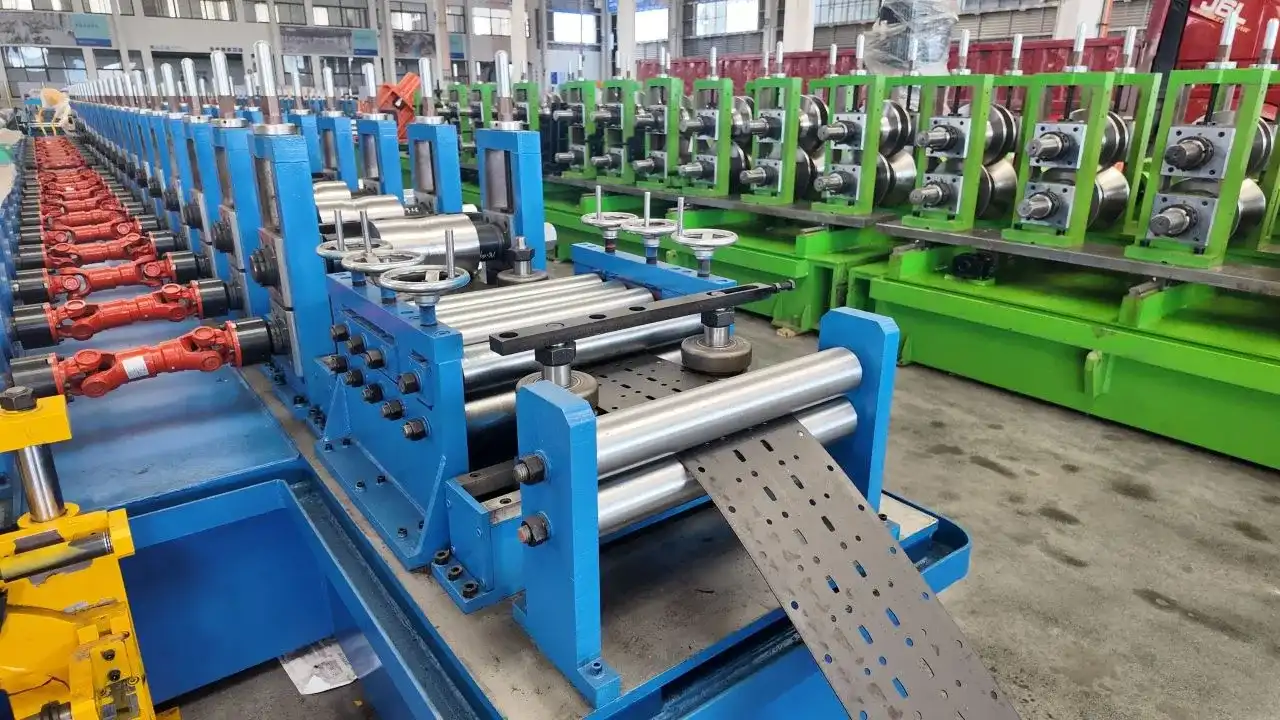
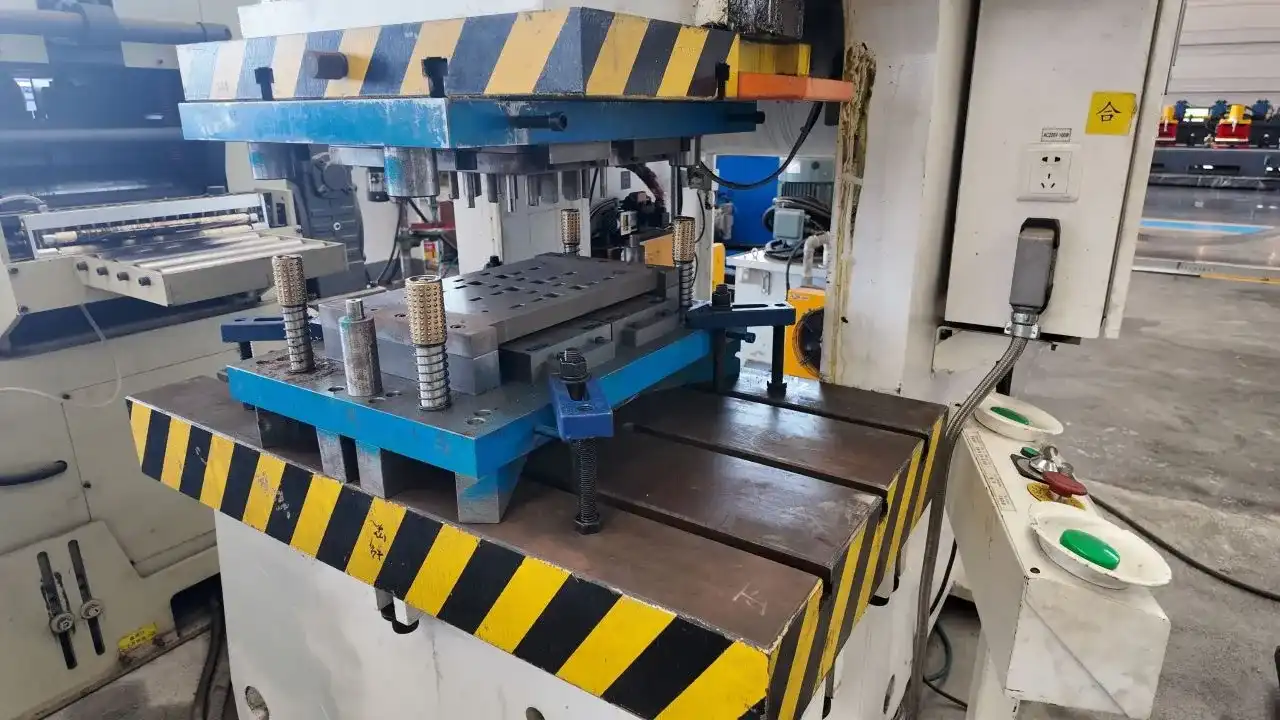
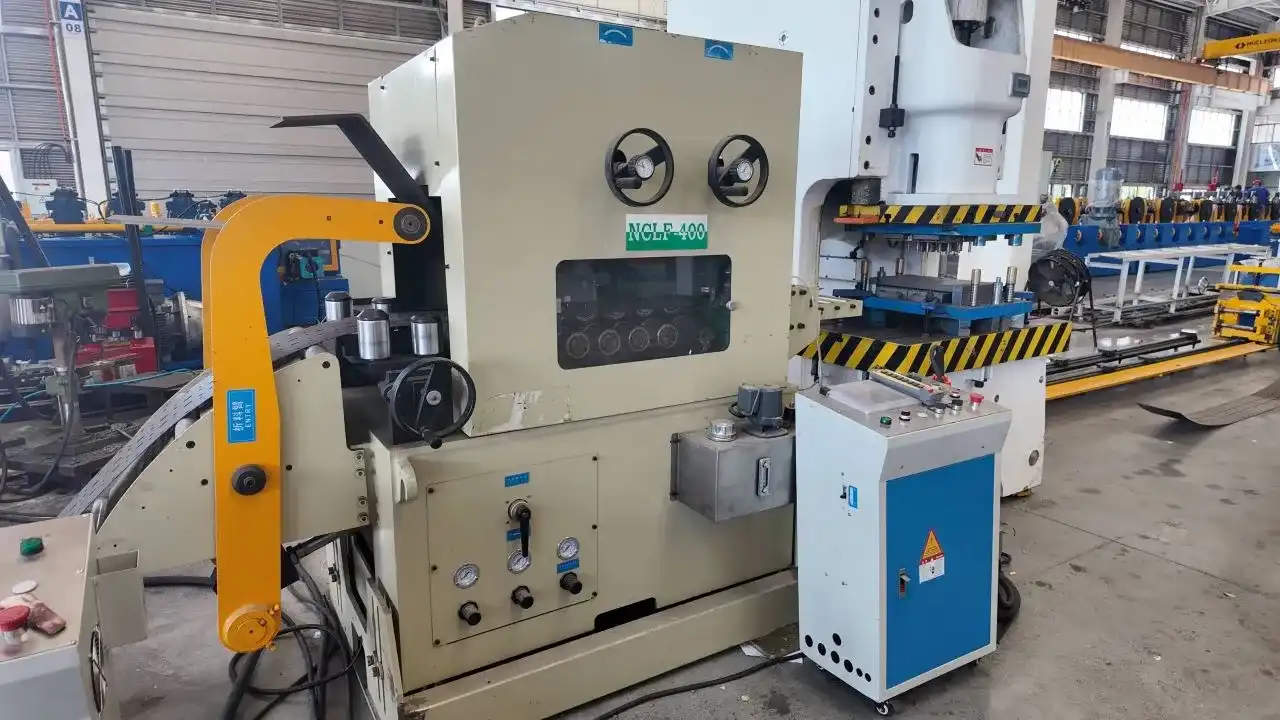
The ZTRFM line makes use of a single process that incorporates automated loading, roll forming, punching, and cutting simultaneously. Through the use of a เครื่องถอดรหัส, the galvanised coil is released and then fed into the conduit. In order to produce the hole or slot pattern that your design demands, punching stations are used. After that, the strip is bent slightly farther at each level by the forming stations, which reduces the likelihood of twisting, cracking, and surface scratches occurring further down. Each post is cut to the appropriate length by a cutting device, and the final parts are stacked by operators. When feeding, punching, shaping, and cutting are all performed at precisely timed intervals, hole spacing and straightness are maintained within acceptable parameters.
Where Finished Posts Are Used
The primary purpose of finished trellis posts in vineyards is to provide support for vines and training wires. Orchards, greenhouses, fences, and crop-support structures are all examples of applications that compatible profiles may be used for. Depending on factors such as soil moisture, fertilisers, sprays, and wind, you should choose the appropriate coating and thickness. You should verify your trellis drawing against the line's thickness and strength constraints since our upright pillar rolling forming machine is designed for warehouse racking pillars that are utilised in garages, supermarkets and industrial racking. It is not appropriate to consider rack uprights and trellis posts to be interchangeable. Before rack uprights can be put into operation, they must first undergo structural calculations, load testing, and hole-pattern validation in accordance with storage-rack design requirements.
Components, Materials, and ZTRFM Specifications
ส่วนประกอบหลักของสายการผลิต
แบบสมบูรณ์ เครื่องขึ้นรูปเสาตั้งตรง line typically includes a decoiler, entry guides, leveler, punching unit, roll forming mill, cutting unit, control cabinet, and output table. Each component affects post quality. The decoiler must match your coil weight, while the leveler stabilizes the strip before punching. Roll tooling shapes the profile and determines its dimensional stability, so it deserves careful review in every quotation. Guards and emergency stops help protect operators. When comparing suppliers, request a complete equipment list rather than just the forming mill price to avoid unexpected additional costs.
Materials and Thickness Range
Galvanised steel is often used for vineyard posts because of the zinc coating's ability to resist corrosion. The ASTM A653 standard includes zinc-coated sheet steel that is regularly used. With a yield strength of up to 235 MPa (about 34 ksi), our equipment is capable of processing galvanised steel plate with a thickness ranging from 1.5 to 2.5 mm (approximately 0.06 to 0.10 in). Any coil that has a greater yield strength is considered to be outside of that range. Make sure that your coil width, coating weight, and yield strength are all within these parameters before you approach someone to obtain a price. Corrosion is accelerated by moisture and fertilisers; thus, the choice of coating should be given equal consideration to thickness.
ข้อมูลจำเพาะของเครื่อง ZTRFM
This value takes into account the amount of time spent cutting, and the line operates at speeds ranging from 0 to 8 meters per minute (about 26 feet per minute). Due to its dimensions of about 11,000 × 1,800 × 1,800 mm (approximately 36 feet × 5.9 feet × 5.9 feet) and its weight of approximately 16 tonnes, it is important to prepare ahead for the availability of floor space and the capacity of the crane. The power is 380V/50Hz, and we configure it specifically for your location. By altering the spacers, you may modify the size of the profile. Blue and yellow are the basic colours; however, we may repaint to your specifications if you so choose. As a result of the fact that hole count and post length both affect actual production, it is important to compare completed posts per hour rather than meters per minute alone.
Roll Forming Compared with Other Production Methods
Roll Forming vs. Press Forming
Both stamping presses and press brakes are capable of producing one bend or one portion for each stroke. This implies that lengthy parts will need more frequent handling, more labour, and a larger degree of diversity across pieces. Through the process of roll forming, the whole cross-section is continually produced, and the process loses very little steel since the strip width is identical to the profile. Roll forming is something that Kalpakjian and Schmid consider to be one of the typical procedures for producing long, uniform sheet metal sections. If your catalogue also contains brackets or caps, you should bear in mind that press forming may nevertheless accommodate pieces that are either very intricate or very short.
Roll Forming vs. Welding-Based Production
There are certain shops that construct posts by welding together pieces of plate. This strategy results in weld seams, heat distortion, grinding, and touch-up work on galvanised surfaces. This is because welding causes zinc to be burnt away near the joint itself. Roll forming forms the profile from a single strip, which allows it to circumvent the majority of those phases and give a look that is consistent throughout. Brackets, reinforcements, and completed components are all areas in which welding is still beneficial, and many hardware manufacturers make use of both processes. Roll forming often reduces the amount of labour and rework required for your part design if it does not need a welded seam along its length.
การเลือกระดับการทำงานอัตโนมัติ
Automatic lines suit steady, high-volume orders because loading, punching, forming, and cutting operate as one process with minimal operator input. Semi-automatic lines cost less and accommodate small batches or frequent profile changes with more manual control. Our เครื่องขึ้นรูปเสาตั้งตรง is automatic and uses spacer adjustment for size changes, making it suitable for repeat production of related profiles. Estimate your annual post volume, the number of profiles you produce, and your labor costs, then compare payback periods. A workshop producing three similar sizes benefits more from spacer adjustments than one manufacturing twenty unrelated profiles.
Buying, Maintenance, and Working with a Manufacturer
วิธีการเลือกเครื่องจักรให้เหมาะสม
You should begin with the completed post rather than the catalogue. Prepare profile drawings or samples, as well as data on the coil, the thickness of the steel, the arrangement of the holes or slots, the completed length, and the goal output. The next step is to evaluate the forming capacity, punching technique, cutting precision, tooling design, floor space, power supply, and safety features of the various alternatives. Due to the fact that tooling, shipping, energy, spare parts, and commissioning all add up, it is more important to consider the overall cost of ownership than the initial price. Before final acceptance, be sure to request sample runs and dimensional inspections so that you can see actual postings rather than promises.
การใช้งาน การบำรุงรักษา และการแก้ไขปัญหา
Before beginning each shift, make sure that the coil alignment, guide settings, roller clearance, punching tools, sensors, and safety devices are all checked. It is important to do regular lubrication, bearing inspections, and control settings backups. The majority of problems may be traced back to a few different reasons. Twisting is often an indication that the rollers are not aligned properly or that the forming pressure is not uniform. Problems with feeding or worn punches are often the causes of inaccuracies in hole location. Scratches should be interpreted as dirty rollers or rough coil edges, and cut-length drift should be interpreted as calibration. It is essential that you always have extra bearings, punches, blades, sensors, and seals on hand, since a single smaller component should never be enough to derail a production plan.
Working with ZTRFM
Cold roll forming machines are designed and manufactured by Cangzhou Zhongtuo, which began operations in 2014 and produces and distributes its products under the ZTRFM brand. Our company is a national high-tech organization that is certified to ISO9001, CE, and CAS. Additionally, we export to more than 150 countries throughout the world. We provide original equipment manufacturer (OEM) and original design manufacturer (ODM) services, as well as a one-stop solution that includes raw materials, machinery, and อุปกรณ์. It is our engineers' responsibility to examine your drawing, design the roll tooling, and have a conversation with you about testing, shipping, and after-sales service. This direct communication eliminates flaws in the specifications and provides you with a detailed technical strategy before you commit to anything.
สรุป
A grape trellis post roll forming machine converts galvanized coil into consistent vineyard posts through continuous feeding, punching, forming, and cutting. Roll forming suits long, repeatable profiles better than press forming or welded assemblies, which add handling, seams, and rework. Component quality, tooling design, and automation level affect output, while material limits determine which posts a line can produce. The ZTRFM machine handles galvanized steel from 1.5 to 2.5 mm with a yield strength up to 235 MPa at 0 to 8 m/min, using spacers for size adjustments. Buyers should compare finished posts per hour, sample inspection results, and total cost of ownership. Regular maintenance and spare parts help maintain production, while using the same equipment as an เครื่องขึ้นรูปเสาตั้งตรง requires separate engineering checks.
คำถามที่พบบ่อย
1. What steel thickness can the machine process?
It processes galvanized steel plate from 1.5 to 2.5 mm thick with a yield strength up to 235 MPa.
2. สายการผลิตนี้วิ่งเร็วแค่ไหน?
The working speed is 0 to 8 m/min, including cutting time. Compare finished posts per hour, because hole count and post length change real output.
3. How do I change the post size?
You adjust the spacers. Some profiles need dedicated rollers or dies, so send your drawings for review.
Request a Customized Grape Trellis Post Roll Forming Machine Solution from ZTRFM
Send your profile drawing, steel thickness, hole layout, finished length, and target output to ZTRFM at zhongtuorollforming@gmail.com. Our engineers will review whether our เครื่องขึ้นรูปเสาตั้งตรง suits your needs and reply with a clear proposal. If you want an upright pillar rolling forming machine supplier that offers OEM, ODM, and one-stop service.