- Anglè
- franse
- Alman
- Pòtigè
- Panyòl
- Ris
- Japonè
- korean
- arabic
- Ilandè
- greek
- turkish
- Italyen
- danish
- romanian
- indonesian
- czech
- afrikaans
- swedish
- polish
- Jwe
- catalan
- Esperanto
- hindi
- Lao
- albanian
- Amharic
- armenian
- azerbaijani
- belarusian
- Bengali
- Bosnian
- bulgarian
- Cebuano
- Chichewa
- Corsican
- croatian
- dutch
- estonian
- filipino
- finnish
- Frisian
- galician
- georgian
- Gujarati
- Ayisyen
- Hausa
- Hawaiian
- Hebrew
- Hmong
- hungarian
- icelandic
- Igbo
- Javanese
- kannada
- Kazakh
- Khmer
- Kid
- Kyrgyz
- latin
- latvian
- lithuanian
- Luxembou..
- macedonian
- Malagasy
- malay
- Malayalam
- maltese
- Maori
- Marathi
- Mongolian
- Burmese
- Nepali
- norwegian
- Pashto
- Persian
- Punjabi
- serbian
- Sesoto
- Sinhala
- slovak
- slovenian
- Somali
- Samoan
- Scots Gaelic
- Shona
- Sindhi
- Soudanè
- swahili
- Tajik
- Tamil
- Telugu
- thai
- Ukrainian
- Urdu
- Uzbek
- vietnamese
- welsh
- Xhosa
- Yiddish
- Yoruba
- Zulu
How to increase cold roll forming speed?
Increasing cold roll forming speed starts with understanding where time is actually lost. From my experience working with production managers and plant engineers, the biggest gains come from fixing mechanical bottlenecks, upgrading control systems, and training operators on best practices. A modern machin pou fòme woulo panèl operating at peak efficiency can reach 15–30 meters per minute, but most facilities run well below that. This guide walks through practical steps to close that gap without sacrificing profile accuracy or machine longevity.
Understanding Cold Roll Forming Speed and Its Constraints
Speed in cold roll forming is not just about how fast the rollers spin. It depends on the entire system working together.
Machine Component Limitations
Worn rollers, undersized motors, and aging gearboxes all act as speed ceilings. If your shaft diameter is below 75mm or roller hardness drops below HRC 58, the machine will vibrate and produce off-spec profiles long before reaching its rated speed.
Karakteristik materyèl
Thicker or higher-tensile steel demands more forming force. Processing G450+ or G550 steel at the same speed as standard galvanized coil is a common mistake. It accelerates roller groove wear and causes flange angle deviation beyond the ±1° tolerance window.
Control System Gaps
Older relay-based electrical panels respond slowly to speed signals. This lag causes inconsistent strip feeding and misaligned punching holes. Industry data shows that facilities using outdated controls lose 15–25% of potential throughput simply due to control latency.
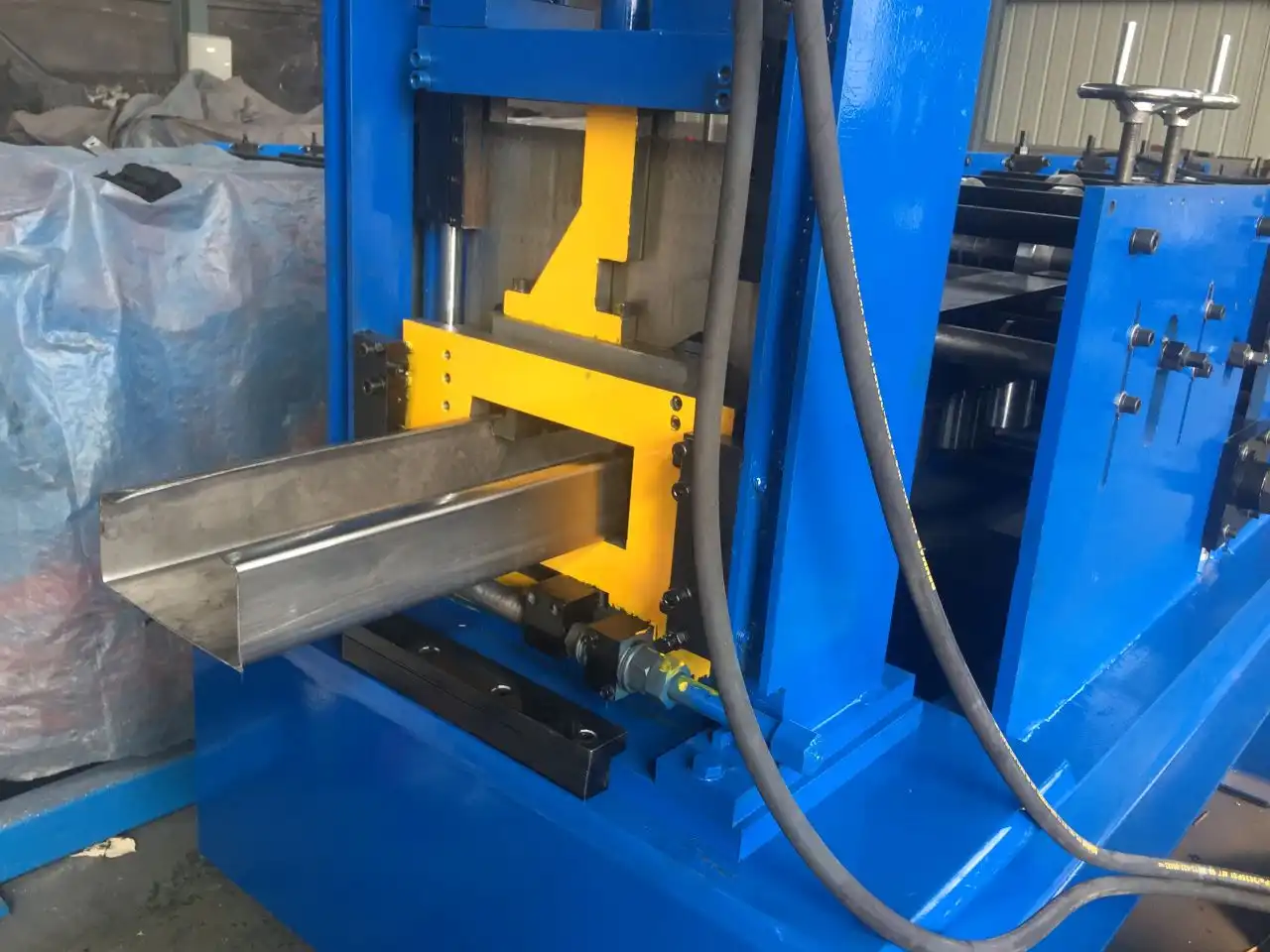
Identifying and Resolving Speed Bottlenecks in Purlin Roll Forming Machines
To go over speed limits, you need an organized diagnostic method, not just a guess.
Measure Before You Adjust
First, time the machine's real throughput per shift and compare it to its stated capacity. Use a digital tachometer to compare the speed of the roller surface to the settings on the PLC. If the gap is more than 10%, it means there is a mechanical or electrical problem that needs to be looked into before any settings are changed.
Common Mechanical Bottlenecks
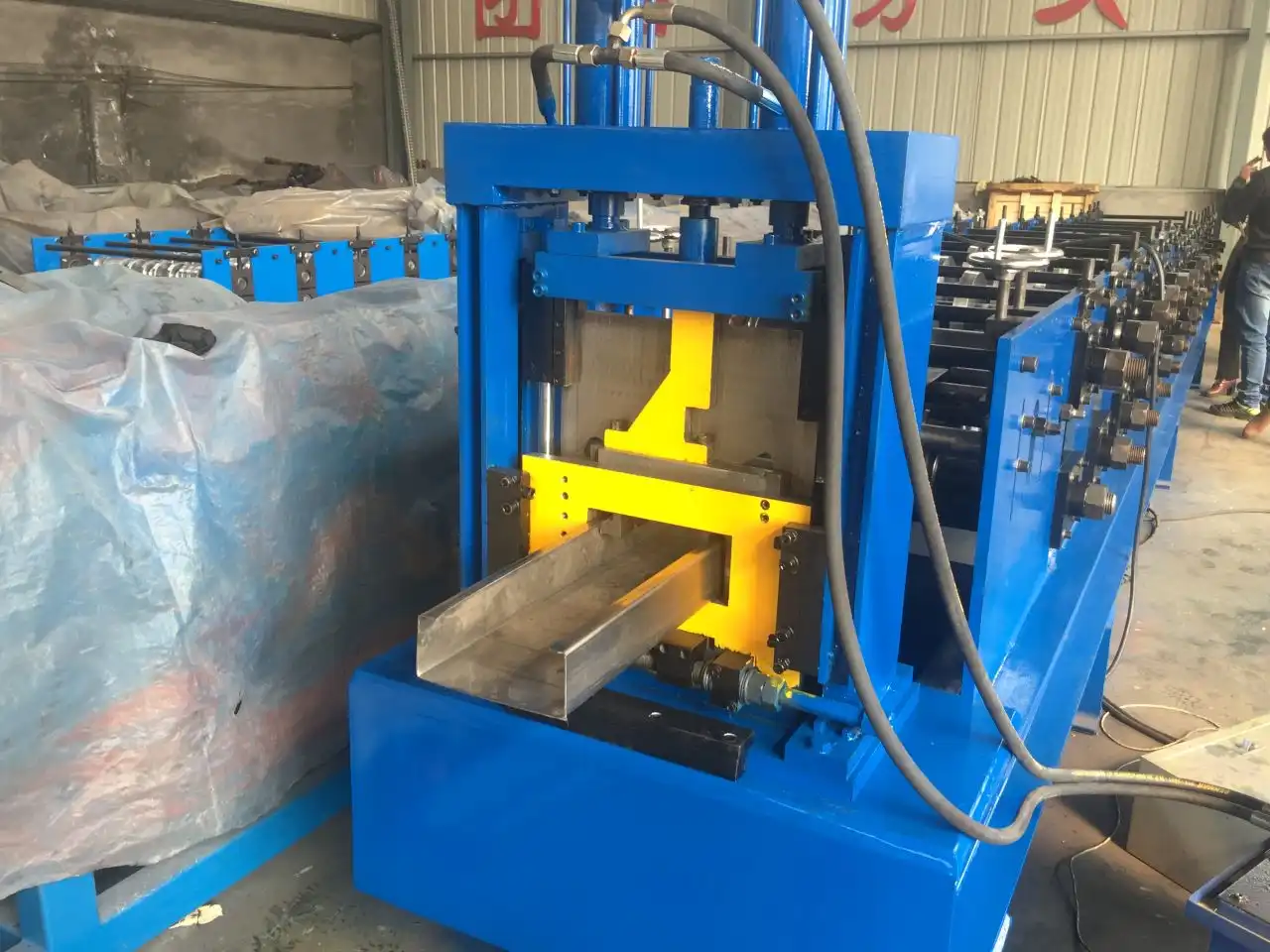
One of the main reasons why C and Z purlin lines slow down is that the roll tools aren't lined up right. If the rollers are out of place by even 0.5 mm, the strip moves around, which makes the machin pou fòme woulo panèlslow down or trip. Every 500 hours, check the run-out concentricity of the main shafts.
Feeding and Hydraulic Response
When you use a manual or inactive derouleur, it causes feeding tension spikes that slow down the forming section. By upgrading to servo-driven feeding systems and replacing passive decoilers with ones that are powered by hydraulics, feeding-related stoppages can be cut by a measurable amount. In the same way, hydraulic shear stations should be able to keep pressure between 12 and 16 MPa without leaking; drops in pressure directly slow down cut cycles.
The types of bottlenecks are mechanical, food, and control. Each of these needs a specific fix. When you work on all three at the same time, you get speed gains that add up over time instead of small ones.
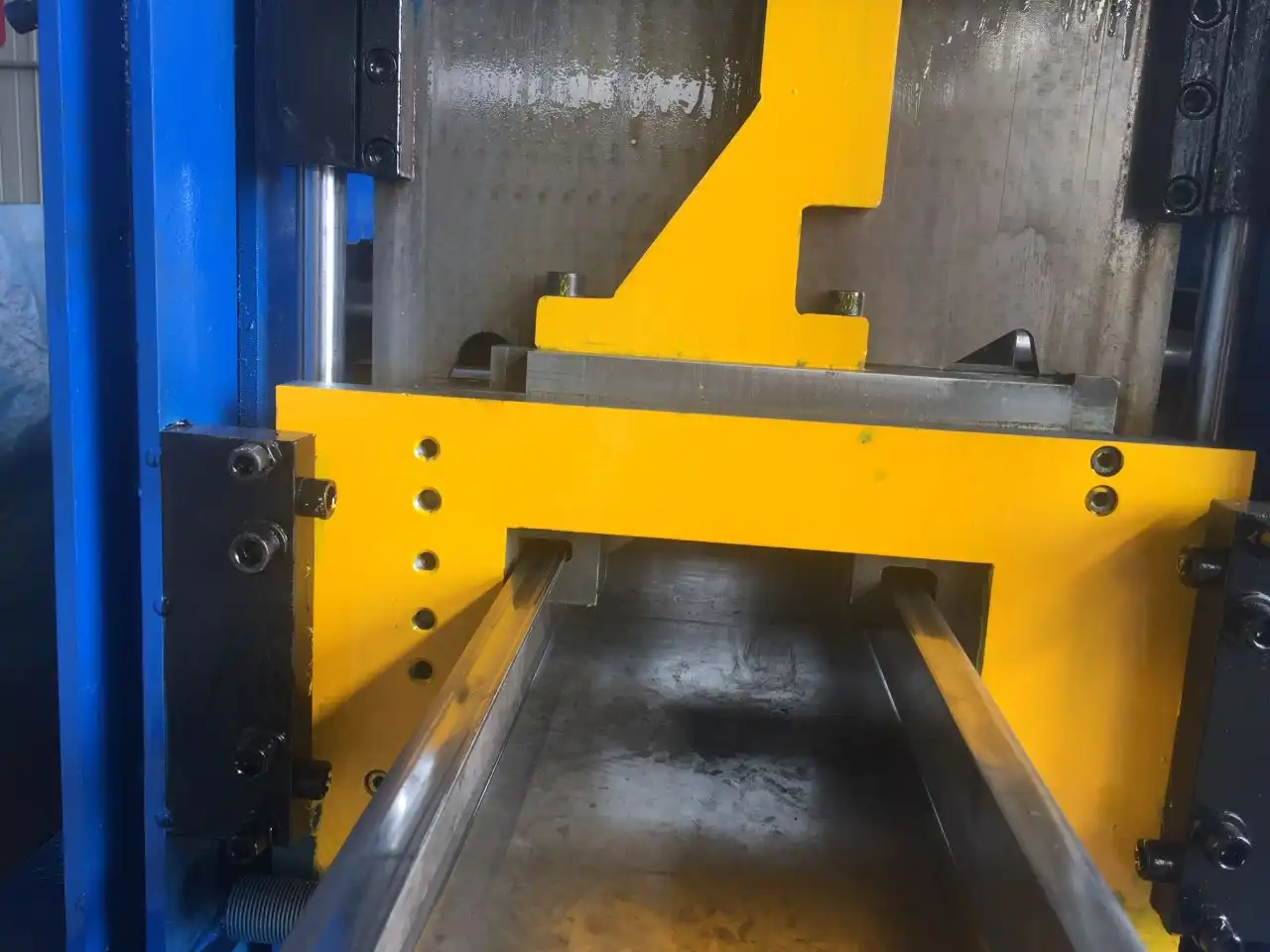
Upgrading to Advanced Purlin Roll Forming Machines for Enhanced Speed
There are times when the problem can't be fixed with the equipment that is already there. That which is being used.
High-Torque Servo Motor Integration
Servo motors have been used in place of mechanical variable-speed drives in modern C/Z purlin lines. Servo systems give real-time feedback on torque, which lets the machine keep the same forming speed even when the thickness of the material changes. This can raise average output by 20–30% on mixed production runs by itself.
Automated Size Changeover
On a fully automatic line managed by a PLC, using the tablet to switch from Z200 to Z250 takes between 1 and 5 minutes. It takes 2–4 hours to do the same thing on a machine that is run by hand. This difference directly means more production hours per day for facilities that use more than one size of purlin during the same shift.
Flying Shear Post-Cut Systems
Post-cut flying shear systems cut profiles while the strip is still moving. This means that they don't have to stop, cut, and start again as pre-cut lines do. This is very important for Z purlins because pre-cutting makes the profile ends flare out and stops the lap joints from nesting properly. Flying shear devices keep the cutting going and make cut-to-length precision better to ±1.5 mm over 6 meters.
These three improvements go well with each other. If a facility puts in servo motors but leaves the old, slow pre-cut method, they will still waste time at the shear station. When you treat the line as a whole, you get the best results.
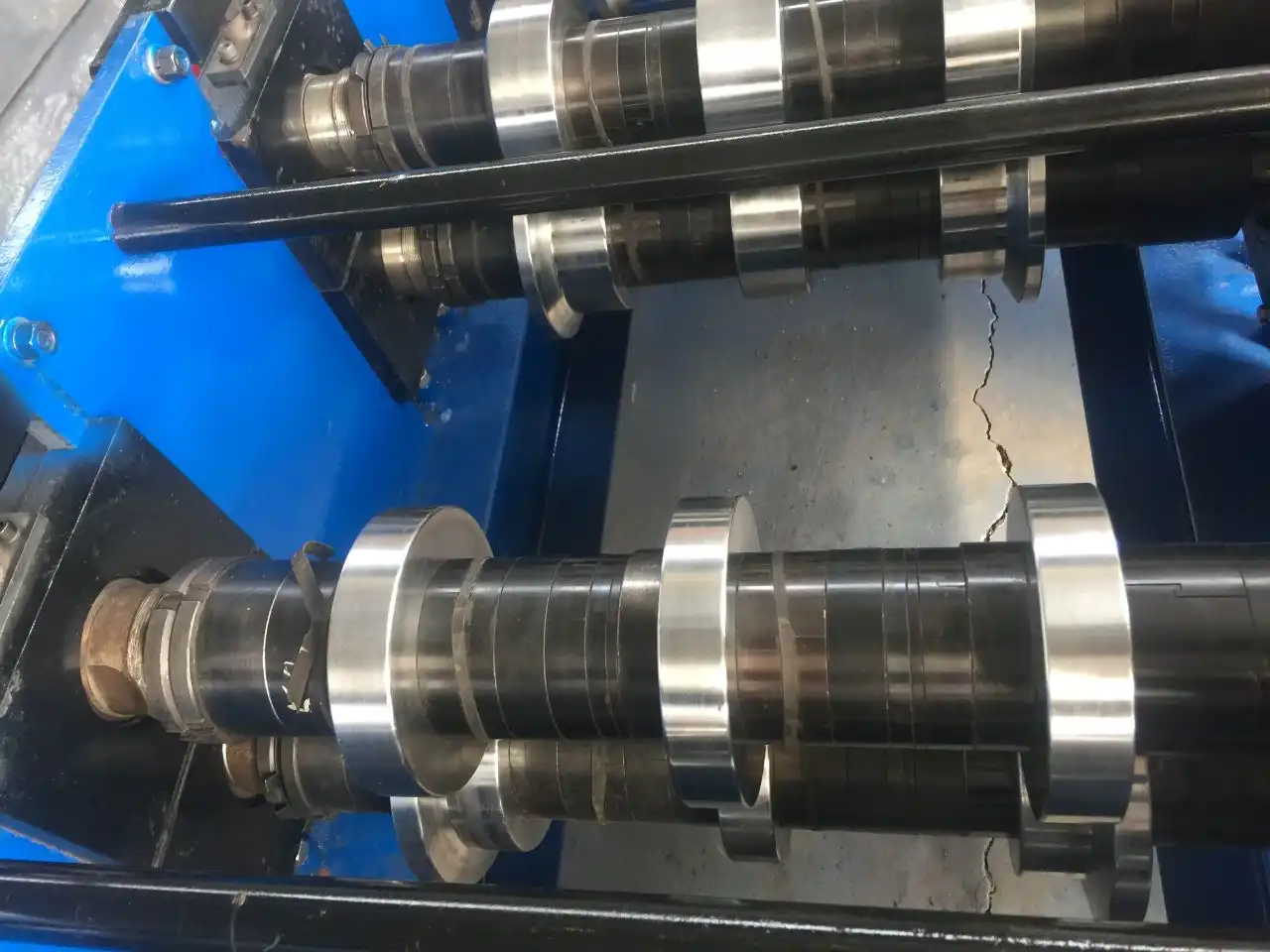
Best Practices for Maintaining and Operating Purlin Roll Forming Machines to Maximize Speed
No matter what its listed specs say, a machin pou fòme woulo panèl that is well taken care of works faster and more reliably than one that isn't.
Scheduled Roller and Blade Inspection
Rollers made of Cr12MoV steel that have been hardened to HRC 58–62 usually don't need to be ground again for millions of rounds of making. But punched die blades can last between 100,000 and 200,000 cuts before they need to be sharpened. When checks are planned based on production volume instead of date time, unexpected downtime during peak production is avoided.
Lubrication and Electrical Checks
I suggest that you grease the main gears, shaft bearings, and chain drives once a week. When bearings are dry, there is more friction, which raises the temperature and makes the drive motor work harder, which limits the top speed. Servo amplifiers, encoder feedback lines, and PLC I/O cards should be checked for signal drift once a month so that it doesn't become a speed-limiting fault.
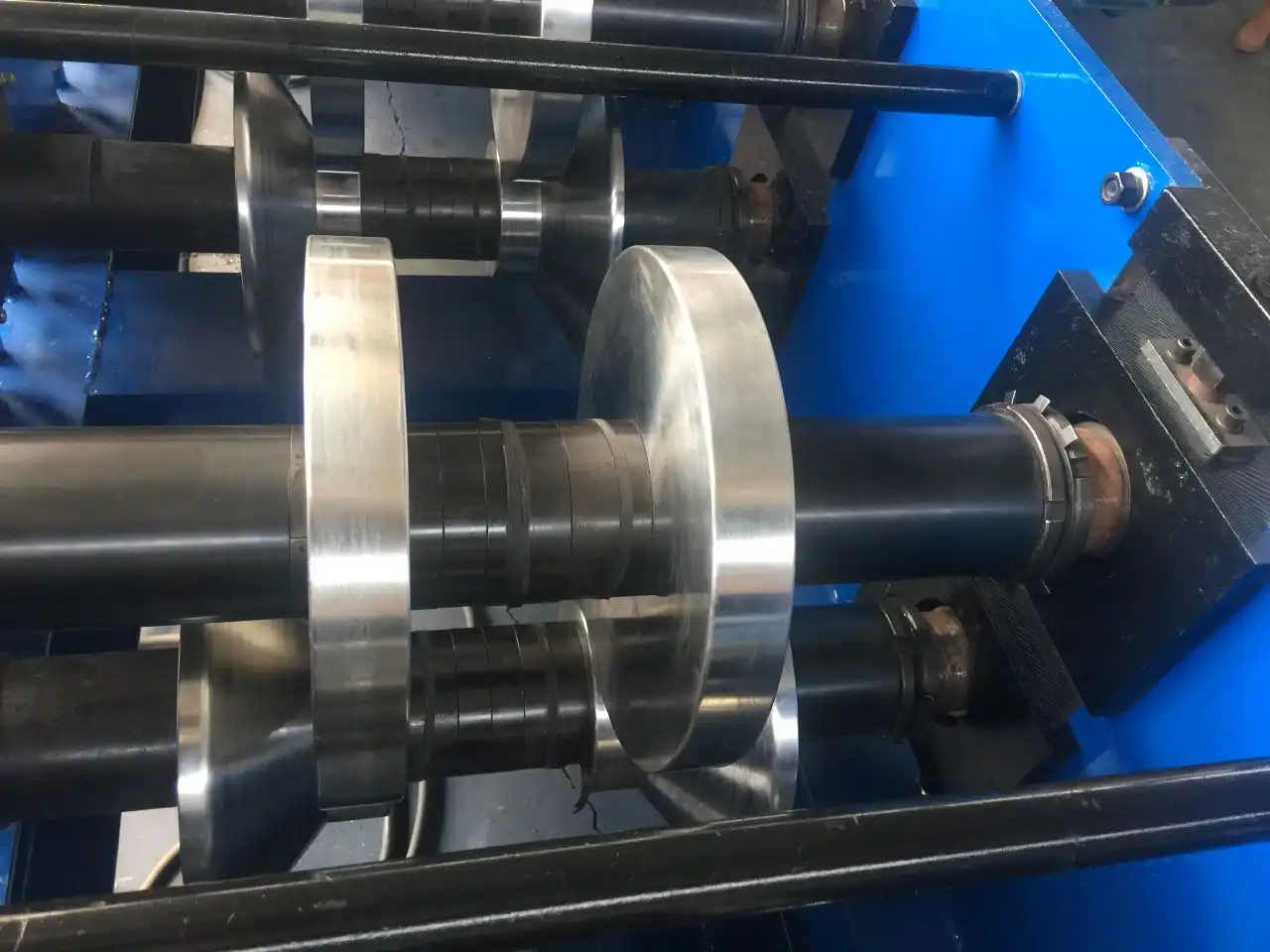
Fòmasyon Operatè ak SOP yo
People who lose speed because of human mistake don't always report it. Standardized working processes that include start-up sequences, speed ramp-up methods, and fault response steps make it faster to fix problems. Operators who have been trained to control speed can spot strange sounds or vibrations early on, stopping the kind of slow speed creep that leads to major repairs.
By following these steps, you can protect both the machine investment and the output plan. Instead of reacting to problems as they happen, regular maintenance makes performance predictable.
How to Make an Informed Purchase: Selecting the Right Purlin Roll Forming Machine for Speed and Efficiency
Buying a faster machine only helps if the machine is matched to your actual production profile.
Evaluate Motor and Drive Technology
Look for machines with servo motor drive systems rather than older mechanical variable-speed drives. Check shaft specifications—solid 40Cr steel shafts with a minimum 75–90mm diameter resist deflection under heavy forming loads and support sustained high-speed operation.
Assess Automation Level and Structural Build
A machine's top speed means little if the frame deflects under load. Side-wall plates should be at minimum 20–25mm thick for processing high-tensile steels above 450 MPa. Confirm that the PLC control system supports infinite size adjustment within the web width range (e.g., 100–300mm) without requiring tooling changes.
Pri Total de Posesyon vs Pri Acha
A lower-priced machine with slower changeover times and higher maintenance frequency can cost more over three years than a higher-spec machine with automated adjustment. Ask suppliers for documented throughput data, not just rated speeds. ISO9001 and CE certification on both the machine and the manufacturer's QC process provide objective quality benchmarks when comparing suppliers across different markets.
Procurement decisions made with these criteria in mind consistently produce better production outcomes than decisions made on purchase price alone.
konklizyon
Three things need to be done to speed up cold machin pou fòme woulo panèls: finding and getting rid of bottlenecks, replacing old equipment with new servo-driven equipment that has flying shear systems, and making sure that operating standards are always met. When all three are taken care of, facilities usually see throughput increases of 25–40% without having to add more floor space or workers. Speed should not be thought of as a single machine setting, but as a feature of the whole system. If you want to build a new structural steel construction shop or add on to an existing PEB production line, this guide will give you some useful ideas to get you started.
Kesyon'w yo
1. How fast can a modern purlin roll forming machine run?
High-grade machines handle forming speeds of 15–30 meters per minute, depending on material thickness and profile complexity. Processing 1.5–3.0mm galvanized steel at the upper end of that range requires servo motors and a well-tuned feeding system.
2. What causes a C/Z purlin line to run slower than its rated speed?
The most common causes are roller misalignment, dry or worn bearings, undersized decoilers creating back tension, and PLC control latency. Addressing these mechanical and electrical issues usually recovers 15–25% of lost speed before any hardware upgrade is needed.
3. Does processing high-tensile steel reduce forming speed?
Yes. G550 steel at 550 MPa yield strength requires higher forming force. Running it at speeds designed for standard galvanized coil stresses the gearbox and accelerates roller wear. Heavy-duty machine specifications with larger shaft diameters and higher motor power ratings are needed to maintain speed with high-tensile grades.
4. How does automated size changeover affect daily output?
On an automatic PLC line, changeover between Z purlin sizes takes 1–5 minutes. Manual machines require 2–4 hours. In a facility running three different sizes per day, automated changeover can recover 4–8 hours of production time weekly.
5. What certifications should I look for when buying a purlin line?
ISO9001 for quality management and CE marking for safety compliance are the minimum benchmarks. These sètifikasyon indicate documented manufacturing processes and traceable quality control, which matter for long-term reliability.
Upgrade Your Production Line with ZTRFM
Since 2014, ZTRFM has been designing and making cold roll forming machines that are exported to more than 150 countries. These machines are certified by ISO9001, CE, and CAS. Our catalog of C/Z machin pou fòme woulo panèl suppliers includes servo-driven lines with automatic size adjustment, flying shear post-cut systems, and full PLC control. These machines are made for high-tensile steel and large-scale production. If you're ready to make your purlin machine produce more, email us at zhongtuorollforming@gmail.comto get technical advice.
Referans
1. Halmos, George T. Manyèl Fòmasyon Woulo. CRC Press, 2006.
2. Enstiti Ameriken pou Fè ak Asye. Manyèl Konsepsyon Asye Fòme a Fwad. AISI, 2016.
3. Bhattacharyya, Debes. Fòmasyon Fèy Konpoze. Elsevier Science, 1997.
4. Australian Steel Institute. Design of Cold-Formed Steel Structures: AS/NZS 4600. ASI, 2018.
5. Manufacturing Engineering Magazine. "Advances in Roll Forming Technology for Structural Sections." SME Publications, 2022.
6. Metal Construction News. "Speed and Precision in Modern Purlin Production Lines." Stamats Communications, 2023.